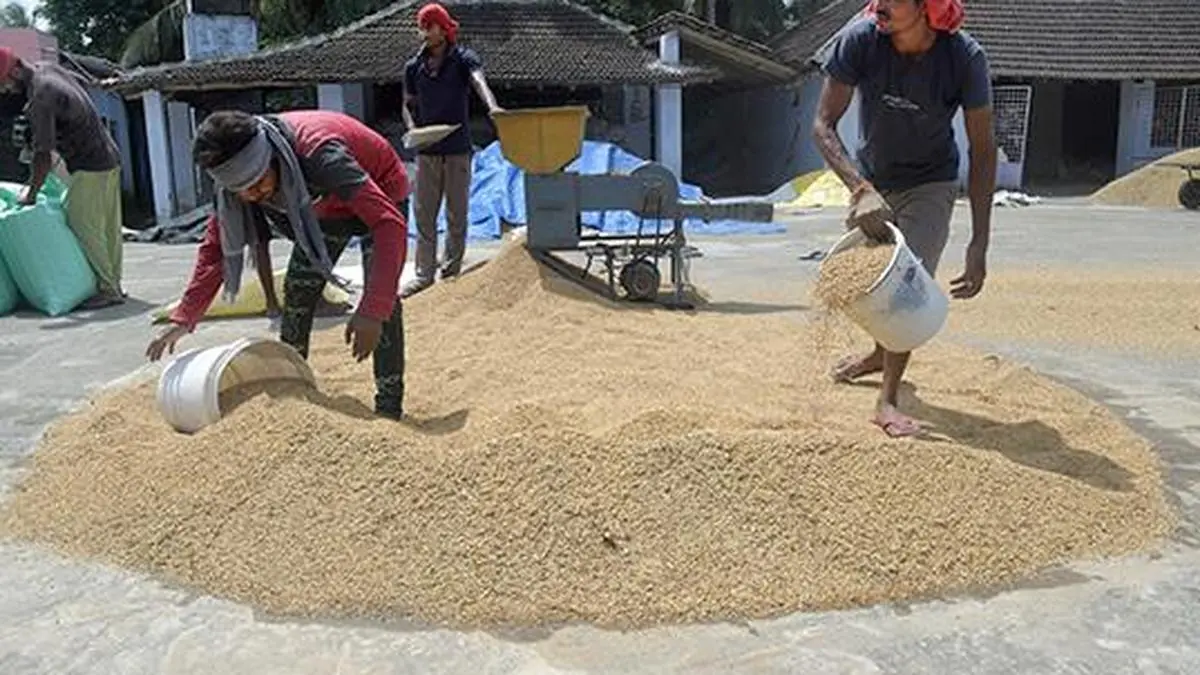
The Indian government’s rice procurement for official reserves reached 49.86 million tonnes (mt) by April 30, marking a 6% increase over the 47.02 mt recorded during the same period last year. This surge in state-held inventory, occurring within the October 2025-April 2026 window, places significant pressure on the government to accelerate its disposal strategy. With a total seasonal target of 56.66 mt, the current pace suggests that the Central Pool will soon face a storage and management bottleneck, necessitating aggressive sales to ethanol distilleries, state governments, and open market channels.
The Mechanism of Surplus Management
The government’s procurement strategy is inherently tied to the dual-season cropping cycle, comprising the Kharif (monsoon) and Rabi (winter) harvests. While the Kharif procurement has largely concluded across most states, the Rabi season is currently underway, with a target of 7.96 mt. The data shows that Rabi procurement has already reached 1.21 mt, up from 1.07 mt at this time last year. This consistent growth in intake, coupled with record-level production estimates of 123.93 mt for the 2025-26 Kharif season, creates a structural surplus that the government must clear to maintain price stability and prevent spoilage.
Historically, the government has utilized ethanol distilleries as a primary outlet for excess grain. In the 2025-26 season alone, 10.8 mt of rice was sold from official reserves, with 5.2 mt directed specifically toward ethanol production. This represents a sharp increase from the 4.53 mt total disposal volume observed in the 2024-25 season. For market observers, the pace of these sales serves as a proxy for the government's urgency in clearing warehouse space before the next harvest cycle begins.
Regional Disparities in Procurement
Aggregate national figures mask significant regional volatility in procurement volumes. Andhra Pradesh has seen a 71.7% surge in procurement, reaching 3.35 mt compared to 1.95 mt a year ago. Similarly, Odisha reported a 31.3% increase, totaling 5.27 mt. These gains in the southern and eastern belts have offset declines in traditional breadbasket states. Punjab, typically the largest contributor to the Central Pool, saw procurement fall 9.7% to 10.49 mt, while Haryana remained largely flat at 3.57 mt.
This geographic shift reflects changing cropping patterns and local production dynamics. In Tamil Nadu, procurement fell 8% to 2.12 mt, while Telangana saw a 15.4% increase to 4.04 mt. These shifts are critical for logistics planning, as the government must manage the movement of grain from surplus-producing states to deficit regions or export-ready hubs. For those tracking stock market analysis regarding agricultural commodities or fertilizer inputs, these regional procurement shifts often signal changes in local farm income and regional infrastructure utilization.
Valuation and Disposal Risks
| State | 2025-26 Procurement (mt) | Year-Ago Procurement (mt) | Change (%) |
|---|
| Andhra Pradesh | 3.35 | 1.95 | +71.7 |
| Odisha | 5.27 | 4.01 | +31.3 |
| Punjab | 10.49 | 11.61 | -9.7 |
| Telangana | 4.04 | 3.50 | +15.4 |
The government’s reliance on ethanol distilleries to absorb excess stock is a policy-driven floor for the market. However, the reliance on this channel introduces execution risk. If the government fails to maintain the current velocity of sales, the resulting inventory overhang could depress open market prices, impacting the profitability of private grain traders and processors. The decision to allow early procurement in Punjab and Haryana in mid-September, due to early paddy arrivals, highlights the government’s reactive stance toward managing supply chain bottlenecks.
Investors should monitor the upcoming monthly disposal figures from the Food Corporation of India. A slowdown in sales to distilleries would indicate that the government is struggling to manage the logistics of the surplus, likely leading to increased pressure on the open market. Conversely, sustained high-volume sales would suggest that the government is successfully navigating the supply glut. With total production for the 2025-26 cycle projected to hit record levels, the margin for error in inventory management is narrowing.
While Welltower Inc. (WELL stock page) operates in the healthcare real estate sector with an Alpha Score of 52, the broader agricultural supply chain remains a distinct macro-variable for the Indian economy. The current procurement trajectory confirms that the government is prioritizing volume intake to support minimum support price (MSP) mandates, even as it creates a long-term challenge for storage capacity and fiscal expenditure on grain management. The next concrete marker for the sector will be the final Rabi procurement tally, which will determine the total surplus available for the remainder of the fiscal year.