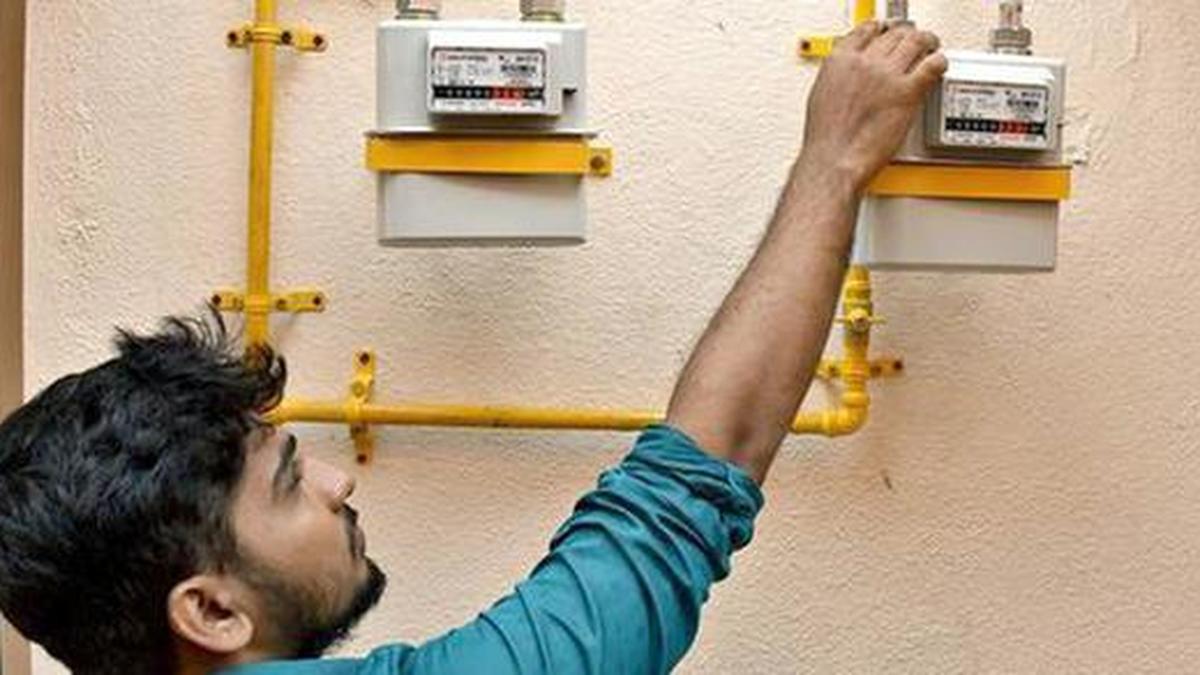
India's Petroleum Ministry has ordered every district to assign a senior officer to oversee the shift from LPG cylinders to piped natural gas, a supply-side policy that gained urgency after the West Asia crisis disrupted cooking-gas imports this year.
The order arrived in an August 21 letter to state chief secretaries signed by Petroleum Secretary Neeraj Mittal. It directs district supply officers to join local PNG Coordination Committees and enforce new regulations that bar households from keeping both an LPG connection and a piped gas connection where the pipeline runs.
Mittal told the states the legal framework is already on the books. The government gazetted two control orders in 2026 under the Essential Commodities Act. One covers piped gas distribution, the other LPG. The orders empower designated officials to disconnect LPG supply to a household that ignores a notice to connect to PNG once the infrastructure is live.
The Ministry's letter framed the urgency around the West Asia disruption. India imports the majority of its cooking-gas requirement, and the bulk of that supply moves through the Strait of Hormuz from Qatar, Saudi Arabia, the UAE, and Kuwait.
When the crisis hit, state-owned oil marketing companies had to prioritize domestic households, rationing supply to commercial and industrial users. The government has since shifted some procurement volume toward the U.S. and Algeria. Piped natural gas, by contrast, held up better. Domestic PNG supplies receive priority allocation of domestically produced gas, insulating household users from the volatility that hit imported LPG and LNG cargoes.
"PNG brings a safer, cleaner and more efficient cooking fuel, playing a critical role in advancing the country's energy transition objectives," Mittal wrote. The experience, he said, strengthened the case for city-gas expansion as a hedge against geopolitical risk.
PNG Coordination Committees already exist in licensed geographical areas, bringing together city gas distributors and state-run oil marketing companies. The Ministry found the committees struggled to get building access, run outreach camps, and process connections at the required pace. The new directive targets that bottleneck.
The district supply officer is expected to secure right of way from resident welfare associations and housing societies. The officer can also enable authorities to exercise designated powers under the control orders when access to a non-public area is refused.
The shift changes the import math. Household consumption accounts for the largest single share of India's LPG requirement. Every household that switches chips away at the country's structural dependence on Middle Eastern shipping routes. For city gas distribution companies, the faster household connection rate directly lifts utilization of the pipeline networks built under the government's city-gas program.
The prohibition on dual connections is the enforcement lever. Earlier adoption drives relied on price caps and subsidy transfers, which were slow. The 2026 orders give an officer the power to cut LPG supply to an address with a live PNG line.
Mittal asked the states to nominate one officer per district, not below the rank of district supply officer. The Ministry said the Department of Food and Civil Supplies is best placed to provide the administrative support because it already regulates LPG distributors at the field level. Mittal requested the names and contact details "at the earliest" and asked the states to accord priority to the matter.
Published - August 23, 2026 01:25 pm IST