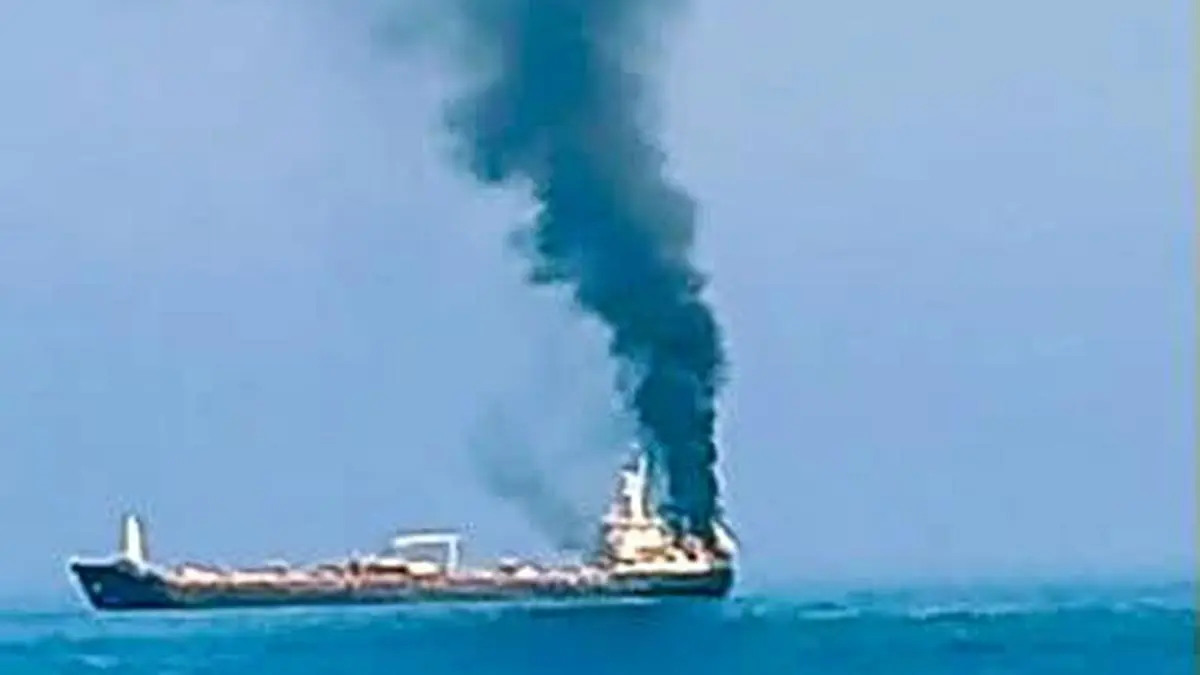
India is closely monitoring an attack on the MT Jalveer off Oman's Shinas port. Three Indian seafarers were earlier killed in a US military strike on a vessel near Oman.
The Indian Embassy in Muscat said Thursday it is closely monitoring an attack on the commercial vessel MT Jalveer off Oman's Shinas port, an incident that comes a day after the confirmed deaths of three Indian seafarers from a separate US military strike on a merchant ship near the same coastline.
In a post on X, the embassy said: "We have learnt of an incident involving a vessel off Shinas port of Oman, earlier today. We are closely monitoring the situation and coordinating with the local authorities for further details." The statement provided no details on the nature of the attack or the status of the crew.
Around the same time, Minister of Ports, Shipping and Waterways Sarbananda Sonowal confirmed that three Indian seafarers reported missing after a US military attack on a commercial vessel off the Oman coast on Wednesday were dead. The two events mark a sharp escalation in risks to commercial shipping in the Gulf of Oman, a critical waterway for crude oil, refined products, and containerized trade moving between the Arabian Sea and the Persian Gulf.
The MT Jalveer is a product tanker. Indian crew are common on vessels transiting the region. The back-to-back incidents will likely push war-risk insurance premiums higher for ships calling at Omani and nearby Gulf ports, shipping sources said. That adds a direct cost line for ship owners and charterers already paying elevated premiums for Red Sea transits after Houthi attacks.
For India, the attacks carry a domestic political dimension. The government faces pressure to secure the safety of the roughly 200,000 Indian seafarers active in global shipping. The embassy's public statement – rare for a single vessel incident – signals the sensitivity.
The market implications are not limited to shipping stocks. Disruptions in the Gulf of Oman can lengthen voyage times for crude tankers, tighten refined-product supply, and widen clean-product freight spreads. Any rerouting of vessels away from the Strait of Hormuz access points would add days to delivery schedules for European and Asian refineries. Insurance costs, already elevated, could become a factor in freight rates.
Indian-listed shipping companies with direct exposure to the Gulf route include the state-controlled Shipping Corporation of India and Great Eastern Shipping, both of which operate tankers in the region. Their stocks may see short-term volatility as traders assess the risk horizon. Global shipowners like Frontline and Euronav, while not directly tied to the India story, would feel any broad regional rate lift.
The broader context is the continued tension between the US and Iran-aligned groups in the region. While Thursday's attack on the MT Jalveer has not been immediately attributed, the cumulative pattern – US military strikes on vessels, now this fresh incident – suggests a deterioration in maritime security that shipping analysts have warned about for months.
The Indian Embassy said it is coordinating with Omani authorities for further details. No further statement has been scheduled.
Prepared with AlphaScala editorial tooling from the source reporting linked above. Indexable analysis may include a cited Alpha Score value. Publishing checks screen each story before release. Educational coverage, not personalized advice.