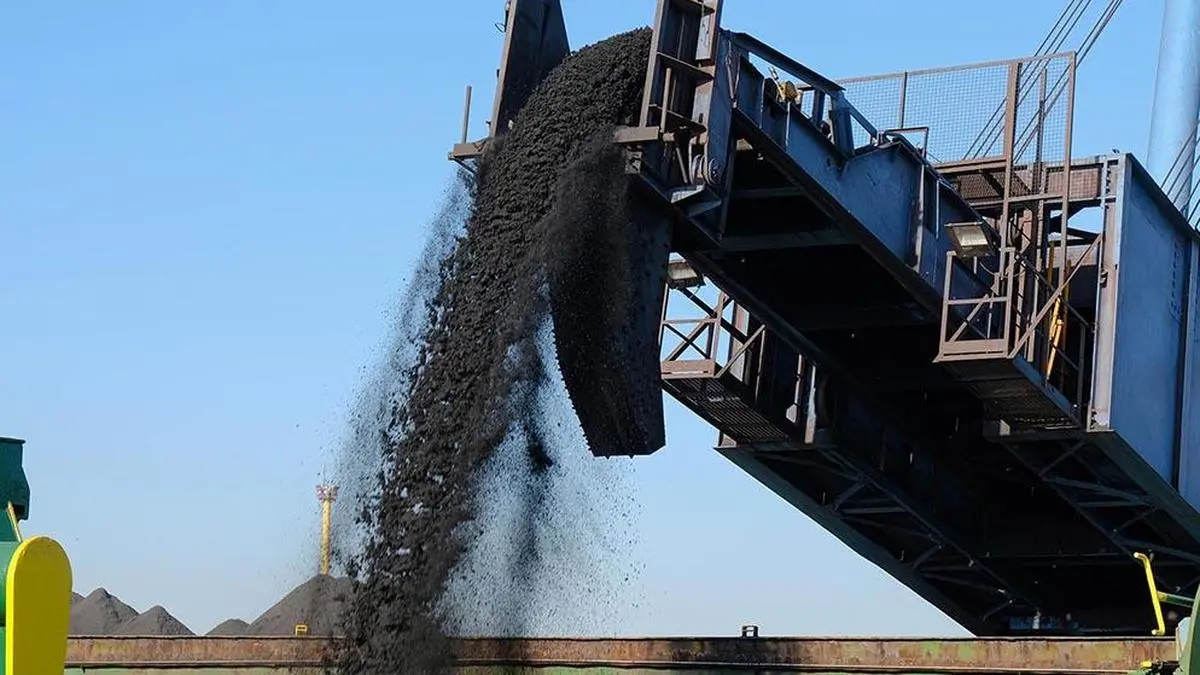
Indiaâs iron ore imports hit a record 5 million tonnes in the first quarter of 2026, up 127% from a year earlier, and the ripple effect is starting to show in global dry bulk shipping. The import surge is absorbing vessel capacity on long-haul routes, particularly from Brazil, and is becoming a measurable driver of freight rates.
That is the core takeaway from shipping analytics firm Signal Ocean, whose data tracks the quarterly volume as the highest in three years. The sequential growth â imports rose 39% from the October-December quarter of 2025 â is especially notable because it bucked the typical seasonal slowdown after the year-end holiday period. This is not a one-off restocking event. The trend has structural roots in Indiaâs steel industry.
Indiaâs Steel Capacity Growth Creates a Quality Gap
Indiaâs installed crude steel capacity surpassed 220 million tonnes in the 2025-26 financial year. As production has scaled, a problem has become more acute: domestic iron ore output is heavily weighted toward fine ore rather than lump ore, and the fines often carry high alumina content that is problematic for large blast furnaces.
Why Premium Ore Matters
Blast furnaces at integrated steel mills require low-alumina, high-grade feedstock to operate efficiently. Indian ore sources, especially from the states of Odisha and Jharkhand, frequently deliver alumina levels above 2.5%, which raises coke consumption, increases slag volume, and reduces productivity. Imported Brazilian ore, by contrast, typically has alumina below 1.5% and iron content above 64%.
Venkateswara Rao, a veteran logistics professional formerly associated with a steel company, summed up the market view:
"Brazil iron ore is the best available in the world, and is very useful for steel manufacturers. This ore works as a âsweetenerâ to blend with low-grade ore."
That blending function is the mechanical reason for the import surge. Indian steelmakers are not replacing domestic ore â they are blending a small percentage of high-grade imports to lift the average quality of the charge. This is a demand that scales with total output, not a substitution.
Who Is Driving the Demand?
JSW Steel is the most visible buyer. The company has expanded capacity at both Vijayanagar and Dolvi, pushing total capacity toward 40 million tonnes per year. Both plants have coastal locations that reduce inland transport costs, making imported seaborne ore economically viable versus domestic ore that must move by rail from the interior.
Other coastal mills â including Steel Authority of India Limited (SAIL) at its Salem and Visakhapatnam plants, as well as newer private players â are following the same logic. The report notes that Indian steelmakers have also grown wary of the reliability of pellet supply flows from West Asia, prompting a shift toward established long-haul suppliers like Brazil.
The Shipping Mechanism: Why Route Length Magnifies the Impact
Not all iron ore imports are equal for the shipping market. The key variable is voyage days per cargo.
Short-haul vs. Long-haul
Indiaâs most traditional import sources â Australia and Oman â are relatively short journeys. A capesize vessel from Port Hedland to Paradip takes about 10 days. From Brazilâs Tubarão to Indiaâs New Mangalore, the voyage is roughly 30 days, three times longer.
Source data: In Q1 2026, Brazil supplied 1.8 million tonnes, or 36% of Indiaâs total iron ore imports. Oman contributed 735,000 tonnes; Australia sent only 164,000 tonnes. The dominance of Brazil means that each tonne of India-bound ore locks up shipping capacity for a much longer period than if the same tonne were sourced from Australia or Oman.
Vessel Absorption and Freight Rates
The Baltic Dry Index (BDI) and capesize segment earnings have been under pressure from fleet growth and slow Chinese demand in recent quarters. An incremental demand source â Indiaâs long-haul route â helps absorb vessel supply that would otherwise remain idle.
| Origin | Q1 2026 volume (mt) | Voyage length (days) | Vessel-days consumed (estimate) |
|---|
| Brazil | 1.8 | 30 | 54,000 |
| Oman | 0.74 | 7 | 5,180 |
| Australia | 0.16 | 10 | 1,600 |
Practical rule: The vessel-day demand from Brazil alone is an order of magnitude larger than from any other single source, and the structural nature of the demand (steel capacity, not speculation) means it is less likely to disappear abruptly.
What Would Confirm or Weaken the Thesis
A trade set-up based on Indiaâs iron ore imports as a driver of dry bulk rates is not a sure thing. Its validity depends on a few observable conditions.
Confirming signals
- Continued Q2 data: If the April-June 2026 import volume exceeds 4 mt, the trend is intact. A drop back below 3 mt would suggest the Q1 spike was stock-building, not structural demand.
- Brazilâs market share: If Brazilâs share stays above 30%, the long-haul effect persists. A shift toward short-haul sources (Australia, Oman) would reduce vessel-day demand even if total volume remains high.
- Indian steel production: Monthly crude steel output above 12 mt per month supports ore demand. Data from the Joint Plant Committee (JPC) is a leading indicator.
- Capesize time charter rates: If the average capesize 5TC (time charter equivalent) for the Baltic-Capesize index holds above $10,000/day during the normally weak Q2 monsoon months, India demand is likely a contributing factor.
Weakening signals
- Dumping of domestic fines: If Indian miners cut prices on high-alumina fines to the point where blending economics fail, import volumes could wane. Monitor the National Mineral Development Corporation (NMDC) monthly pricing.
- China resurgent: If Chinese steel demand rebounds and pulls Brazilian cargoes away from India, the India-bound premium may disappear. The Brazil-India route competes with Brazil-China for capesize capacity.
- Policy intervention: Indiaâs steel ministry has, in the past, encouraged use of domestic ore through import duties or quality mandates. A 5% import duty hike on iron ore would weaken the import incentive.
Sector Readthrough: Which Shipping Segments Benefit
The readthrough is most direct for capesize vessels (100,000-200,000 DWT), which are the workhorses of the iron ore trade. A capesize can carry about 170,000 tonnes of iron ore, so 5 mt per quarter translates to roughly 30 capesize voyages.
Restricted to dry bulk market
This is not a story that spills into tanker or container markets. The commodity is iron ore, the vessel class is dry bulk, and the exposure is concentrated among owners with capesize tonnage.
Key insight: The India iron ore trade adds a positive demand tailwind that was not present in 2023-2024. It is incremental to Chinese demand, not a substitute. For a shipping market that has been oversupplied since 2022, any structural demand increment is worth tracking.
Risk to watch: Fleet growth
The capesize fleet is still growing. Newbuilding deliveries in 2026 are expected to be about 3-4% of the existing fleet. If India demand adds only 2% to capesize tonne-mile demand, the freight rate impact will be muted. The net effect depends on how much spare vessel capacity the market already has.
The Next Decision Point: Q2 Data and Monsoon Season
The next concrete marker is the April-June 2026 import figure, which Signal Ocean will likely report in July. Indian ports typically see reduced cargo handling during the summer monsoon (June-September), so a Q2 result above 4 mt would be an unusually strong seasonal performance.
For a trader watching dry bulk freight rates, the catalyst to confirm the setup would be a rise in the Brazil-India capesize route fixture rate relative to the Brazil-China rate. Currently, the two routes share a common vessel pool. If Indian buyers are willing to pay a premium to secure cargoes, that premium is a direct read on constraint.
Bottom line for traders: Indiaâs iron ore imports are a real, structurally backed demand shift in dry bulk shipping. The mechanism is clear: steel capacity growth, ore quality mismatch, coastal mill locations, and a tilt toward long-haul Brazilian supply. The bullish case for capesize rates depends on India maintaining import volumes above 4 mt per quarter and Brazilâs share above 30%. Q2 data, due mid-year, is the next decision point.
Steel output figures from the Joint Plant Committee and the Brazil-India capesize fixture spread are the two most actionable leading metrics. Watch them, not the headlines.