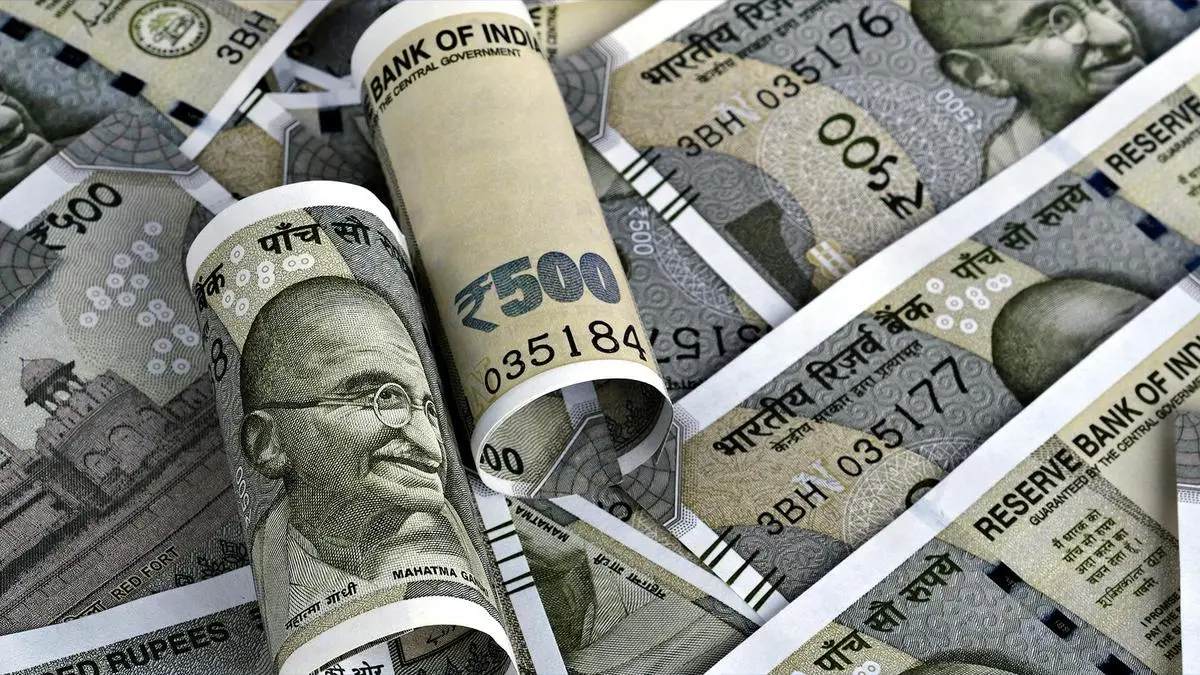
India's industrial credit growth doubled to 15.1% year-on-year in the fortnight ended April 30, 2026, up from 7% a year earlier, according to Reserve Bank data released Friday. The acceleration in lending to micro, small, and large industries signals that the domestic demand cycle is gaining momentum. It also tightens the policy calculus for the RBI as it weighs inflation risks against growth support.
The data, collected from 41 select banks covering about 95% of total non-food credit, showed non-food bank credit expanding 15.8% y/y versus 9.8% in the corresponding fortnight of 2025. The broad-based pickup in lending – spanning agriculture, services, and personal loans – forces a reassessment of the terminal repo rate and the transmission path through bond yields, the rupee, and equity sector rotation.
Industrial Credit Surge: 15.1% vs 7%
The headline industrial credit number masks important compositional shifts. Micro and small and large industries accelerated. Medium industries posted only steady growth. Among major sub-sectors, infrastructure, basic metal and metal products, all engineering, petroleum, coal products and nuclear fuels, and chemicals recorded higher y/y outstanding credit.
Subdued Sectors: Construction and Textiles
Construction, textiles, and rubber, plastic and their products saw marginally subdued credit growth. The divergence suggests that while capex-heavy and export-oriented industries are borrowing, domestic-facing cyclical sectors remain cautious. This pattern has implications for RBI's sectoral risk assessment and for equity investors positioning in Nifty Realty versus Nifty Infrastructure.
Agriculture and Services: Broadening the Base
Credit to agriculture and allied activities grew 13.7% y/y, up from 9.2% a year ago. The services sector registered 18.6% growth (versus 10.1%), driven by NBFCs, commercial real estate, trade, and professional services. The services acceleration is particularly relevant for RBI's inflation outlook. Services inflation tends to be stickier than goods inflation.
RBI Policy Path: Tightening Bias or Growth Accommodation?
The credit data arrives ahead of the June 2026 monetary policy meeting. The RBI has held the repo rate at 6.50% since February 2023. The tone has shifted hawkish in recent months as food inflation persists. The 15.1% industrial credit growth and 15.8% non-food credit growth reduce the urgency for a rate cut. They increase the probability of a hawkish hold or even a 25-basis-point hike if the May CPI print, due in June, exceeds the 5% upper tolerance band.
Key insight: The credit impulse is a lagging indicator of demand. The magnitude of acceleration – especially in industry and services – suggests the output gap is closing. That gives the RBI cover to prioritise inflation control over growth support. A shift that would directly affect bond yields and INR carry trades.
Bond Yields: Repricing the Terminal Rate
The 10-year Indian government bond yield has already risen 12 basis points in May, partly on expectations of a hawkish RBI. The credit data reinforces that repricing. If the RBI signals a higher terminal rate, the yield curve could bear-flatten. The short end would rise faster than the long end as rate hike expectations are pulled forward.
| Sector | April 2026 y/y Growth | April 2025 y/y Growth |
|---|
| Industrial | 15.1% | 7.0% |
| Agriculture | 13.7% | 9.2% |
| Services | 18.6% | 10.1% |
| Personal Loans | 16.0% | 11.9% |
Practical rule: When credit growth outpaces nominal GDP growth by a wide margin – current nominal GDP growth is around 10% – the RBI typically views it as a sign of overheating. The 15.8% non-food credit growth versus 10% nominal GDP implies a credit-to-GDP gap that the central bank will flag in its Financial Stability Report.
INR and EM Carry: The Dollar Impact
A hawkish RBI supports the Indian rupee by widening the rate differential with the Federal Reserve. The USD/INR pair has traded in a 83.00-83.50 range in May. If the RBI hikes in June, the carry advantage for INR-denominated bonds could attract foreign portfolio inflows, pushing the rupee toward 82.50. If the RBI holds but sounds dovish, the rupee could weaken past 83.50.
Gold and Oil: Indirect Transmission
Higher Indian rates are negative for gold in the short term. They increase the opportunity cost of holding non-yielding assets. The RBI's gold purchases – the central bank added 27 tonnes in Q1 2026 – provide a floor. For crude oil, India's strong credit growth implies robust demand. The Strait of Hormuz risk premium remains the dominant driver. The credit data is a secondary factor for oil traders.
Equity Sector Rotation: Banks, Infrastructure, Consumer
The credit data has direct implications for Indian equities. Bank Nifty is the most immediate beneficiary. Faster loan growth, especially in industry and services, supports net interest income and fee income. HDFC Bank, ICICI Bank, and State Bank of India are likely to see earnings upgrades if the trend persists.
Infrastructure and Capex Plays
Infrastructure credit growth accelerated. That supports Larsen & Toubro, Adani Ports, and NTPC. The government's capex push combined with private sector borrowing creates a tailwind for capital goods and engineering stocks.
Consumer and Auto: Mixed Signals
Personal loans grew 16% y/y. Vehicle loans and housing sustained robust growth. Credit card outstanding moderated, suggesting some consumer fatigue. Maruti Suzuki and Bajaj Finance may benefit from vehicle loan demand. Credit card-focused lenders like SBI Cards face headwinds.
Next Catalyst: May CPI and IIP Prints
The RBI will release May CPI data in mid-June, followed by industrial production (IIP) figures. If CPI prints above 5% and IIP confirms the credit growth signal, the case for a June rate hike strengthens. Traders should watch the May 2026 WPI data as well. Wholesale inflation tends to lead retail inflation in India.
For a broader perspective on how credit cycles interact with global risk appetite, see our market analysis section. The savings rate drop to 2.6% in the US has already reshaped dollar and gold paths. India's credit surge adds a domestic layer to the same macro story.
The RBI's next policy decision is scheduled for June 6-8, 2026. Until then, the 15.1% industrial credit growth number will anchor the hawkish narrative. Bond and equity traders must price a higher probability of a rate move.