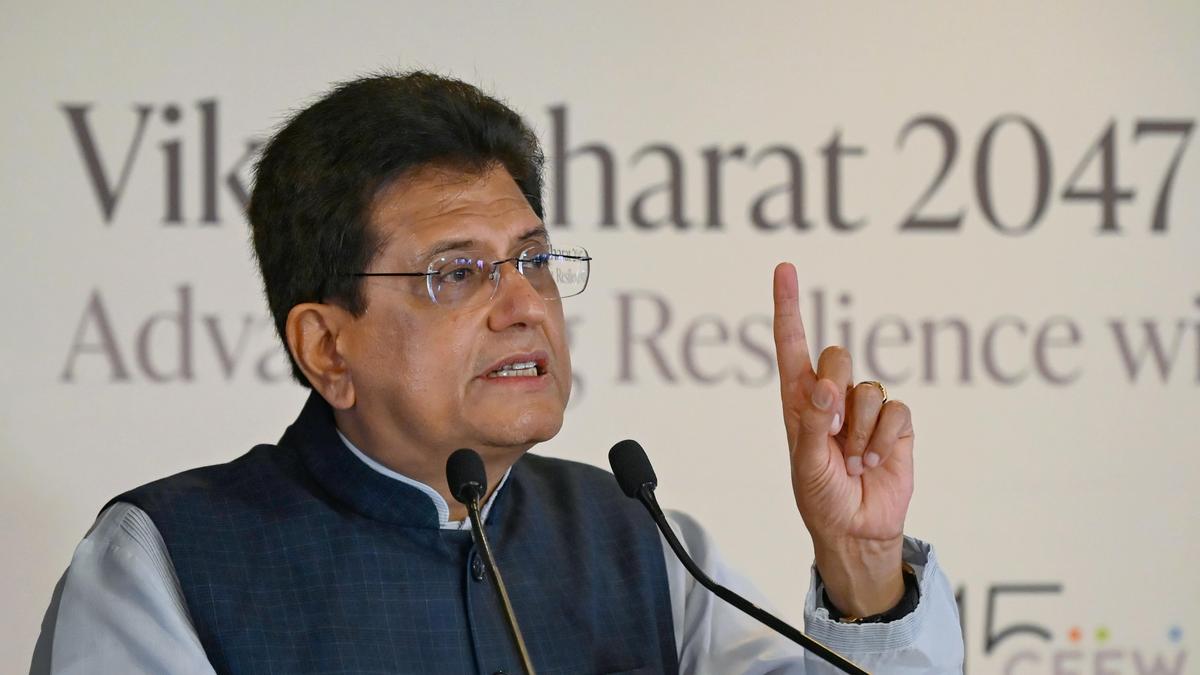
India reported an increase in export volumes during the first three weeks of April, defying expectations of a slowdown linked to escalating tensions in West Asia. Commerce and Industry Minister Piyush Goyal confirmed the growth, attributing the momentum to a strategic expansion of trade frameworks and active diplomatic engagement in global trade negotiations. This performance suggests that the country's export sector is maintaining a degree of insulation from regional geopolitical instability.
Strategic Trade Frameworks and Market Access
The resilience of India's export sector is tied to the implementation of Free Trade Agreements with the UAE, the UK, and the EU. These agreements serve as structural pillars that provide predictable market access for Indian goods, even as traditional shipping lanes face potential disruption from regional conflict. By diversifying its trade partners and formalizing terms through these agreements, India has reduced its reliance on single-market demand and mitigated the immediate impact of supply chain volatility.
Ongoing trade talks continue to occupy a central role in the government's strategy to sustain this growth. The ability to maintain export volume during a period of heightened uncertainty indicates that the underlying demand for Indian manufacturing and services remains robust. This development provides a counter-narrative to the broader concern that West Asian instability would immediately suppress emerging market export activity.
Sectoral Read-through and Regional Stability
The ability of Indian exporters to navigate the current environment provides a specific read-through for regional logistics and manufacturing sectors. While global trade remains sensitive to maritime security in the Red Sea and surrounding areas, the data from April suggests that established trade corridors are functioning with sufficient efficiency to support export growth. This stability is critical for sectors heavily reliant on consistent throughput, such as textiles, engineering goods, and refined petroleum products.
AlphaScala data currently tracks various utilities and industrial entities that may be impacted by these macro shifts. For instance, Southern Company (SO) maintains an Alpha Score of 45/100, reflecting a Mixed outlook within the utilities sector. Investors monitoring SO stock page should consider how regional trade stability influences energy demand and input costs for large-scale industrial operations. Broader stock market analysis suggests that while export growth is a positive indicator, the sustainability of these figures depends on the duration of the current geopolitical standoff.
The Path to Sustained Export Performance
The next concrete marker for this narrative will be the formal release of the full-month trade data for April. This report will clarify whether the initial three-week trend held through the end of the month or if late-period logistical pressures began to weigh on final figures. Beyond the monthly data, the progress of ongoing trade negotiations with the UK and EU will serve as the primary indicator of whether India can continue to expand its export footprint despite global headwinds. Any shifts in the status of these trade talks will likely dictate the next phase of market sentiment regarding India's industrial export capacity.