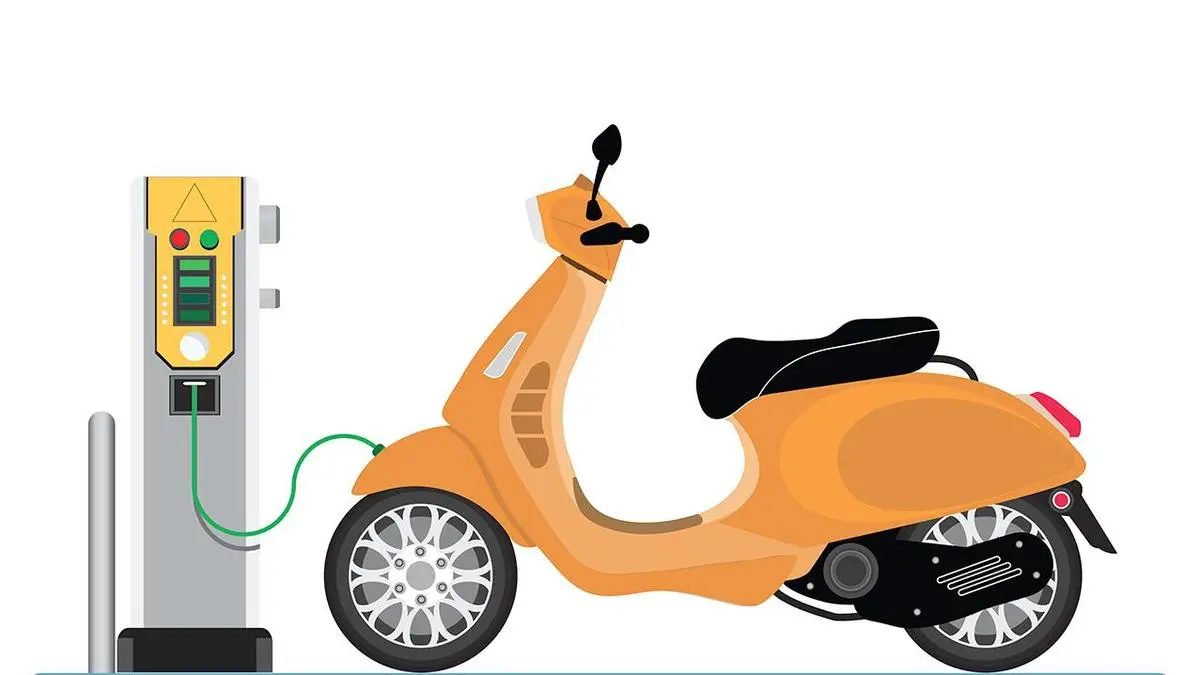
India's electric passenger vehicle sales jumped 75% in April 2026, reaching 23,506 units. The shift signals a move toward mass-market adoption and scale.
Alpha Score of 58 reflects moderate overall profile with moderate momentum, moderate value, moderate quality, moderate sentiment.
The Indian electric vehicle market recorded a significant expansion in April 2026, with retail sales for electric passenger vehicles (PVs) climbing 75.14 per cent year-on-year to 23,506 units. According to the Federation of Automobile Dealers Associations (FADA), this growth has pushed the electric segment's contribution to the overall PV market to 5.8 per cent, up from 3.7 per cent in April 2025. This shift represents a structural move toward electrification in the mass-market segment, where incumbents are aggressively scaling production to capture early-adopter demand.
Tata Motors remains the dominant force in the electric PV space, reporting 8,543 units in April, a 77 per cent increase over the previous year. Mahindra & Mahindra (M&M) secured the second position with 5,413 units, reflecting a 64 per cent year-on-year growth. JSW MG Motor India followed with 5,006 units. A notable development in the competitive landscape is the emergence of new entrants, with Vietnam-based VinFast selling 1,232 units, narrowly edging out Maruti Suzuki India, which recorded 1,231 units. This parity suggests that the market is entering a phase of intense competition where brand loyalty is being tested against product availability and pricing strategies.
In the luxury segment, BMW led with 300 units, more than doubling its 144-unit performance from April 2025. Mercedes-Benz India followed with 104 units, while Tesla recorded 43 units. While these volumes remain small relative to the mass market, the growth in luxury EV registrations indicates a broadening of the consumer base for high-end electric mobility.
The electric two-wheeler (2W) segment experienced a 61 per cent year-on-year growth, reaching 148,740 total units. However, the internal composition of this growth reveals significant divergence. TVS Motor Company led the market with 37,683 units, an 88.64 per cent jump, followed by Bajaj Auto with 32,898 units and Ather Energy with 27,034 units. Hero MotoCorp also saw substantial growth, reaching 15,238 units compared to 6,150 units in April 2025.
Conversely, Ola Electric faced a sharp contraction, with sales declining 38.60 per cent to 12,171 units. This decline highlights the sensitivity of the 2W segment to regulatory and incentive cycles. Sai Giridhar, Vice President at FADA, noted that the EV share in 2Ws moderated to 7.8 per cent in April from 9.79 per cent in March. The March figure was bolstered by pre-buying activity ahead of the expiration of specific mass-segment incentives. Despite this moderation, the current penetration remains above the fiscal year 2026 average of 6.5 per cent, suggesting that underlying demand remains resilient even as the market adjusts to the withdrawal of subsidies.
Electric three-wheeler sales grew by 3.30 per cent to 64,549 units, with M&M, Bajaj Auto, and TVS Motor Company emerging as the top three players. The most aggressive growth, however, occurred in the electric commercial vehicle segment, which saw a 149 per cent year-on-year surge to 2,245 units. This rapid expansion in commercial electrification is a critical indicator for logistics and fleet operators, suggesting that the total cost of ownership (TCO) parity is increasingly favoring electric variants for short-haul and urban delivery applications.
| Segment | April 2026 Units | April 2025 Units | Growth (%) |
|---|---|---|---|
| Electric PV | 23,506 | 13,421 | 75.14 |
| Electric 2W | 148,740 | 92,538 | 61.00 |
| Electric 3W | 64,549 | 62,489 | 3.30 |
| Electric CV | 2,245 | 902 | 149.00 |
The data suggests that the Indian EV sector is transitioning from a policy-driven growth phase to a competitive, product-led phase. For investors, the primary risk involves the sustainability of demand as government subsidies are phased out or recalibrated. The divergence between established players like TVS and Bajaj versus newer or more volatile players like Ola Electric underscores the importance of manufacturing scale and distribution reach. While the stock market analysis often focuses on high-level indices, the granular performance of these automotive segments provides a clearer picture of the industrial shift occurring within the broader manufacturing sector. As companies like M&M and Tata Motors continue to dominate, the ability to maintain margins while scaling production will be the primary determinant of long-term value creation in the Indian electric mobility space.
AI-drafted from named sources and checked against AlphaScala publishing rules before release. Direct quotes must match source text, low-information tables are removed, and thinner or higher-risk stories can be held for manual review.