India defends ethanol blending as safe, cites 20 crore vehicles on E20
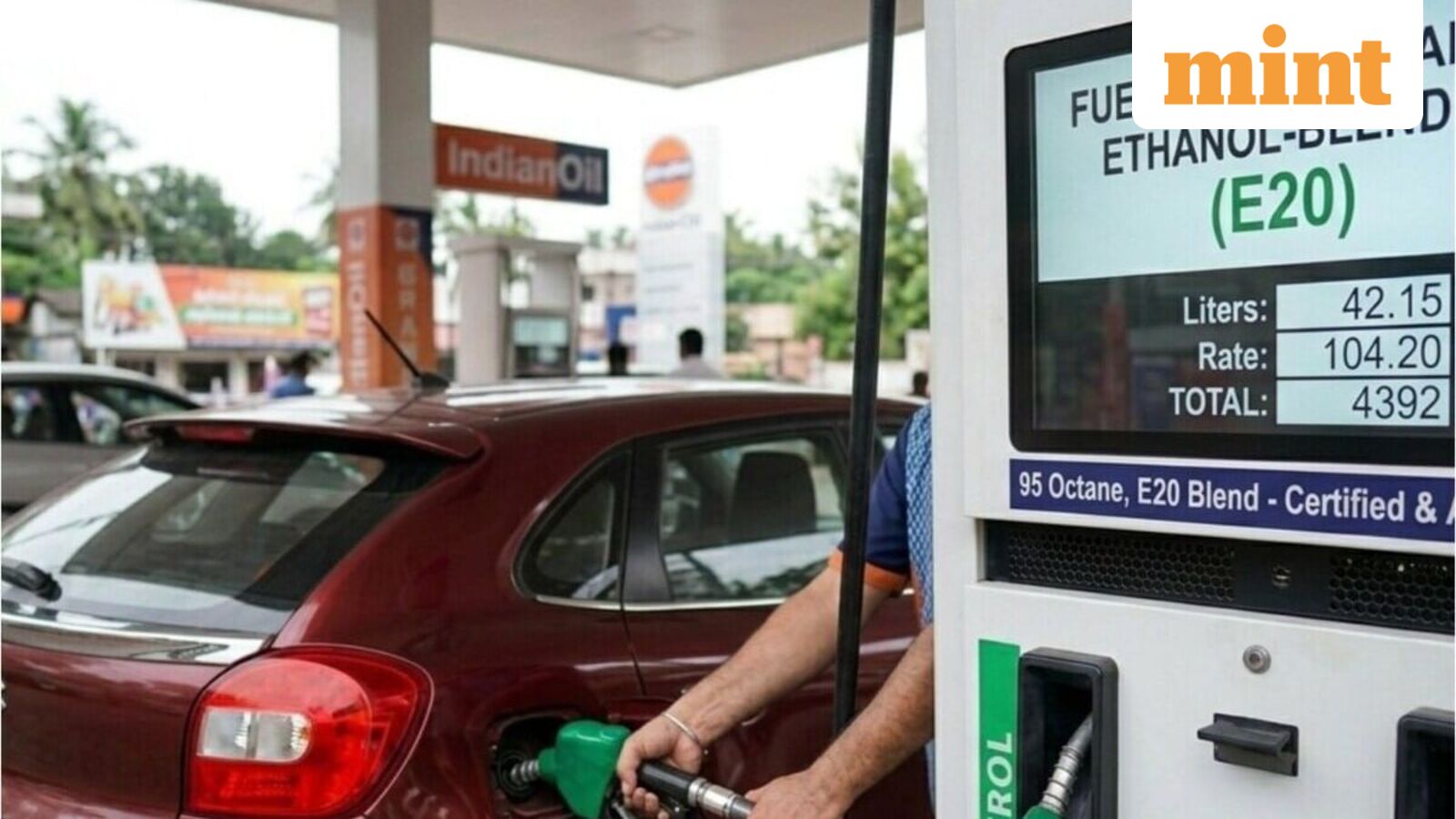
India's government says E20 petrol is safe after testing on 20 crore vehicles. Minister cites field data from manufacturers showing no engine damage, while ethanol blending helps shield consumers from global oil price volatility.
The Indian government on Thursday pushed back against concerns that its ethanol blending programme damages vehicle engines, citing extensive testing and field data from millions of vehicles running on the fuel.
Minister of State for Petroleum and Natural Gas Suresh Gopi, in a written reply to the Lok Sabha, said laboratory studies and field trials conducted by the Automotive Research Association of India (ARAI), the Society of Indian Automobile Manufacturers (SIAM), Indian Oil Corp (IOC), the Indian Institute of Petroleum and automobile manufacturers had all confirmed that E20 fuel was safe under prescribed standards.
"These studies also established that legacy vehicles do not exhibit any significant variation in performance or abnormal wear and tear due to E20," he said.
The government said E15 petrol had been in widespread use for more than three-and-a-half years and E19-E20 fuel for more than two-and-a-half years. Over 20 crore two-wheelers and more than three crore petrol cars are now running on these blends, the minister said, without any verified evidence of widespread engine failure or vehicle breakdown attributable to ethanol blending.
Gopi cited data from a leading automobile manufacturer that serviced 2.84 crore vehicles during 2025-26, including about 1.5 crore vehicles not originally certified as E20-compatible. The manufacturer reported no E20-linked corrosion, abnormal wear or reduction in component life. A leading two-wheeler manufacturer reported similar field experience, while another original equipment manufacturer found no evidence of ethanol-induced corrosion after tracking 1.4 crore E20-operated vehicles over an extended period, he said.
The Ethanol Blended Petrol (EBP) Programme was implemented through a phased and scientifically validated process in consultation with NITI Aayog, automobile manufacturers, ARAI, SIAM, Oil Marketing Companies (OMCs) and other technical institutions, the minister said.
On pricing, Gopi said public sector OMCs procured ethanol under a framework designed to ensure adequate supplies and provide remunerative prices to producers, rather than maximise company profits. The weighted average ex-mill price of ethanol for the 2025-26 supply year was ₹66.61 per litre, while the estimated procurement cost, including GST and transportation, was about ₹71 per litre for IOC, Hindustan Petroleum Corp and Bharat Petroleum Corp.
The government said petrol prices were market-determined and reflected international crude oil prices, exchange rates, freight, taxes, ethanol procurement costs and other operational expenses. Public sector OMCs incurred an average under-recovery of about ₹11 per litre on petrol between March and June 2026, amounting to around ₹21,300 crore, as retail prices remained below market-determined levels, the minister said.
The minister said India's dependence on crude oil imports made ethanol blending strategically important, particularly during the ongoing West Asian crisis. "During the recent West Asian crisis, despite sharp increases in global crude prices, India was able to shield consumers through calibrated Government interventions, diversified sourcing and the increasing contribution of domestically produced biofuels," he said.
The government said that while global crude prices had risen by around 70-80 per cent since February 2026, domestic fuel prices had increased by only about 7-8 per cent. When the Indian crude basket touched nearly USD 135 a barrel, petrol could have cost around ₹125 per litre at market prices, the minister said. Consumers continued to pay ₹94.77 per litre in Delhi, helped by OMCs procuring ethanol at about ₹70 per litre, Gopi added.
He described ethanol blending as "a strategic investment in energy security, price stability, farmer welfare and foreign exchange savings, rather than a revenue-generating exercise for OMCs."
Drafted by a large language model from the source reporting linked above, then screened by automated publishing checks. It is not read by a journalist before publication. Some articles cite our Alpha Score. Verify prices and figures against the original source. Educational coverage, not personalized advice.