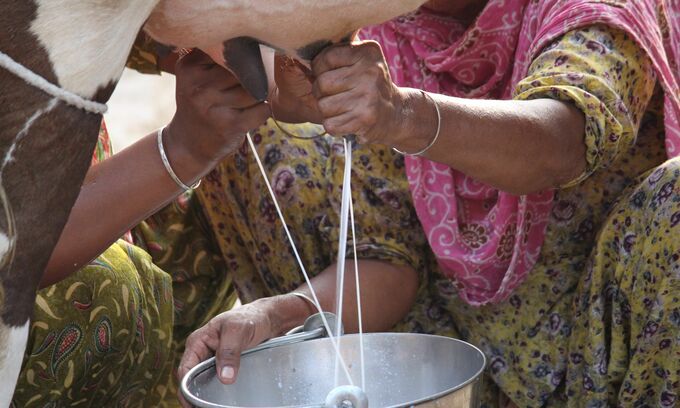
India's 245M metric ton milk output dwarfs the US — but the real signal is in the monsoon-driven export spread, not total volume.
India now produces 245 million metric tons of milk per year, more than double the U.S. total, according to VnExpress. The number is not a rounding error. It reflects a structural advantage in both herd size and distribution density, not simply population scale.
Two facts make that number stand out. First, India's dairy economy runs on buffalo milk, which carries higher fat content and is less volatile in price than the cow-milk benchmark used in most futures markets. Second, the supply chain is dominated by smallholders–260 million farmers operate on an average herd of two animals. That distribution means production is geographically diversified and less exposed to any single weather event, labor strike, or disease outbreak.
The common mistake is to treat India's output as a simple volume play. European and U.S. dairy markets rely on large-scale, capital-intensive operations that produce consistent, standardized milk for industrial processing. India's system produces mostly fluid milk consumed locally, with about 20% going to processing. The price signals are different: Indian wholesale milk prices track local fodder costs and monsoon timing, not the Global Dairy Trade auction. A trader watching GDT alone will miss the real supply dynamics of the world's largest producer.
A better framework starts with the India-specific price mechanism. The benchmark is the procurement price set by the Gujarat Cooperative Milk Marketing Federation (Amul), which covers about 35% of formal milk collection. Amul sets its price based on fat content and seasonality, not international parity. When monsoon rains are on track and fodder is cheap, domestic milk prices fall, narrowing the spread between Indian skim milk powder and international prices. That spread, when it widens past $500 per metric ton, historically triggers a surge in Indian SMP exports. The 2025 export jump of 28% followed exactly that pattern: a strong monsoon drove local prices down, the spread opened, and Indian SMP flooded into Southeast Asia and the Middle East.
The confirming factor to watch is the monsoon progress map from the India Meteorological Department. If June-August rainfall stays within 5% of the long-period average, fodder costs will stay low and production will hold above 240 million tons. Anything below that–a 10% deficit, which hit in 2023–tightens domestic supply and flips India from a potential exporter to a net buyer of butterfat from New Zealand and the EU. That shift alone can add $200-$300 per metric ton to global butter prices in the following quarter.
So the simple story is that India makes more milk than anyone. The better read is that the number only matters when you see what the price of fodder and the path of the monsoon do to the export spread. Watch the IMD rainfall data, not the GDT auction. That is where the real signal lives.
Prepared with AlphaScala editorial tooling from the source reporting linked above. Indexable analysis may include a cited Alpha Score value. Publishing checks screen each story before release. Educational coverage, not personalized advice.