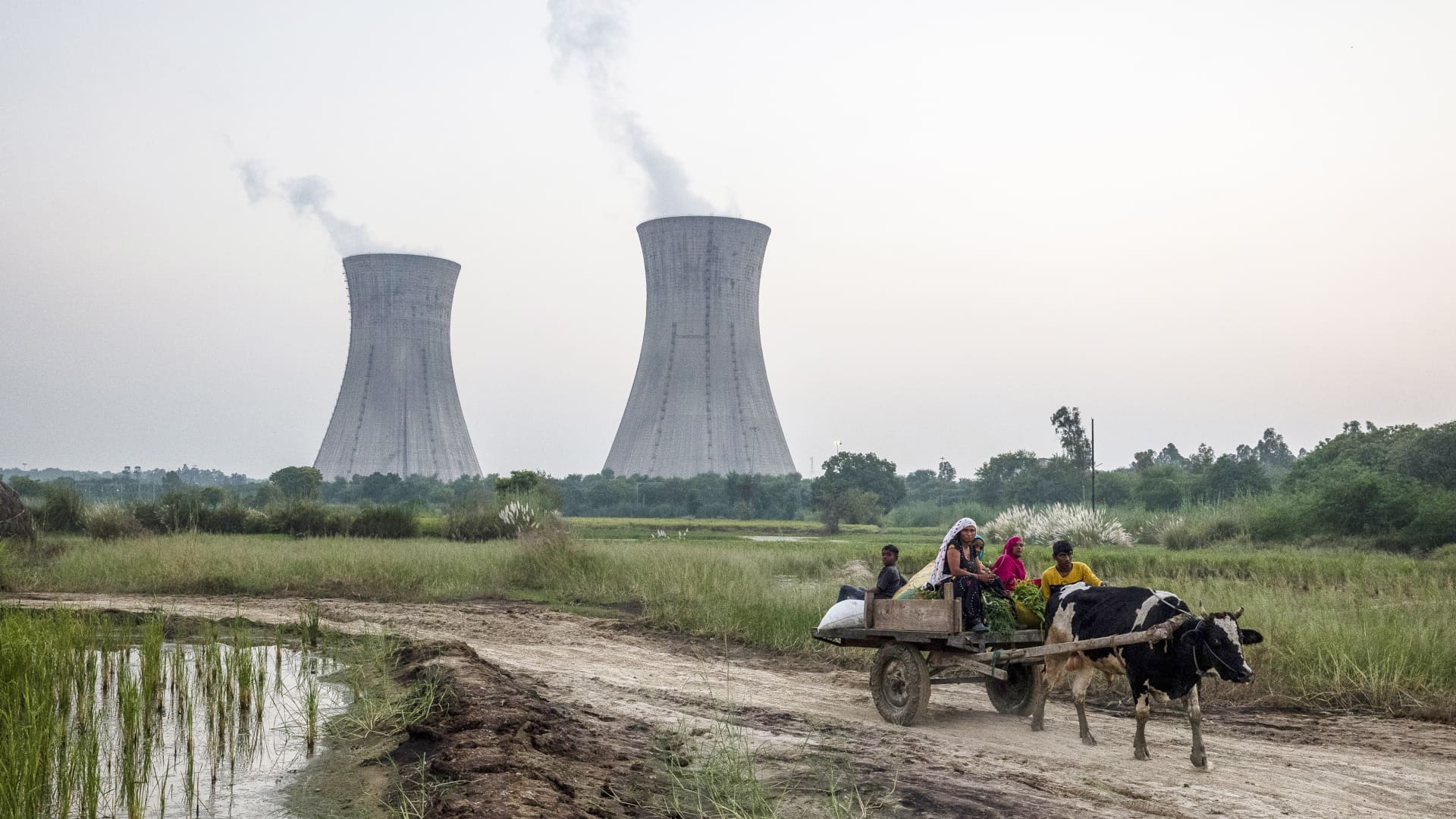
India’s energy landscape is undergoing a forced pivot back to carbon-intensive power generation, driven by the dual pressures of a record-breaking heatwave and geopolitical instability in the Middle East. As the world’s third-largest carbon dioxide emitter, the nation’s reliance on coal is not merely a structural reality but an immediate tactical response to the prohibitive costs of liquefied natural gas (LNG) and the urgent need to stabilize a grid under extreme thermal stress. For investors, this shift signals a prolonged period of elevated coal consumption that defies recent decarbonization narratives, creating a specific set of winners and losers across the energy and industrial sectors.
The Mechanism of Displacement
The primary driver of this shift is the economic unviability of gas-fired power. Approximately 60% of India’s LNG imports transit through the Strait of Hormuz, a critical maritime chokepoint currently threatened by the Iran-related conflict. This supply chain vulnerability has pushed LNG prices to levels that make gas-based power generation functionally obsolete for many utilities. According to Girish Madan, director of corporate ratings at Fitch Ratings in Singapore, the result is a direct substitution effect: coal-based power is absorbing the burden of peak summer demand that would otherwise be met by gas.
Data from S&P Global Energy confirms the scale of this transition. In April, coal-fired power generation reached 164.9 average gigawatts, a notable increase from the 160.7 average gigawatts recorded during the same period last year. This represents a sequential rise of 5.6 average gigawatts, or 3.5%, in a single month. While gas-fired generation saw a minor rebound in late April, it remains 1.5 average gigawatts below 2025 levels, illustrating that the displacement of gas by coal is not a temporary anomaly but a structural trend in the current power mix.
Industrial Substitution and Petcoke Constraints
The reliance on coal is extending beyond the power sector into heavy industry, specifically cement production. Firat Ergene, lead insights analyst for coal, petcoke, and cement at Kpler, notes that supply chain disruptions in the Middle East have significantly inflated the price of petroleum coke, a common fuel source for cement kilns. As petcoke prices rise, industrial operators are increasingly substituting it with coal to maintain production margins. This creates a secondary demand floor for coal that is independent of the power sector’s requirements, further tightening the domestic supply-demand balance.
This industrial shift is particularly relevant when evaluating companies like COKE stock page, which operates within the broader consumer defensive and logistics ecosystem. While the direct impact on such firms varies, the broader inflationary pressure on energy inputs serves as a persistent headwind for manufacturing and distribution costs across the Indian economy. Understanding these supply-chain linkages is essential for any stock market analysis focused on emerging market industrial exposure.
Climate Volatility as a Demand Multiplier
The intensity of the current heatwave acts as a force multiplier for energy demand. On April 27, data from the New Delhi-based platform AQI indicated that all 50 of the world’s hottest cities were located in India, with temperatures frequently exceeding 40 to 45 degrees Celsius. These conditions have forced the power grid to operate at maximum capacity, leaving little room for energy source diversification. The government’s May 2 release warns of continued heatwave conditions across Northwest, Central, and West India, suggesting that the pressure on coal-fired plants will persist through the summer months.
Looking ahead, the potential development of the El Niño climate effect introduces a significant upside risk to coal demand. Andre Lambine, lead APAC short-term power and renewables research at S&P Global Energy, estimates that a full-scale El Niño event could trigger a 10% year-over-year growth in coal-fired power generation. This would effectively stall India’s progress toward its stated goal of reducing the emissions intensity of its economy by 47% by 2035. While India remains committed to a net-zero target by 2070, the immediate reality is a reliance on fossil fuels that is likely to deepen before it moderates.
Assessing the Long-Term Execution Risk
Investors should distinguish between the long-term policy goals of the Indian government and the short-term operational necessities of its energy sector. While India has made progress in expanding non-fossil fuel capacity—which accounted for 52% of total installed capacity as of February—the intermittent nature of solar, wind, and hydropower means that coal remains the only reliable baseload provider during peak demand. With coal-fired plants still accounting for nearly 43% of total generation capacity, the sector is effectively locked into a high-carbon trajectory for the foreseeable future.
The risk for market participants is twofold. First, the continued reliance on coal subjects the Indian economy to global commodity price volatility, particularly if the conflict in the Middle East escalates further. Second, the disconnect between net-zero rhetoric and the reality of rising carbon emissions creates a regulatory risk, as international carbon-border adjustment mechanisms may eventually penalize Indian exports. For now, however, the immediate catalyst remains the heatwave-driven demand, which effectively guarantees that coal will remain the dominant fuel source for the Indian power grid throughout the current fiscal cycle.