India-UK Trade Pact Gains Momentum to Boost Bilateral Investment
Removing regulatory barriers and streamlining standards will drive cross-border capital flows. Watch for the next ministerial round to finalize terms.
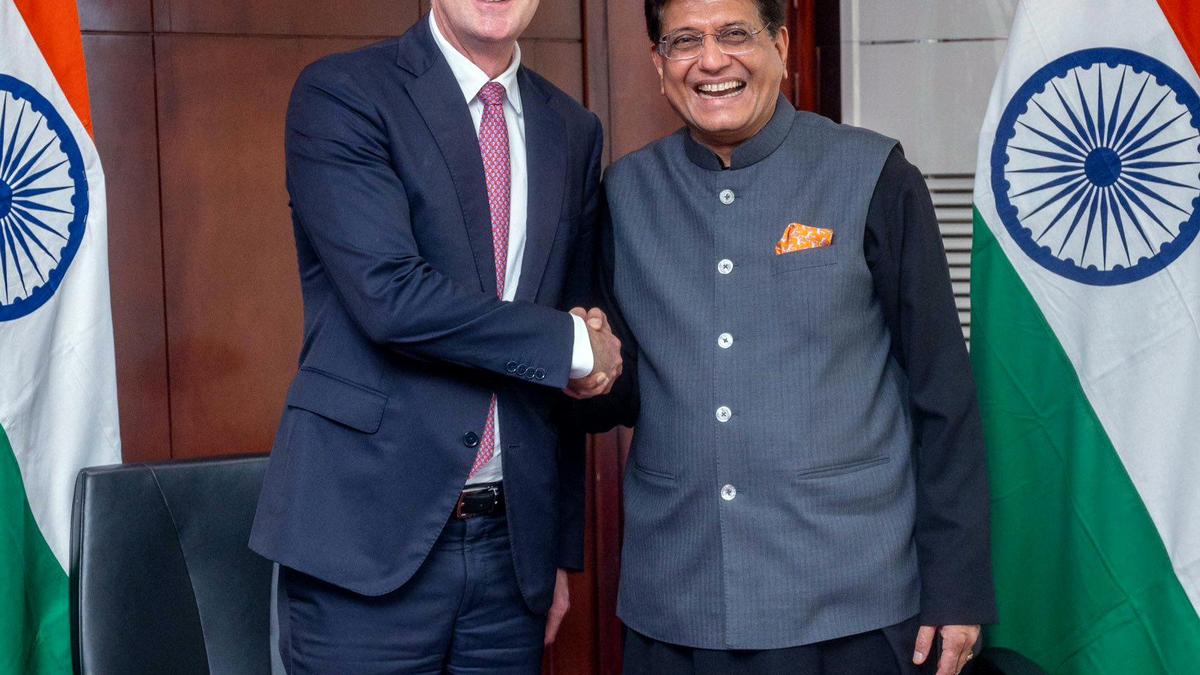
Commerce Minister Piyush Goyal and UK Secretary of State for Business and Trade Peter Kyle held a virtual meeting to accelerate the implementation of the Comprehensive Economic and Trade Agreement. The dialogue focused on removing existing barriers to market access and streamlining regulatory frameworks between the two nations. This push for a finalized trade pact serves as a primary mechanism to deepen bilateral investment flows and modernize commercial cooperation.
Strategic Alignment on Trade Barriers
The discussion centered on the specific technical hurdles that have previously delayed the completion of the agreement. By prioritizing the resolution of these friction points, both governments aim to create a more predictable environment for cross-border services and manufacturing. The focus remains on aligning standards to facilitate easier movement of goods, which is a critical step for sectors reliant on integrated global supply chains.
This development follows broader trends in stock market analysis where emerging market partnerships are increasingly viewed as hedges against regional supply chain instability. The ability of India and the UK to finalize these terms will dictate the pace of new capital deployment in high-growth industries like technology and green energy. Market participants are monitoring the progress of these talks as a bellwether for the wider geopolitical shift toward bilateral economic corridors.
Economic Impact and Future Integration
The potential implementation of the agreement is expected to lower tariffs on a wide range of products, providing a significant boost to export-oriented businesses. By reducing the cost of doing business, the pact could incentivize firms to expand their operational footprints in both jurisdictions. The current momentum suggests that both ministries are prioritizing the removal of administrative bottlenecks that have historically hampered trade volume growth.
Future updates will likely focus on the specific tariff schedules and the timeline for final ratification. The next concrete marker for this process will be the subsequent round of ministerial-level negotiations, which are expected to formalize the commitments discussed in this session. Observers should watch for official statements regarding the finalization of the services chapter, as this will provide the clearest signal of the agreement's long-term economic scope.
AI-drafted from named sources and checked against AlphaScala publishing rules before release. Direct quotes must match source text, low-information tables are removed, and thinner or higher-risk stories can be held for manual review.