Stocks● Neutral
In numbered graves, Ceuta buries 18 migrants from Spain's deadliest border crisis
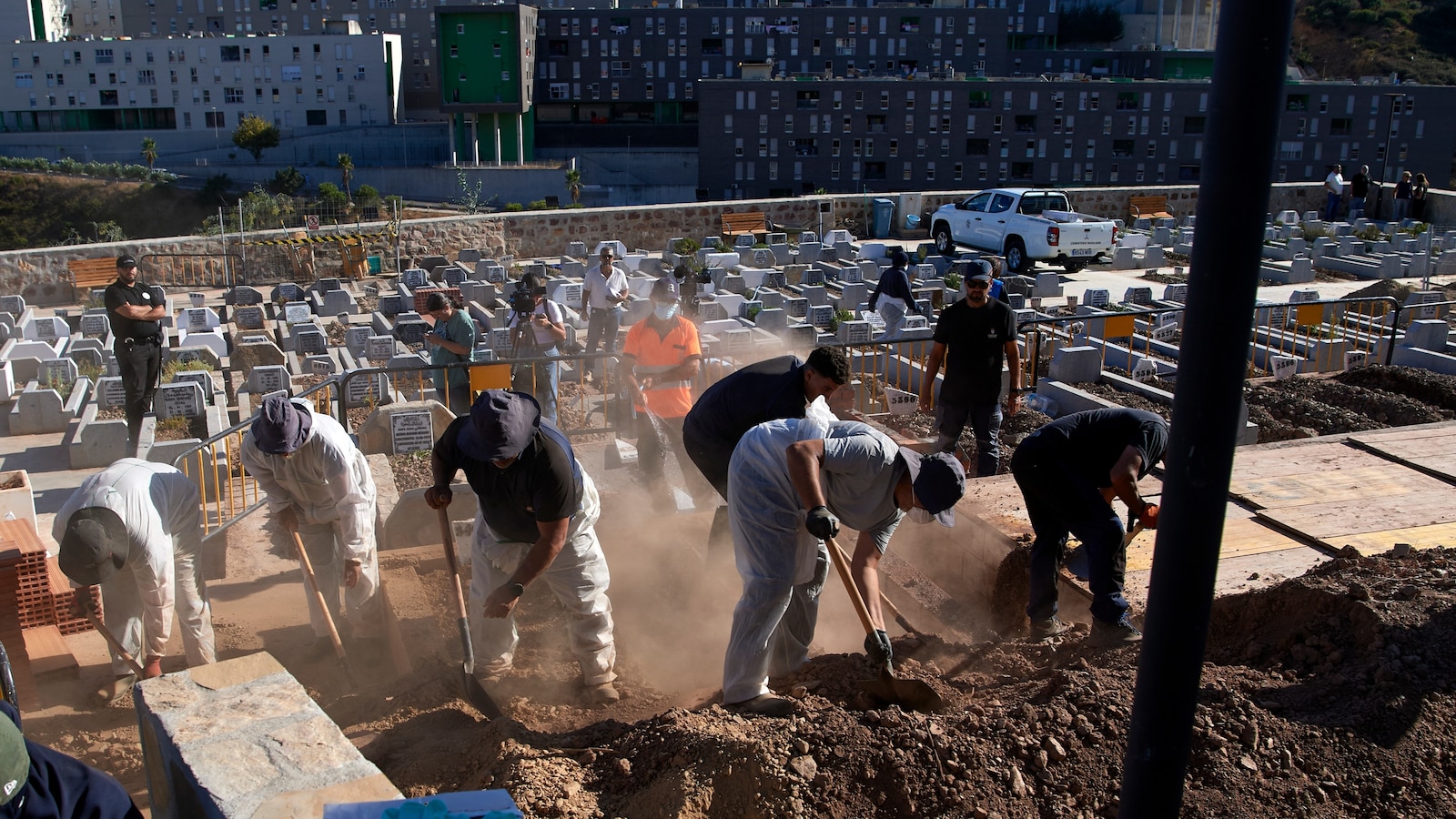
Eighteen unidentified migrants were buried in numbered graves at Ceuta's Muslim cemetery Friday, three weeks after 90+ died in Spain's deadliest border crisis. An NGO called the burials a 'new human tragedy.'
Continue with
CEUTA, Spain -- The body bags went into the ground one after another. An Islamic cleric recited prayers while gravediggers worked quickly, lowering the white bundles into cinderblock plots marked only with numbers. A small group of locals watched from a distance.
Eighteen migrants were laid to rest Friday in the Muslim cemetery at this Spanish enclave on the North African coast. They were among the more than 90 people who died three weeks ago during Spain's deadliest border incident. Most drowned or were killed in a stampede near a border checkpoint, according to the Associated Press.
The dead are unidentified. Said Mohammed, the cemetery's acting manager, told AP the graves were marked with numbered stones in case families claim the bodies later. All of the dead buried Friday were men.
More than 72,000 migrants poured into Ceuta in late July, driven by misinformation, poverty and a lack of jobs, migrants told AP. Spanish and Moroccan authorities blame social media rumors and human smuggling networks for the deadly event.