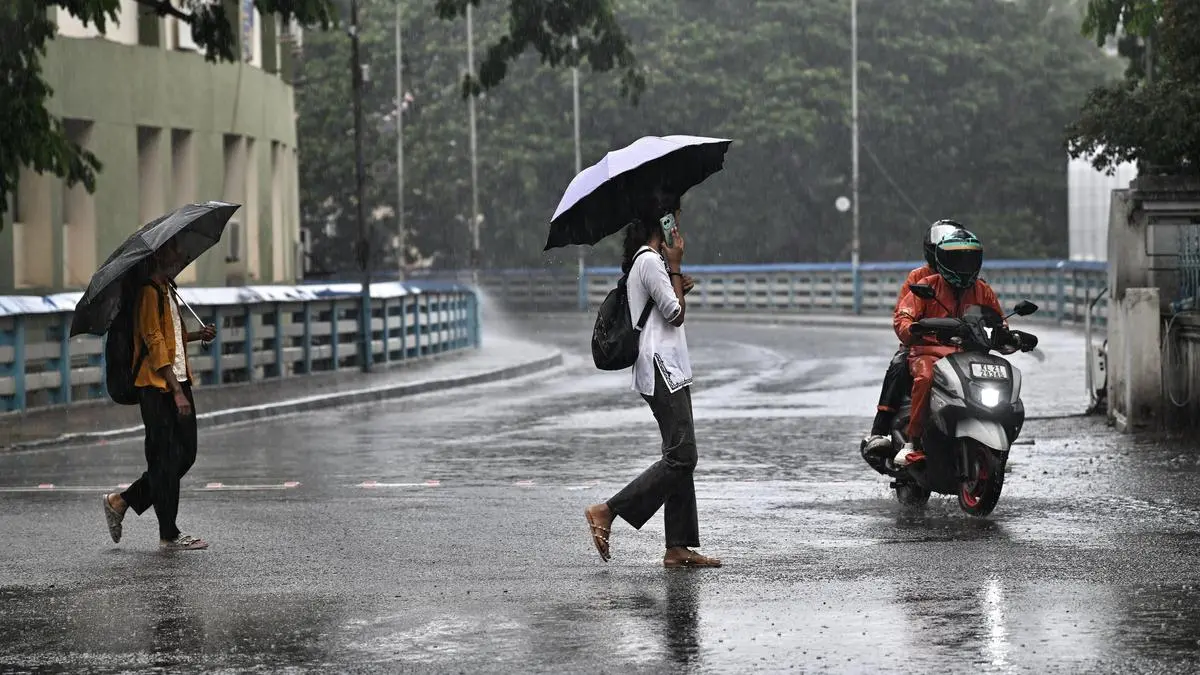
The India Meteorological Department (IMD) has cut its 2026 southwest monsoon forecast to 90% of the long period average (LPA) of 87 cm, placing the season in the "below normal" category. The revision from April's 92% forecast signals a worsening rainfall outlook for the June-September period, with direct consequences for agricultural output, rural demand, and inflation-sensitive sectors.
IMD Director General M Mohapatra said the south, central, and north-west regions will receive below-normal rain. The east and north-east meteorological sub-divisions may see normal precipitation, defined as 94-106% of LPA. The Monsoon Core Zone (MCZ), which covers most rainfed agriculture areas in central India, is likely to be below normal at less than 94% of LPA.
Regional Rainfall Breakdown: Central and South Face the Deficit
Central and Southern India: The Biggest Deficit
Quantitatively, rainfall is likely to be less than 94% of LPA in central and southern regions. The mostly irrigated north-west may receive below 92% of LPA. Normal to above-normal rainfall is expected only in isolated pockets of north-west, eastern parts of the south peninsula, and adjoining areas of east-central India.
East and North-East: The Relative Bright Spot
The east and north-east sub-divisions are the only areas where precipitation may fall within the normal range of 94-106% of LPA. This divergence matters because the east and north-east account for a smaller share of the national kharif crop output compared to central and southern India.
June Outlook: Heat Waves Compound the Rain Deficit
Below-Normal June Rains
Mohapatra said June rainfall is likely to be less than 92% of the June LPA of 165.4 cm. This early-season deficit is critical because June planting sets the trajectory for the entire kharif season.
Above-Normal Temperatures and Heat Waves
Above-normal monthly maximum temperatures are likely over most parts of the country, except some parts of central, north-west, and east India. Above-normal minimum temperatures are expected across most regions, except some parts of north-west, central, and adjoining south peninsular India.
Above-normal heat wave days are expected in June over many parts of Uttar Pradesh, Haryana, Punjab, Bihar, Odisha, Chhattisgarh, Gujarat, and Andhra Pradesh, as well as isolated regions of Maharashtra, Telangana, Himachal Pradesh, and Tamil Nadu. Below-normal heat wave days are likely only over Rajasthan and Jharkhand.
The ENSO and IOD Drivers: El Nino Transition Underway
El Nino Timing Matters
Currently neutral El Nino-Southern Oscillation (ENSO) conditions are transitioning towards El Nino conditions over the equatorial Pacific. Mohapatra said El Nino may emerge in June, though it may be weak. By July-August, ENSO may transition to a moderate El Nino. A strong El Nino is likely only after the monsoon season.
El Nino is historically associated with below-normal Indian monsoon rainfall. The timing of the transition matters: a weak El Nino in June may not suppress early rains severely, a moderate El Nino by July-August could deepen the deficit during the peak monsoon months.
Indian Ocean Dipole Remains Neutral
The latest MMCFS forecast indicates that current neutral Indian Ocean Dipole (IOD) conditions are likely to continue during the monsoon season. A positive IOD can offset some El Nino effects by enhancing rainfall over the Indian subcontinent. Neutral IOD offers no such buffer.
Agricultural and Economic Implications
Rainfed Agriculture at Risk
The MCZ covering central India is the country's primary rainfed farming belt. A below-normal monsoon in this zone directly threatens kharif crops such as paddy, soybean, cotton, and pulses. The IMD's forecast of less than 94% of LPA for the MCZ means farmers may face delayed sowing or crop stress.
Irrigation as a Partial Buffer
North-west India, which is mostly irrigated, may fare better despite receiving below 92% of LPA. Reservoir levels in the region depend on both monsoon rain and snowmelt from the Himalayas. A weak monsoon could still strain water resources.
Government Response and Advisories
Earth Sciences Secretary M Ravichandran said the IMD can issue weather-based forecasts, and the agriculture ministry will issue advisories accordingly. The IMD will release its July rainfall forecast in the last week of June. This timeline gives policymakers a narrow window to adjust sowing recommendations, seed distribution, and contingency planning.
Sector Read-Through: What This Means for Markets
Consumer Staples and Rural Demand
A below-normal monsoon typically pressures rural incomes and demand for fast-moving consumer goods (FMCG), two-wheelers, and tractors. Companies with high rural exposure may face headwinds in the second half of 2026.
Fertiliser and Agri-Input Stocks
A weak monsoon can reduce fertiliser application rates, affecting volumes for companies in the fertiliser and agrochemical space. If the government steps up subsidy support or contingency sowing, some demand may be preserved.
Food Inflation Risk
Below-normal rainfall raises the risk of food price inflation, particularly for vegetables, pulses, and edible oils. The Reserve Bank of India (RBI) may factor monsoon outcomes into its monetary policy stance. Persistent food inflation could delay any rate cut cycle.
Power and Water Utilities
Above-normal temperatures and heat waves increase electricity demand for cooling, which may benefit power generation companies. Weak monsoon rains reduce hydroelectric generation potential and strain water supply for thermal power plant cooling.
The AlphaScala View: Positioning for a Weak Monsoon
Alpha Score 44/100 for Southern Company (SO) reflects a mixed outlook in the utilities sector. While SO is a US-based utility and not directly exposed to Indian monsoon risk, the broader theme of weather-driven demand and water stress applies across global utility markets.
For Indian equities, the practical approach is to monitor the July forecast update in late June. If the IMD maintains or deepens its below-normal call, defensive positioning in staples with pricing power and underweight exposure to rural-discretionary names may be warranted.
Key insight: The monsoon forecast is not a single-event catalyst. The progression from neutral ENSO to moderate El Nino by July-August means the rainfall deficit may widen as the season advances. The June forecast matters for planting; the July-August forecast matters for yields.
Risk to watch: If El Nino strengthens faster than currently modelled, the IMD may need to revise its forecast again into the "deficient" category (below 90% of LPA). That scenario would amplify the risks outlined above.
What Confirms or Weakens the Thesis
A confirmed moderate El Nino by July would validate the below-normal monsoon outlook. A delayed El Nino onset or a positive IOD developing mid-season could improve rainfall prospects. The July forecast update from IMD is the next concrete marker.
For traders, the monsoon narrative intersects with global commodity prices, rupee movement, and RBI policy. A weak monsoon alone does not dictate market direction, it adds a layer of risk that compounds existing macro uncertainties.
The IMD's revised forecast sets the baseline for the kharif season. The next data point is the July rainfall forecast in late June, followed by weekly cumulative rainfall updates from June 1 onward.