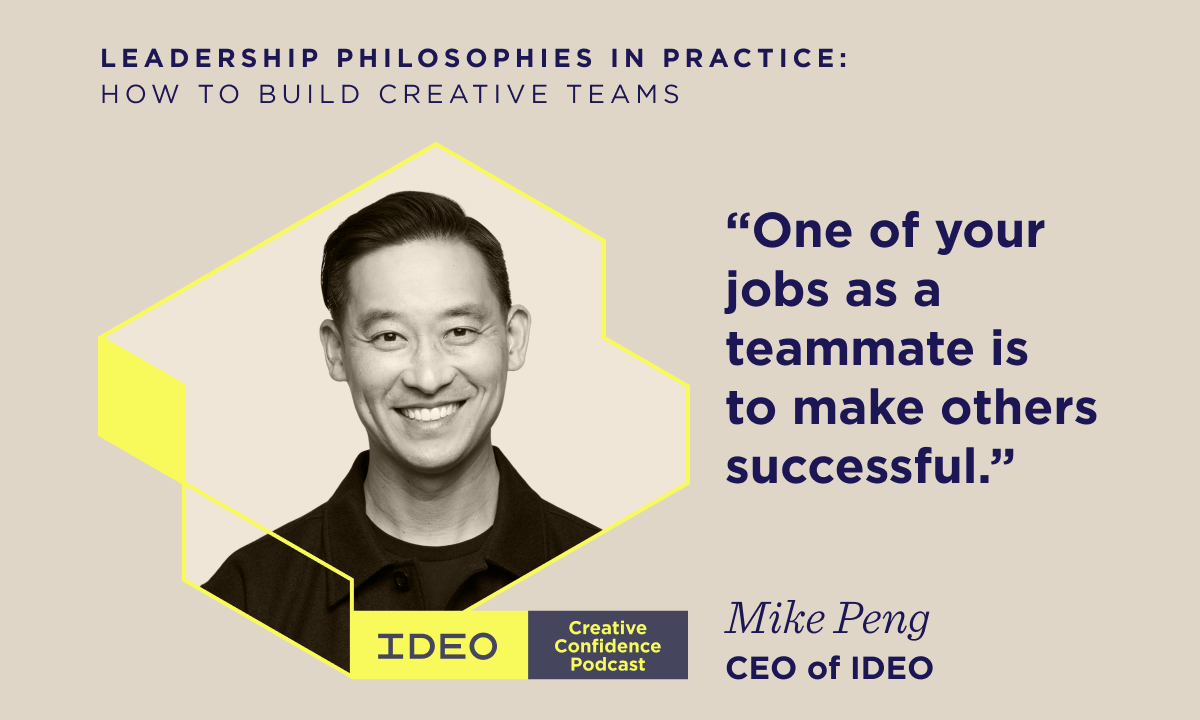
Mike Peng shares how small experiments, trust, and side projects can unlock creativity even when the system isn't designed for it.
In a recent episode of the Creative Confidence Podcast, IDEO CEO Mike Peng answered questions from listeners about creative leadership. He spoke about building teams, handling resistance, and staying inspired. The conversation built on an earlier episode about creative excellence.
Peng said leaders should start by acknowledging reality rather than fighting it. Instead of overhauling an entire system at once, he suggested modeling the behaviors they want to see. Small experiments often work better than big transformations, he said.
Resistance usually comes from fear, Peng said. It could be fear of failure, loss of control, or wasted effort. Rather than persuading skeptics with theory, he recommended using concrete examples and small experiments to show what is possible. Seeing real outcomes helps shift people from opposition to curiosity.
Peng said he does not try to build teams of people who think the same way. He looks for complementary strengths and different perspectives. Then he focuses on creating an environment where people genuinely want each other to succeed. When there is trust, psychological safety, and shared ownership, the work gets better than anything one person could produce alone, he said.
Great designers put in the reps, Peng said. They practice their craft over and over and let the work speak for itself. They stay deeply curious, know what they are good at, and hold strong opinions loosely. They also know how to use inspiration as fuel and how to influence others by communicating ideas in ways that resonate.
Peng said he does not believe careers move in straight lines anymore. With longer working lives, growth happens in chapters – periods of exploration, focus, reinvention, and learning. Leaders need to design systems that support movement and curiosity, not just promotions and titles.
When there is not a clear path forward, Peng said he has always turned to side projects. They let people choose the work they want to do and build the skills they want to develop. The key is being able to connect those projects back to where they want to go. Show how the work you have chosen prepares you for the role you are aiming for.
Leaders often overvalue planned inspiration, such as bringing in a great speaker, and undervalue how much inspiration is actually everywhere, Peng said. For him, inspiration is anything that sparks a question or feels unexpected. It can come from pop culture, reality TV, or music people might dismiss as lowbrow. What matters is staying open and asking why something sticks and how it might connect to your work.
Most organizations do not have IDEO's culture, Peng said, and that is often why they come to the firm in the first place. When creativity is not valued on its own, he focuses on connecting it to what stakeholders already care about: outcomes, impact, and results. He said he usually ends up reframing the original problem together with clients so they are answering the same question. That means meeting clients halfway, respecting their expertise, and building trust over time.
Peng said creative leadership starts with behavior, not authority. Lower the risk and curiosity follows. A team should share values, not perspectives. Practice builds skill, and influence gives it reach. People-centered careers are built for evolution, not ladders. The best time to prepare for the next role is before it appears. Inspiration is not something you schedule. It is something you stay open to. Ground creativity in shared goals and real outcomes.
Drafted by a large language model from the source reporting linked above, then screened by automated publishing checks. It is not read by a journalist before publication. Some articles cite our Alpha Score. Verify prices and figures against the original source. Educational coverage, not personalized advice.