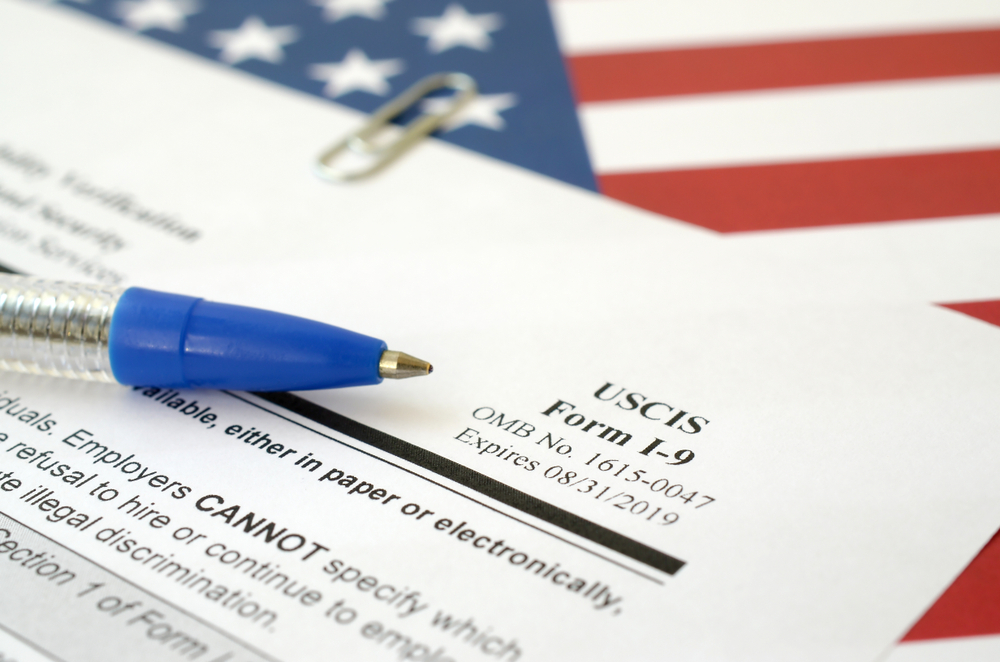
ICE updated its Form I-9 inspection fact sheet March 16. The update reclassified a range of previously curable errors as substantive violations subject to immediate fines. The change was made without notice or rulemaking. It widens the potential penalty base for any employer using US-based labor.
Since 1997, ICE followed the Virtue Memorandum. The memo divided errors into substantive violations, which draw fines, and technical or procedural violations, which carried a 10-business-day cure period. The new fact sheet collapses that distinction. Errors that now trigger fines include a missing employee date of birth or work authorization expiration date in Section 1. Incomplete document information in Section 2 is also now a substantive violation. The prior practice of offsetting Section 2 omissions by keeping copies of supporting documents no longer serves as a defense.
Penalties per form range from $288 to $2,861 under 8 C.F.R. § 274a.10(b)(2).
The figures are adjusted annually for inflation. Because fines run per form, the total scales with headcount. A company with 100 I-9s bearing errors that were once technical could face a penalty between $28,800 and $286,100. Knowing-hire or continuing-to-employ violations carry much higher penalties. ICE uses a scoring metric with multipliers and mitigation factors. The baseline exposure has risen.
The rule change hits employers with decentralized hiring or heavy use of seasonal labor. Companies that rely on E-Verify and have gaps in Social Security number fields or remote verification procedures are also exposed. The compliance burden falls hardest on firms where I-9 completion is handled by local HR or operations staff rather than a centralized compliance team. Large technology and retail employers, such as Apple Inc., which manages a workforce of over 160,000 across stores and contract partners, face some of the highest exposure to a systemic audit.
A proactive internal audit of I-9 forms is the primary mitigation. The audit should focus on the newly reclassified fields. Employers using remote verification must confirm they are active E-Verify participants. Their procedures must match the updated requirements. Legal review of electronic storage systems against DHS security standards is another step.
Guattery said uneven application across ICE field offices creates unpredictable risk. The absence of a rulemaking process means there is no formal comment period. No administrative challenge path exists before enforcement begins. Guattery said a stepped-up inspection cycle often accompanies policy changes of this type, accelerating the timeline for companies that have not audited their forms.
"The change took effect March 16 with no prior rulemaking period," said Peter D. Guattery, an attorney with Whiteford, Taylor & Preston. "Employers should review their I-9 compliance programs before they receive a notice of inspection."