Stocks● Neutral
I wanted to care for my parents as they got older. The reality is proving to be more difficult.
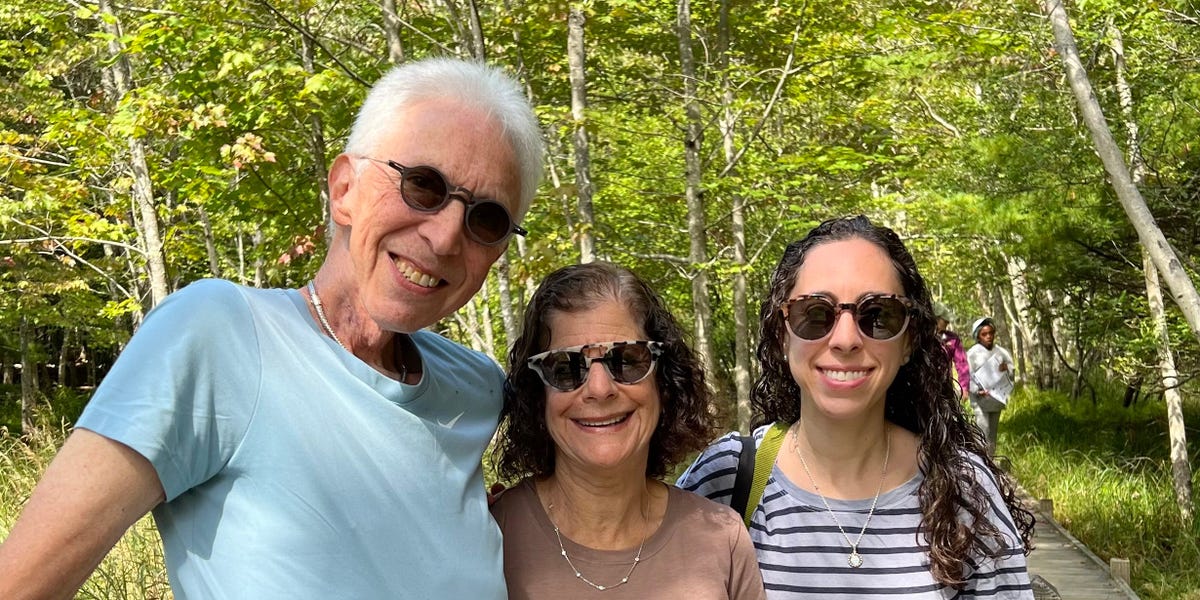
A woman with MS struggles to care for her aging parents. Her mother's surgery and father's cancer aftermath reveal the gap between her childhood promise and her physical limits.
Continue with
I told my mother a few months ago, one evening before bed, that I'd try to meet her at the hospital. I wasn't feeling great. I'd do my best. The next morning, my 71-year-old mother had surgery to lift her bladder. My 74-year-old father is a stage 4 tongue cancer survivor, now dealing with the downstream effects of radiation. I live with multiple sclerosis. So my mother, otherwise healthy, plays the caregiver role. She attended most of my appointments during the 13 years I searched for a diagnosis. She goes to every medical visit with my father. She was beside me for the birth of my older son in 2011 and later cared for him when my younger son was born in 2014.
Lying in the hospital bed that Monday morning, she threw our normal family narrative off kilter. I walked into her room just as she arrived post-recovery, the anesthesia still swirling through her system. "Can you fill this out for me?" she asked, handing me the cafeteria menu for her overnight stay. "I can't read right now," she continued, her words slightly slurred.
It hit me then. I'd never seen her like this: vulnerable and dependent. "Pasta alfredo with chicken or mac and cheese for dinner?" I asked, chuckling. I knew a discussion of the absurdity of a hospital offering only pasta options would follow. "I'll write-in chicken breast with vegetables and rice," I suggested, handing her the cranberry juice that had been left just beyond her reach. She asked me to plug in her cellphone charger.
As I moved around the room, my legs jittered. My hands shook. I've lived with MS for two decades. Stress makes it worse. I struggled to stand. I realized this disease that had affected my personal functioning and my ability to parent was now impeding my capacity to care for my mother. Something I'd always imagined I'd do without limits.
When I was younger, my paternal grandfather stayed at our home after surgery. I'd arrive home from school to find him resting in his favorite recliner. My maternal great-grandmother came to live with my grandmom during her final months. I remember watching my grandmother bring a turkey and cheese sandwich to her bedside. That scene is vivid.
Now the tables have turned. My mother takes my 94-year-old grandmother to run errands weekly and to doctor's visits. She's been back and forth to the hospital with her as she struggles with lymphedema and infections in her legs. One day I, too, will find myself in the caregiver role.
I've always aspired to personally care for my parents when the time came. My grandfather, living with Alzheimer's, was involved in an incident at his nursing home that still haunts me and my family 10 years later.