Hyundai's AI cuts crash-test research 90% and downtime 86%, showing industrial AI's information-compression role. A data pipeline built since 2019 made it possible.
Hyundai Motor Group said in an Aug. 12 press release that artificial intelligence has cut the time its engineers spend searching for and reviewing historical crash test cases by roughly 90%. The automaker is deploying AI across engineering and manufacturing, with a separate system for vehicle maintenance. An AI-based cart routing system cut unnecessary production downtime by 86%, and an AI tool used for maintenance shortened response times by 42%, the company said. Hyundai noted the figures are internal and have not been independently audited.
Those numbers point to an enterprise AI use case that differs from the chatbots and copilots dominating corporate adoption. Instead of automating the final decision, Hyundai is using AI to compress the information-heavy work employees complete before making that decision.
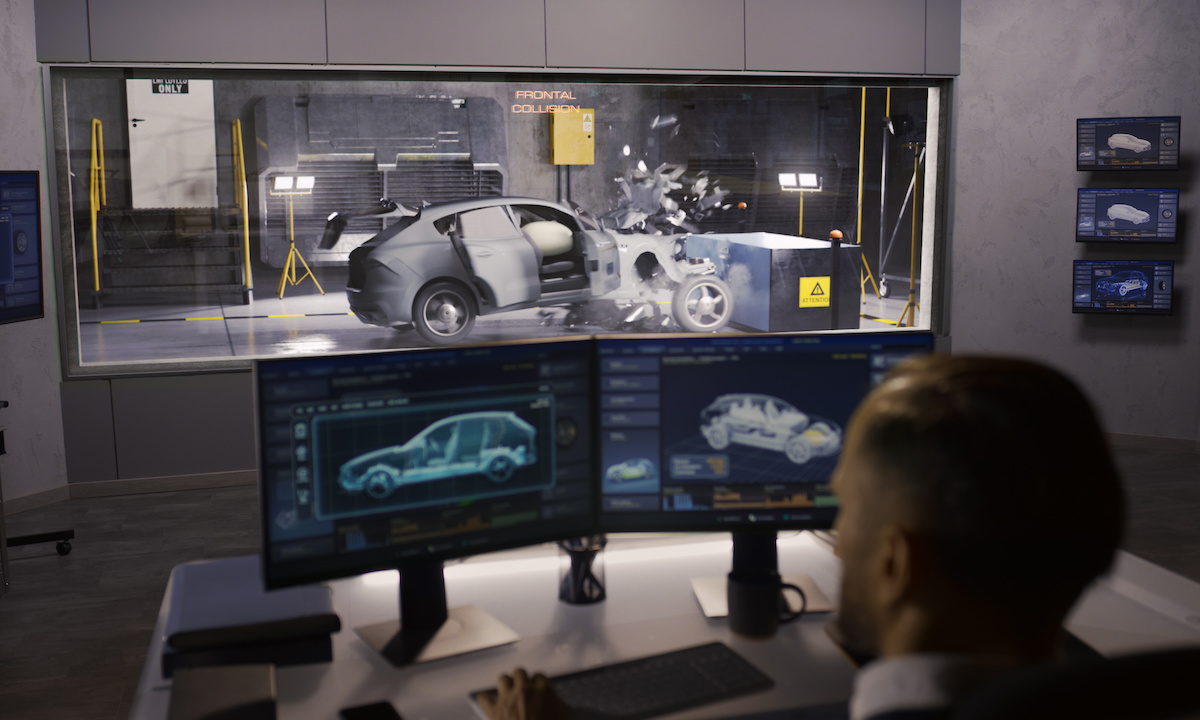
Crash testing generates large amounts of data. An engineer evaluating a new test may need to find comparable historical cases and examine vehicle conditions, injury mechanisms, previous analyses and the fixes made in response. Finding the right information across years of testing can become a job in itself.
Hyundai is using AI to make that historical knowledge easier to retrieve. Rather than manually searching through previous cases, engineers can use the Crash Safety AI Assistant to identify relevant historical tests and pull together the information needed to analyze a current result, cutting that search-and-review time by roughly 90%, Hyundai said.
Hyundai is applying the same principle to other operational bottlenecks. A reinforcement learning system now automatically reroutes parts-delivery carts around production-line disruptions. The system replaces a process that once required a worker to manually judge and restore cart sequencing whenever equipment errors tangled the route, cutting unnecessary downtime by 86%, according to Hyundai's release. A separate AI tool lets repair technicians describe symptoms or error codes in plain language and receive a diagnosis pulled from manuals and past service records, cutting maintenance response time by 42%.
The common thread is how Hyundai is using AI to reduce the time employees spend waiting for information and searching for an answer. This category of gain does not require solving the much harder problem of automating physical labor itself.
The industrial deployments sit inside a wider rollout. Hyundai's internal H Chat Pro platform, which gives employees access to ChatGPT and Gemini, as well as Claude, inside a company-controlled environment, surpassed 30,000 active users in July, roughly 80% of general employees at Hyundai Motor and Kia, Hyundai said. That adoption did not happen overnight. The company has been building a unified data infrastructure called the Global One Data Pipeline since 2019, standardizing how information flows across the company years before generative AI existed as a mainstream product. Hyundai called that early investment the actual foundation behind this week's numbers.
Hyundai is separately pushing into what it calls the Physical AI era through its ownership of Boston Dynamics, targeting annual robot production capacity of 30,000 units by 2028.
Drafted by a large language model from the source reporting linked above, then screened by automated publishing checks. It is not read by a journalist before publication. Some articles cite our Alpha Score. Verify prices and figures against the original source. Educational coverage, not personalized advice.