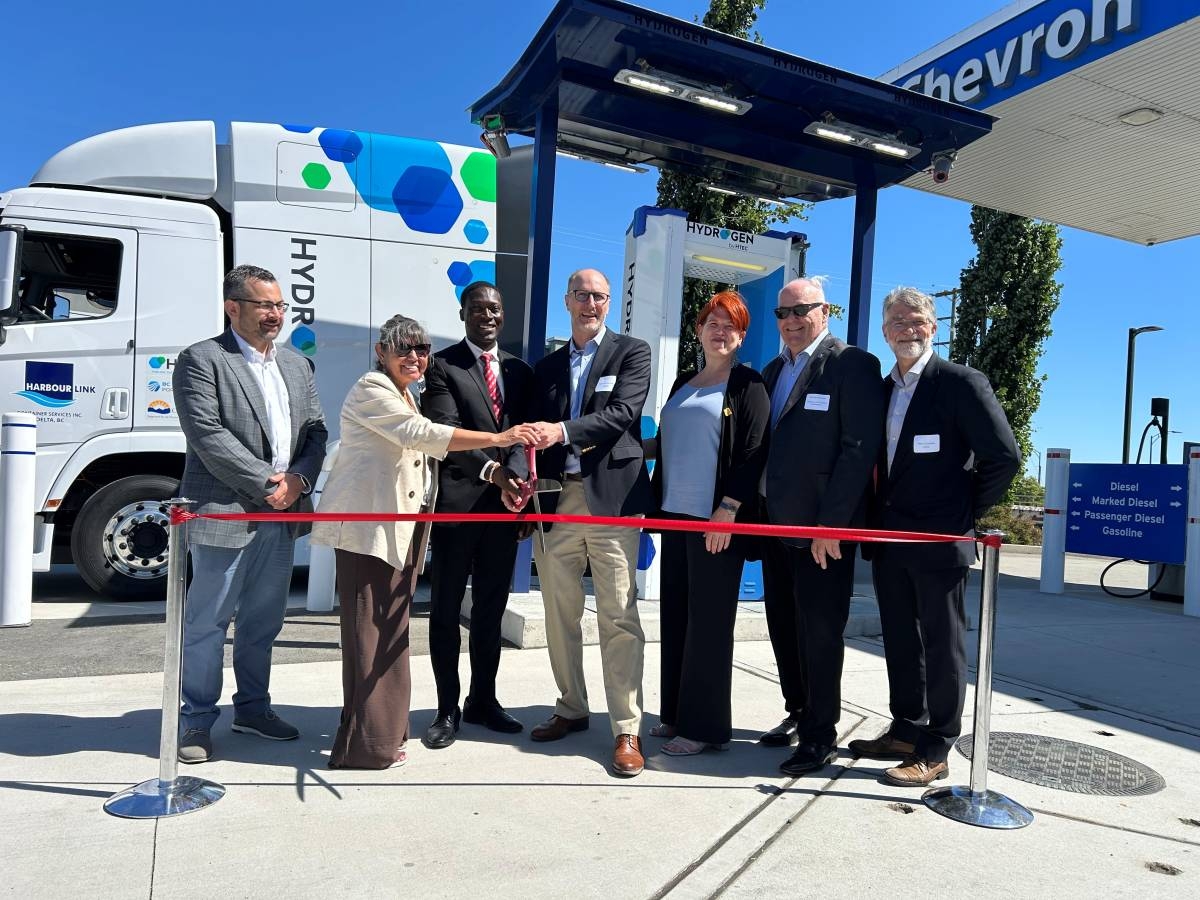
HTEC has opened what it calls Canada's first commercial heavy-duty hydrogen refueling station capable of 700 bar pressure, located on Tsawwassen First Nation land in British Columbia. The station supports an initial deployment of 12 Class 7 and 8 fuel cell electric trucks operating in drayage and regional freight routes. Those trucks are funded through the B.C. Hydrogen Truck Pilot Project and the B.C. Hydrogen Ports Project.
The station is part of HTEC's broader H2 Gateway Program, which includes a 1.8-tonne-per-day clean hydrogen production facility in Burnaby and a light-duty refueling network. Partners include Sunoco LP (SUN), which owns the cardlock site, the Canada Infrastructure Bank, Natural Resources Canada, and the B.C. government. Powertech Labs supplied the station equipment. Hyundai Motor Company provided the XCIENT Fuel Cell trucks. Harbour Link Container Services and Triple Eight Transport are the first fleet operators to lease them.
Tsawwassen First Nation Chief Laura Cassidy said the project shows that economic development can respect the land. "Our Treaty was the first step in making opportunities like this possible," she said in a statement. HTEC President Colin Armstrong said the station gives fleets confidence to operate fuel cell trucks in day-to-day logistics.
The station is a practical step forward but the real test will come in utilization and cost. Hydrogen for heavy trucking at 700 bar refueling pressure is more expensive than diesel on an energy-equivalent basis. The 12-truck pilot is small. The question is whether those early operators find enough savings in maintenance, uptime, or regulatory credits to offset the fuel premium.
Confirming factors would include sustained truck orders beyond the initial 12, demonstrated refueling reliability at the station, and a hydrogen price that trends toward the C$5–6 per kilogram range where total cost of ownership starts to compete with diesel. Invalidating factors would be if fleet operators shift to battery electric alternatives for regional routes, or if HTEC's single production plant cannot meet scaling demand without supply interruptions.
The next concrete marker is data from the first few months of truck operations. Harbour Link's executive vice president, John Bourbonniere, said the pilot allows evaluation of cutting-edge technology in real conditions and that the data will inform future investments. Sunoco's role as a fuel distribution partner could expand if the station proves viable.
The station is now open for commercial use. The first trucks are expected to begin refueling in the coming weeks.