Quick-commerce didn't invent a new need. It walked into the obvious gap between the corner store and the e-commerce warehouse. The pattern repeats across markets.
Quick-commerce occupies a gap that was visible and unowned. The space between the neighborhood kirana store and full e-commerce sat empty for years. Not because it was hard to see. Because it belonged to no one's job description.
On one side sits the kirana store: close enough to walk to, open when needed, stocked for the immediate moment. On the other sits full e-commerce: endless selection, competitive pricing, a delivery window measured in days. Near and limited. Complete and slow. The seam between two established categories was nobody's business, right up until someone decided it was theirs.
The kirana owner was not going to build a fifteen-minute delivery app. The e-commerce giant was not going to reinvent last-mile logistics around a single neighborhood.
This pattern is the one worth tracking across markets. The strongest product ideas are rarely new categories. They are unowned space between two existing ones. Space that existed the moment both categories did. Sitting there the whole time. Waiting for someone to stop treating it as the awkward seam between two businesses and start treating it as a business of its own.
The musician Brian Eno once complained that the problem with computers was they did not have enough Africa in them. Africa, in that framing, is not a place. It is an attribute. A direction you can push almost anything toward, Eno said. Push a spreadsheet in that direction. Push a password. You do not know what you will get until you push. That is the point. It turns invention into a search problem instead of a creation problem.
Most creative or product work starts with a blank page and a vague sense of "make something good." That is a genuinely hard place to start from. Starting instead with an existing thing and a specific direction to push it. More automated, more social, more local, more permanent. That turns invention into a search problem. You are not asking what is possible. You are asking what this becomes if you lean on it hard enough in one direction. Then you react to what shows up.
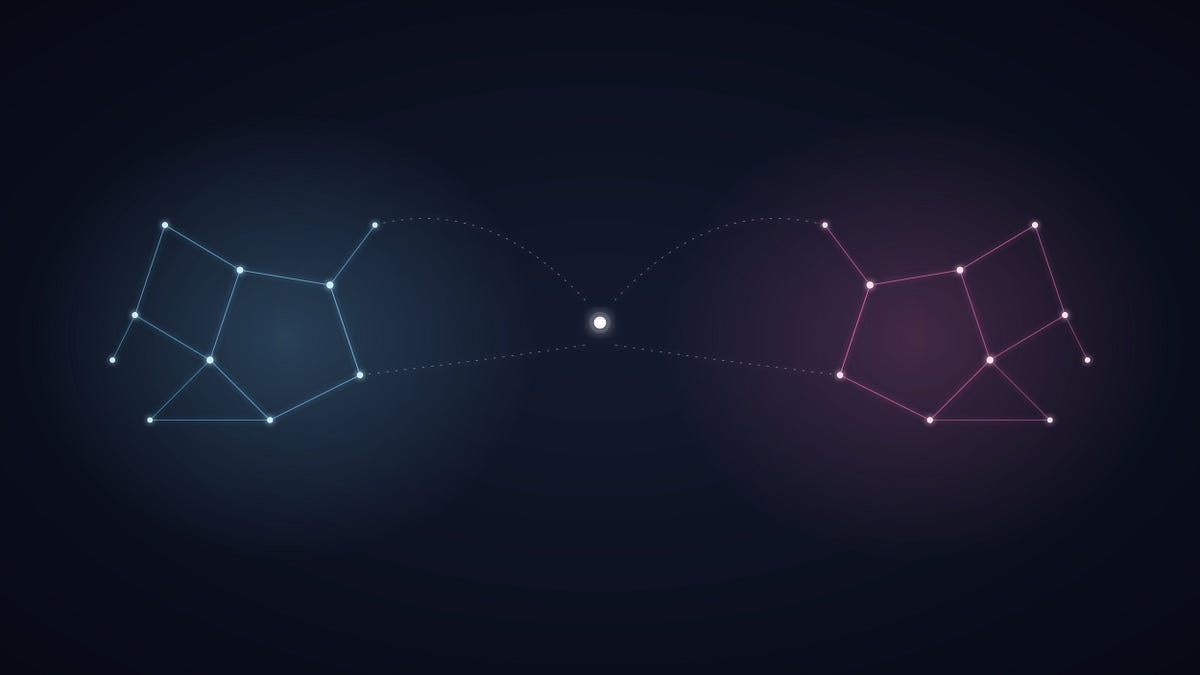
The bigger move is noticing that between any two known things sits a stretch of space that is real, mapped, and empty. Not because it is impossible to build there. Because nobody has looked yet. The space belonged to no one's job description. It seemed unfashionable until suddenly it was not.
Gaps like this do not stay empty because they are hard to see. They stay empty because they do not belong to anyone. The actual skill in play is usually not creativity in the conventional sense. It is closer to trespassing. A willingness to walk into a space that two established players have implicitly agreed not to occupy. A willingness to build there anyway.
The third move in this cluster is subtler. Noticing that a problem in one field has the same underlying shape as a problem in a completely unrelated one. A pattern in geology sharing a structure with a pattern in immunology. Two fields separated by every institutional boundary that exists. Sharing a shape that almost nobody is positioned to notice. Almost nobody is fluent in both.
That gap is different from the quick-commerce example. That one was visible to anyone paying attention to two categories they already understood. This one is invisible by construction. It requires expertise in two disconnected domains simultaneously. That is a rare enough combination in any single human that most of these overlaps simply never get found. A solution sitting comfortably in supply chain logistics might be exactly the shape needed for a problem in epidemic modeling. The two communities working on each would have no natural reason to ever compare notes. The gap is not unowned because nobody wants it. It is unowned because almost nobody is standing in both rooms at once.
All three of these moves are the same underlying move at different distances. Pushing a known thing in a direction. Walking into the visible gap between two categories. Close by, it looks like product intuition. Zoom out a bit, it looks like the kind of cross-functional insight that only shows up when someone sits at the intersection of two teams. Zoom out further, it stops looking like something a single person can plausibly do. It starts looking like something that needs a system holding the entire map at once. A system able to notice a shared shape between fields no individual has the bandwidth to master both of.
The gap was always there, mapped, waiting. Quick-commerce built in it. The pattern repeats across markets.
Drafted by a large language model from the source reporting linked above, then screened by automated publishing checks. It is not read by a journalist before publication. Some articles cite our Alpha Score. Verify prices and figures against the original source. Educational coverage, not personalized advice.