Stocks● Neutral
How Operational Efficiency Lifts Margins and Stock Performance
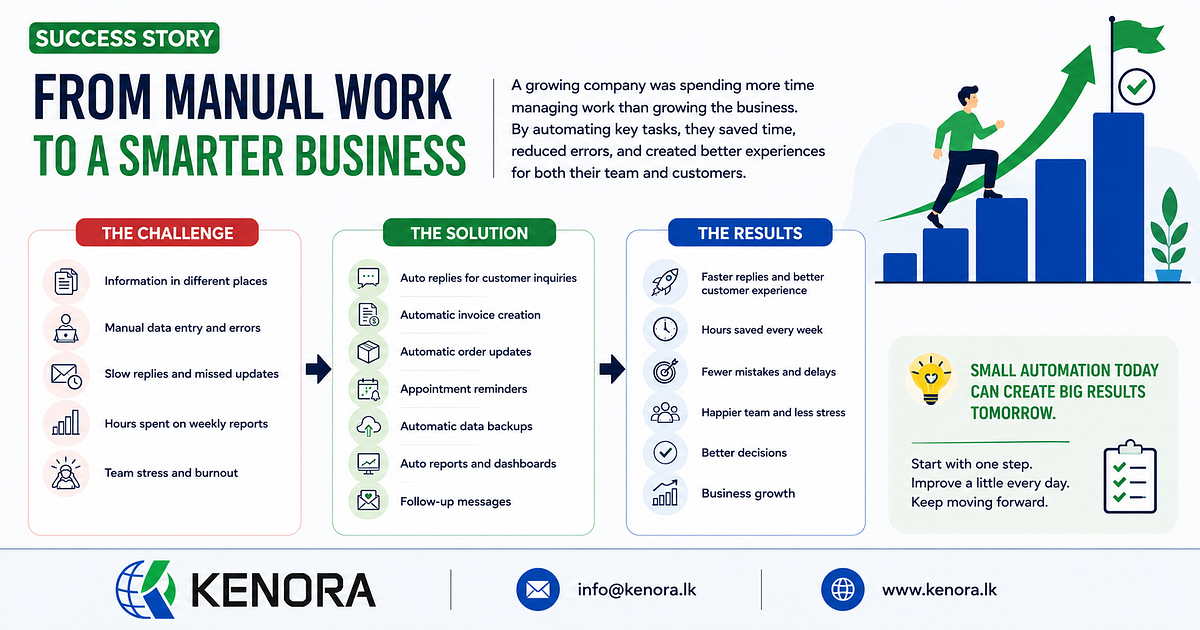
A business turnaround story shows how automation and process fixes can drive margin expansion. The lesson applies to publicly traded companies: operational efficiency lifts stock performance.
Continue with
A growing company hit a wall. New customers kept signing up, orders kept coming in. On paper, the business looked fine. Behind the scenes, staff were copying data between systems by hand, invoices were typed manually, and customer updates went out one at a time. Managers spent hours each week building reports from scratch. The team worked harder each month, yet the pile of work never shrank.
A customer called to check an order; support could not find the latest update. The warehouse had one version, sales another. Nobody knew which was right. Each small mistake chipped at trust. The owners looked at technology instead of hiring more people. They started with one question: what tasks repeat every day and don't truly need a human?
They automated customer messages first. Every message got an instant reply, and the right team was notified. Customers stopped wondering if their query had been received. Next came invoices – generated automatically when an order came in. Order updates followed, so customers no longer called to check progress. Step by step, the daily grind lifted.
The biggest surprise was a happier team. Instead of copying information between systems, staff had time to solve real problems. Managers planned for growth instead of building reports from scratch. The office felt calmer. Customers noticed: replies came faster, invoices arrived on time, questions got answered sooner. Many said doing business with the company had simply become easier. Nothing about the product changed – only how the business worked behind the scenes.
With data now collected automatically, managers saw current numbers in minutes instead of hours. Better information led to better decisions. A year later, the business had grown again. More customers, more orders, more people. This time the systems were ready. Nobody stayed late every night. The day-to-day work stayed under control.