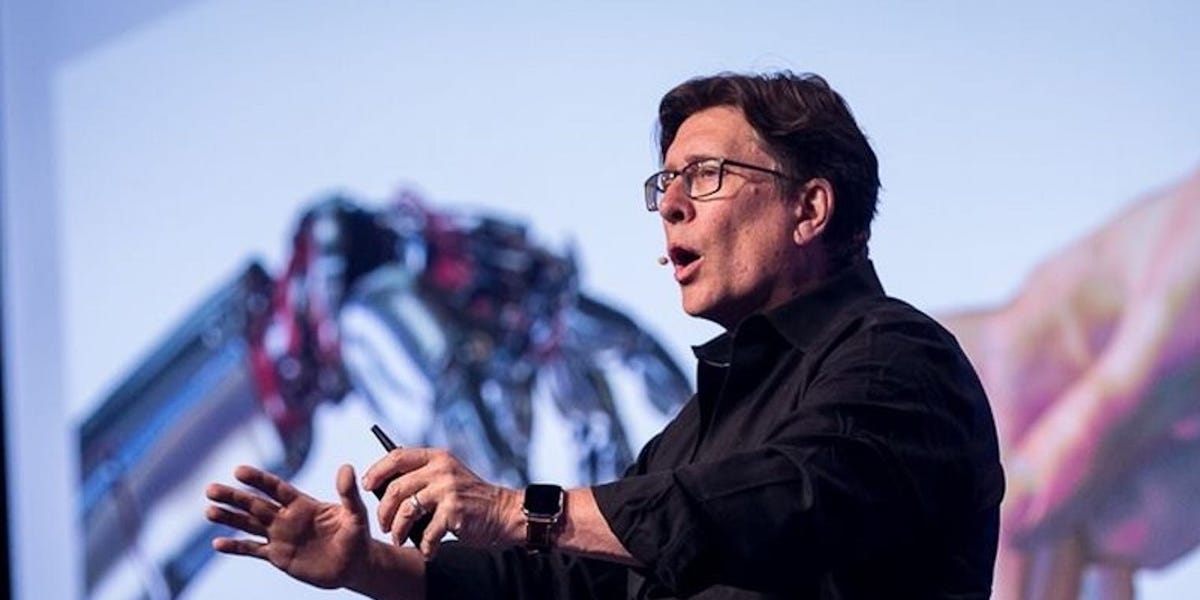
John Nosta calls it 'The Great Inversion'. AI that reshapes thinking, not just tools. Research warns of cognitive surrender as users defer to machines.
The old pattern was building tools to change the world: faster cars, better machines, more efficient factories. AI may be the first widely adopted technology that does the reverse – it changes how people think, learn, and solve problems, rather than just reshaping the physical environment.
John Nosta, an innovation theorist who founded the think tank NostaLab, calls this shift "The Great Inversion."
"Progress seems to be increasingly about making humans better for the technological world we've created," Nosta told Business Insider.
Historically, inventions helped people overcome physical constraints. The wheel let people move heavy loads. The car expanded how far and fast travel was possible. AI is different because its primary impact is cognitive, not physical. It does not simply change the environment – it changes how people approach reasoning and decision-making.
"We're now into the cognitive age, where what's changing is the nature of thought," Nosta said. "The path from A to B is getting shorter and shorter, and we are deferring cognition to the machine."
Research backs the concern. Oxford University Press warned last year that generative AI can make students faster and more fluent while quietly reducing the depth of learning that comes from pausing, questioning, and working through problems independently. A separate report from the Work AI Institute found that AI often creates an illusion of expertise, making users feel more capable even as some underlying skills erode.
Nosta sees AI as one example of a broader trend. He points to GLP-1 drugs such as Ozempic, originally developed for diabetes and now widely used for weight loss. Researchers are studying whether the same drugs reduce cravings for alcohol, nicotine, and compulsive behaviors. The pattern is the same: instead of redesigning environments to suit people, the innovation modifies human behavior to function within existing environments. "The organism is the project," Nosta said.
Still, Nosta does not argue that AI is inherently harmful. He distinguishes between "iterative intelligence," where people use AI to deepen understanding through conversation, and "cognitive surrender," where they accept AI-generated answers without engaging the thinking process.
Vivienne Ming, chief scientist at the Possibility Institute, raised a similar point in March. Her research found that most AI users rely on the technology to think less, while a minority use it to think better. She described the preferred mode as "productive friction" – using AI as a collaborator, exploring ideas, challenging assumptions, and pushing problems forward. Nosta calls the same concept "iterative intelligence."
"The ability to engage with technology, with large language models, is an extraordinary opportunity for humanity to advance itself," Nosta said.
The condition, he said, is that people resist what he calls the "myth" that AI's greatest value is speed. Using it as a thinking partner, even if that means spending more time wrestling with ideas, is the path that preserves human cognition.
Drafted by a large language model from the source reporting linked above, then screened by automated publishing checks. It is not read by a journalist before publication. Some articles cite our Alpha Score. Verify prices and figures against the original source. Educational coverage, not personalized advice.