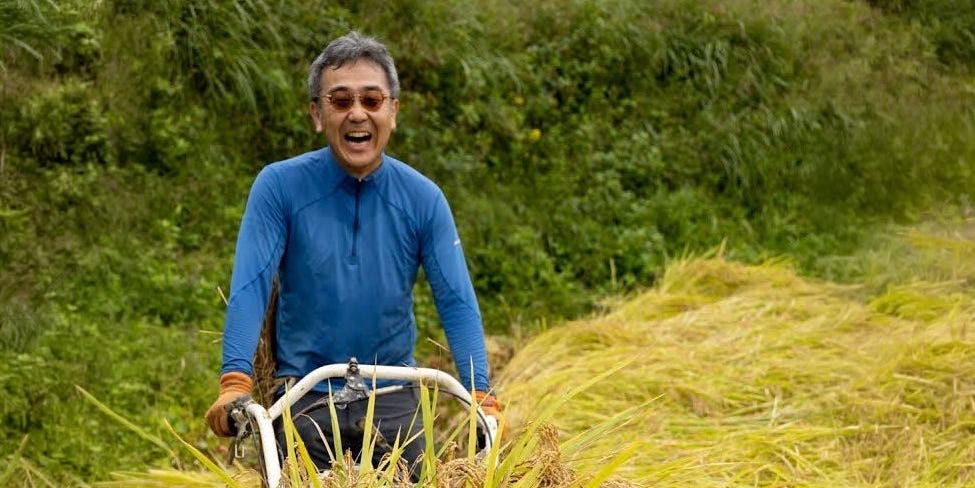
After years in Tokyo finance, Goki Akuzawa saw value in abandoned rice terraces. Now his guesthouse and organic rice farm show the countryside holds overlooked returns.
Goki Akuzawa spent eight years splitting his time between Tokyo finance and rural Niigata. Then he saw something the market had missed. Rice terraces, he says, are undervalued assets.
Akuzawa, 62, now runs Toronoki House, a guesthouse in a renovated kominka. He also grows organic Koshihikari rice on two rented terraces and brews traditional sake from the harvest. His company, Satoyama Asset Management, hires local residents to cultivate the fields, supporting a shrinking rural economy.
The shift started after the 2008 financial crisis. Akuzawa had to lay off colleagues. The experience forced him to rethink what creates value. A trip to an art festival in Tokamachi, Niigata, in 2009 showed him a different way of life. He became mesmerized by rice terraces.
He began visiting traditional villages across Japan, Bali, Thailand, and Vietnam, seeing them through an asset manager's lens. The insight: rural land, particularly rice terraces, is priced for obsolescence but holds cultural and productive value that markets ignore.
In 2016, he bought an abandoned farmhouse near a rice terrace. Renovation costs were split between his savings and a loan from a government financial institution. The architect was Karl Bengs, known for restoring traditional homes in Niigata.
The guesthouse opened in 2018. It accommodates up to 10 guests, but Akuzawa keeps occupancy low to run it himself. Guests visit the rice terraces and local artworks, share dinner, and talk about village life.
To add more value, he applied for a donburoku sake brewing license in November 2020, receiving it five months later. He opened a small brewery, using rice from his terraces.
The business model ties hospitality to agriculture, with sake brewing as a third revenue stream. Akuzawa manages everything except meal preparation. He still travels to Tokyo for meetings but spends most days farming and brewing.
The broader thesis: Japan's rural villages are shrinking and aging. Vacant properties are abundant. Akuzawa argues that outsiders – Japanese or foreign – can create value by restoring these assets and building relationships with local communities.
"In Tokyo, success is often measured by growth, efficiency, and financial returns," he said. "In the countryside, it's measured through relationships, health, and a sense of community. The contrast taught me that wealth and happiness aren't always the same thing."
The rice terraces, he believes, remain undervalued. The model – buy, restore, cultivate, host – is replicable, he said. For investors willing to look beyond the usual metrics, the countryside may offer returns that don't show up on a balance sheet.
Drafted by a large language model from the source reporting linked above, then screened by automated publishing checks. It is not read by a journalist before publication. Some articles cite our Alpha Score. Verify prices and figures against the original source. Educational coverage, not personalized advice.