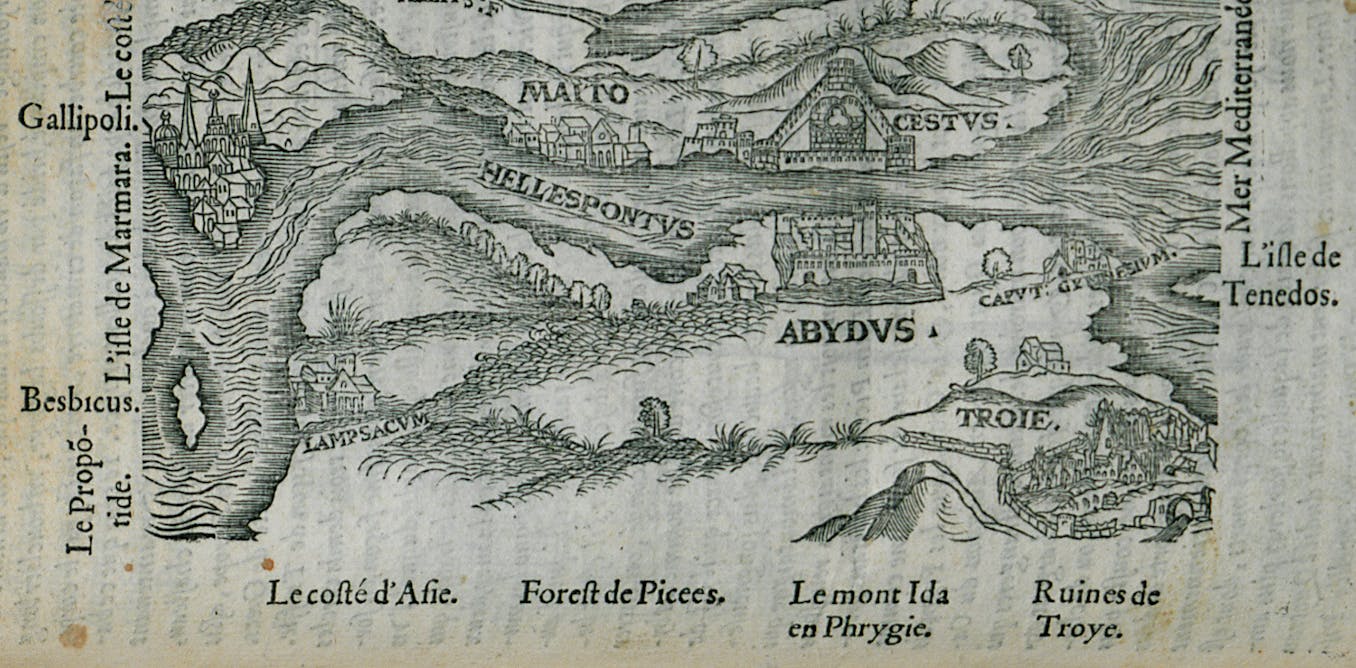
Christopher Nolan's The Odyssey reframes the Trojan war as a trade war over a shipping route. That idea would not have surprised ancient Athenians. They knew the narrow waterway near Troy – the Dardanelles – was a lifeline for grain from the Black Sea.
Athens controlled the strait for decades. It collected a 10% toll on cargo after 413 BCE. The revenue kept the city alive during the Peloponnesian War. When Sparta finally seized the strait in 405 BCE and cut off grain shipments, Athens starved and surrendered. Control of that single chokepoint ended an empire.
The lesson is not ancient history. The Dardanelles remain a strategic passage for modern shipping. Any disruption of that route – through conflict, sanctions, or tolls – would ripple through global grain and energy supply chains.
That kind of narrow-waterway risk is now priced into certain sectors. Telecom and utility stocks, for instance, hold exposure through their supply networks. BCE (BCE) carries an Alpha Score of 62, reflecting moderate resilience to such macro shocks. Southern Co. (SO), with a score of 46, shows a more mixed profile – its coal and gas supply lines cross chokepoints that could tighten in a crisis.
Traders who focus on single-company earnings often miss this layer of risk. A 10% toll on Black Sea cargo would not show up in a quarterly report until margins have already narrowed. The real signal is the geopolitical posture around the strait itself.
No country has announced a new toll. The historical pattern – secure the passage, tax the traffic, lose the war when control slips – remains the same. The waterway near ancient Troy still matters.