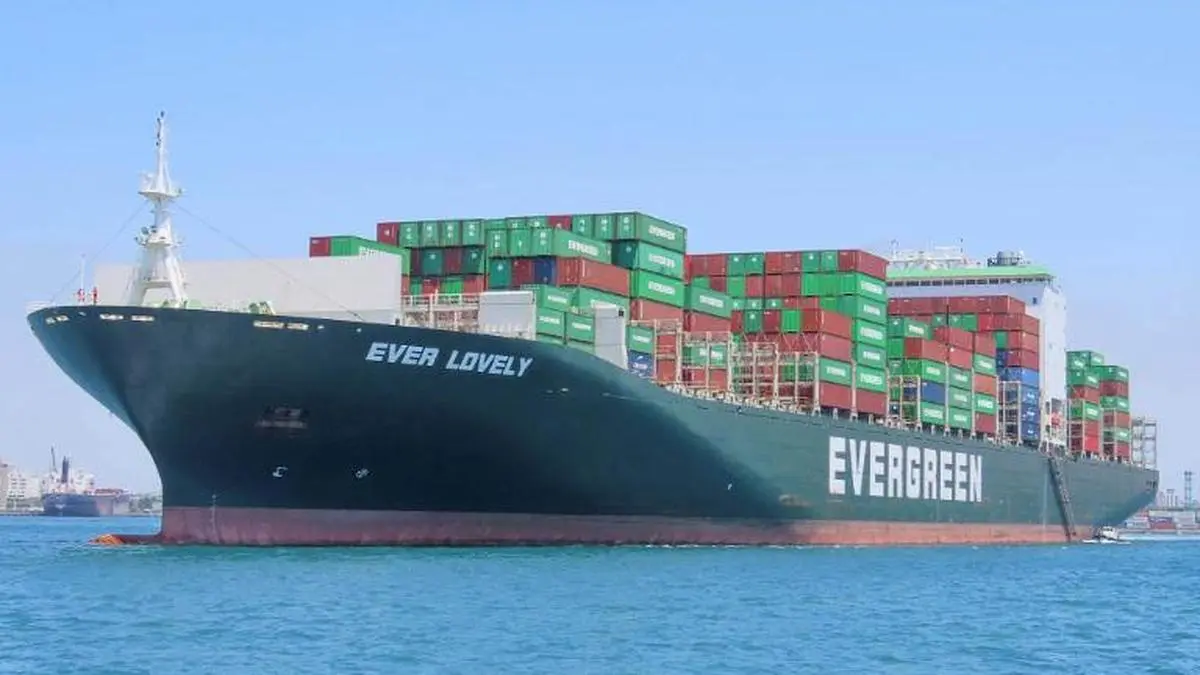
A Singapore-flagged container ship was struck by an unidentified projectile in the Strait of Hormuz on Thursday, the first attack since an interim US-Iran peace deal reopened the waterway. The vessel, Ever Lovely, sustained damage to its bridge while sailing southeast of Oman, according to security alerts seen by Bloomberg News. UK Maritime Trade Operations confirmed the incident and advised ships to “transit with caution.”
Brent crude touched $76 a barrel on the news, reversing earlier losses that had taken prices back toward pre-war levels. The attack came a week into a period of relative calm after the preliminary agreement between Washington and Tehran.
A White House official, speaking on condition of anonymity to discuss internal deliberations, said it was too soon to assign responsibility. The US is investigating whether the strike was ordered by high levels of the Islamic Revolutionary Guard Corps or a rogue decision by lower-level personnel, the official said. No deaths or environmental damage were reported. Iran’s foreign affairs ministry did not respond to a request for comment.
Earlier Thursday, at least three commercial vessels, including two oil supertankers, turned around while attempting to exit Hormuz on the Oman side. Shipping intelligence company Windward Maritime said the U-turns followed Iranian Revolutionary Guard instructions delivered by radio and social media. Ship-tracking data show a fourth inbound vessel also reversed course.
Iran’s Persian Gulf Strait Authority said Thursday that any transit occurring outside its framework would not be eligible for insurance coverage or safe-passage guarantees. That language directly threatens the economics of shipping through the strait without Tehran’s permission.
The International Maritime Organization, which had launched an evacuation plan earlier this week, immediately paused the operation.
The IMO said Tuesday it had secured safety guarantees that could allow hundreds of ships to exit the Gulf. Two alternative exit routes have emerged because the standard mid-channel path is thought to have been mined. One runs near Iran’s coast; the other hugs Oman’s shoreline under US protection. The attack hit near the Omani corridor.
US President Donald Trump did not address the episode at a White House dinner Thursday night. Instead, he said Iran would soon buy US wheat and soybeans. “That process is going to be starting pretty soon,” Trump said.
For the crude market, the equation shifted. The early peace-deal dividends – a rapid restart of flows from Gulf producers, visible in the tanker exodus last week – now face a fresh layer of friction. Insurance costs for Hormuz transits are expected to rise after Iran’s safe-passage ultimatum. The IMO pause gives shipowners another reason to hesitate.
Gulf energy producers had begun ramping up production as flows through Hormuz appeared to be holding up. The attack and the IMO pause could slow that ramp-up. If shipowners delay transits, the return of Iranian and other Gulf crude to global markets may take longer than the peace deal had promised.
The attack tests the durability of the US-Iran interim deal. A White House official said the US is investigating whether the strike was ordered by high levels of the IRGC or a rogue decision. Either scenario complicates the path to a permanent agreement.
Vessel-tracking data from Bloomberg show the U-turns were not universal. Some ships continued their exits even after the attack. The pattern of turnarounds and the IMO pause signal that confidence in an open strait is fragile. For context on the chokepoint’s role in global supply, see the crude oil profile.