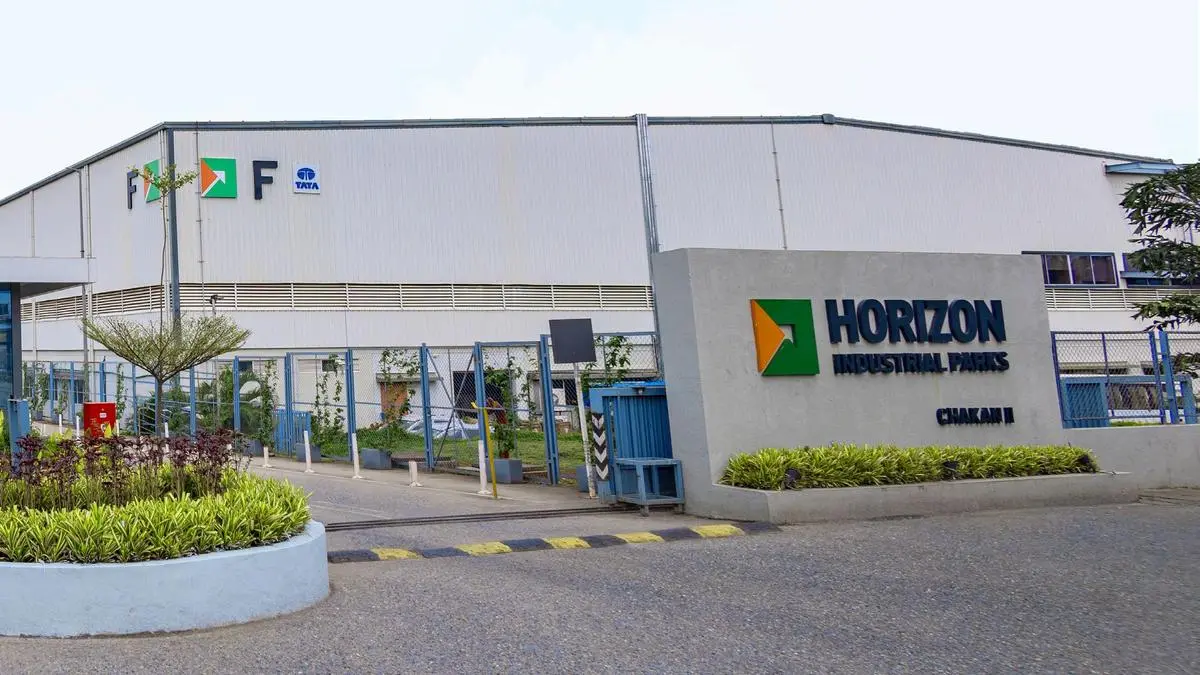
Horizon Industrial Parks opens its initial public offering for subscription Monday. The Blackstone-backed company, which owns Grade-A warehouses and industrial facilities, plans to raise ₹2,600 crore through a fresh issue. Most of the proceeds, ₹2,250 crore, will go toward repaying borrowings. There is no offer for sale component.
Blackstone's pre-IPO stake of 88.7 per cent will fall to 75.4 per cent after the issue, the prospectus shows. The company gives investors exposure to India's manufacturing and consumption-driven growth, the document says.
The asking price looks expensive, BusinessLine said in its analysis. At 31.3 times post-issue enterprise value to EBITDA for fiscal 2026, the valuation leaves little margin for error. BusinessLine recommended investors give the IPO a pass and look for more attractive entry points later.
HIPL owns three types of logistics assets. Fulfilment centres – large warehouses from 50,000 sq ft to 0.5 million sq ft – account for 57 per cent of operational space by area. These are leased to e-commerce, third-party logistics, FMCG and retail clients. Industrial facilities, ranging from 50,000 sq ft to 0.8 million sq ft, make up 40 per cent of the portfolio. They serve automotive, renewable energy, electronics and aerospace companies. In-city centres, at 0.8 million sq ft, cover quick-commerce dark stores, online pharma, and cloud kitchens. These command premium rents, far above the other two categories.
Blackstone's backing provides global heft. The American asset manager oversees over $1.3 trillion in assets and roughly 1.2 billion sq ft of logistics space worldwide. Horizon benefits from the manufacturing push and rising e-commerce penetration. Quick commerce, a smaller but fast-growing segment, adds further demand. Per capita warehousing stock in India is just 0.5 sq ft, compared with 47.1 sq ft in the US and 7.2 sq ft in Japan. Grade-A warehousing stock is projected to grow from about 300 million sq ft to 950 million sq ft by 2030, a CAGR of 25 per cent, the prospectus says.
HIPL holds a land bank of about 2,200 acres. 77 per cent is freehold, the rest on long-term leasehold of over 90 years. These parcels sit in India's top 10 industrial and consumption hubs, including Hyderabad, Ahmedabad and Pune. The current operational portfolio is 28.6 million sq ft, with scope to develop another 32.6 million sq ft. That includes 6.1 million sq ft of in-city centres. In FY26 the company operationalised 5.2 million sq ft.
Occupancy stood at 93.6 per cent as of May 31, 2026. Leases run 5-10 years with rent escalation clauses of 4.5-5 per cent per annum. Rent per sq ft per month grew at a CAGR of 7.7 per cent between FY23 and the end of May 2026. HIPL also provides ancillary services – turnkey fit-outs, rooftop solar, cold storage, and on-site staff accommodation.
The company became operational in May 2021 when Blackstone acquired the business from the Embassy group and Jazz Leaf Investment. It built 28.6 million sq ft in five years. The expansion left it with high debt.
Gross debt stood at about ₹6,900 crore as of FY26, or 11.4 times EBITDA. Despite strong EBITDA margins, interest costs push the company into losses. Depreciation is largely non-cash given the low upkeep costs of these assets.
The fresh issue brings leverage down. Post-issue, net debt to EBITDA improves to 2.75 times. Still, the 31.3 times EV/EBITDA multiple looks expensive, BusinessLine's analysis said.
Growth must come from operationalising the remaining 32.6 million sq ft. The company expects to develop that in four to five years, requiring roughly ₹8,000 crore of capital, management told analysts. After repaying ₹2,250 crore of debt, the company will have about ₹2,000 crore in cash for development. The remaining ₹6,000 crore would need fresh debt, beyond what internal cash flows can cover. For perspective, HIPL generated ₹481 crore of pre-tax operating cash flow in FY26.
Even under optimistic assumptions – ignoring the time gap between commissioning and leasing – BusinessLine's model estimates that by FY28 the company will have about 40 million sq ft operationalised. At that point, EBITDA would put EV/EBITDA at 17 times. Given execution risks, that valuation still leaves little room for slippages.
Risk-averse investors might consider REITs as alternatives, which offer dividend yield and mature portfolios, BusinessLine noted.
The issue closes Thursday.