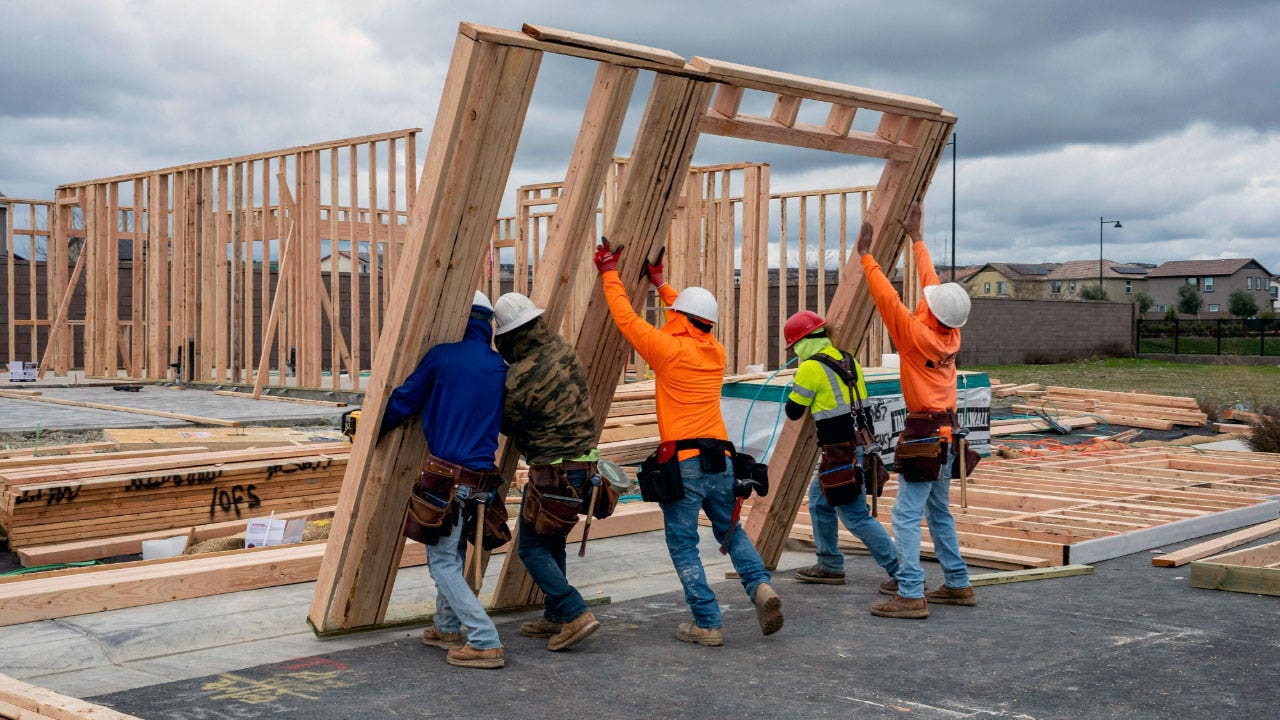
High mortgage rates get most of the blame for the housing affordability crisis. Homebuilders point to a different bottleneck: a persistent shortage of skilled workers that is adding two months to construction timelines and pushing costs higher.
"Labor is one of the largest and most expensive inputs when it comes to home production and land development," Jim Tobin, president and CEO of the National Association of Home Builders, told Fox News Digital.
Tobin said the construction industry is short roughly 250,000 workers every month. At the peak of the building cycle a few years ago, the gap reached 400,000. He called it "a persistent shortage."
The labor constraints are already showing up in project schedules. Ed Brady, president and CEO of the Home Builders Institute, said the shortage adds nearly two extra months to building timelines. "Inflating costs and delaying delivery," Brady said.
A recent report from the Home Builders Institute and NAHB estimates the industry will need about 723,000 new workers each year to keep pace with demand and help close the nation's 1.5 million-home housing gap.
Regulatory costs compound the problem. NAHB estimates government regulations add nearly $132,000 to the price of a typical new home.
Tobin noted that many construction jobs do not require a four-year college degree and can provide stable, middle-class careers. The industry has struggled for years to attract enough workers to replace retiring tradespeople.
States that have prioritized homebuilding have been better positioned to accommodate population growth and economic expansion, housing industry leaders said. The labor shortage remains the most immediate constraint on how fast those states can build.