Stocks● Neutral
HKUST Anniversary Highlights Medical School, Space Projects
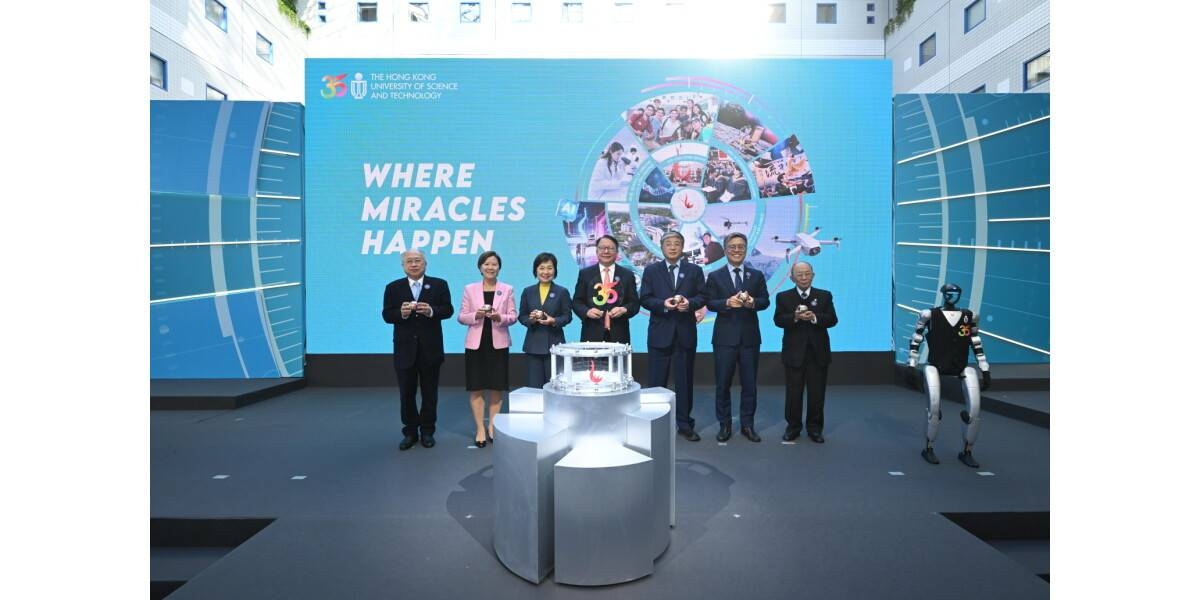
HKUST launched its 35th anniversary with plans for a new medical school starting 2028, robotic dog demonstrations, and a DJI drone donation, signaling Hong Kong's innovation ambitions.
Continue with
The Hong Kong University of Science and Technology kicked off its 35th anniversary with a ceremony that doubled as a showcase of the institution's expanding role in Hong Kong's innovation economy. The event, held March 16, featured plans for a new medical school, robotic dog demonstrations, and a drone donation from DJI founder Wang Tao.
President Nancy Ip, who joined HKUST in 1993, traced the university's rise from a startup research campus to a top-50 global institution. She credited founding president Chia-Wei Woo with building ties to mainland China before the Greater Bay Area concept existed, a move that later enabled HKUST (Guangzhou) to open in 2022.
The biggest announcement was a medical school, set to admit its first class in 2028. Ip called it "a transformative milestone" pursued for over three decades. The HKSAR government awarded HKUST the right to build Hong Kong's third medical school, a decision that positions the university to train a new generation of clinicians and researchers. Council chairman Harry Shum said the school will bridge traditional medical curriculum with AI and technology, covering diagnosis, treatment, recovery, prevention, and personalized medicine.
The ceremony itself leaned heavily on technology. Robotic dogs developed by an HKUST-nurtured startup, Direct Drive Technology, alongside the civil engineering department and the Cheng Kar-Shun Robotics Institute, carried ceremonial "Miracle Balls" to officiating guests. A drone donated by Wang Tao, founder of DJI, delivered a commemorative key. Wang also donated two of DJI's latest drone solutions to the university for research into the low-altitude economy.