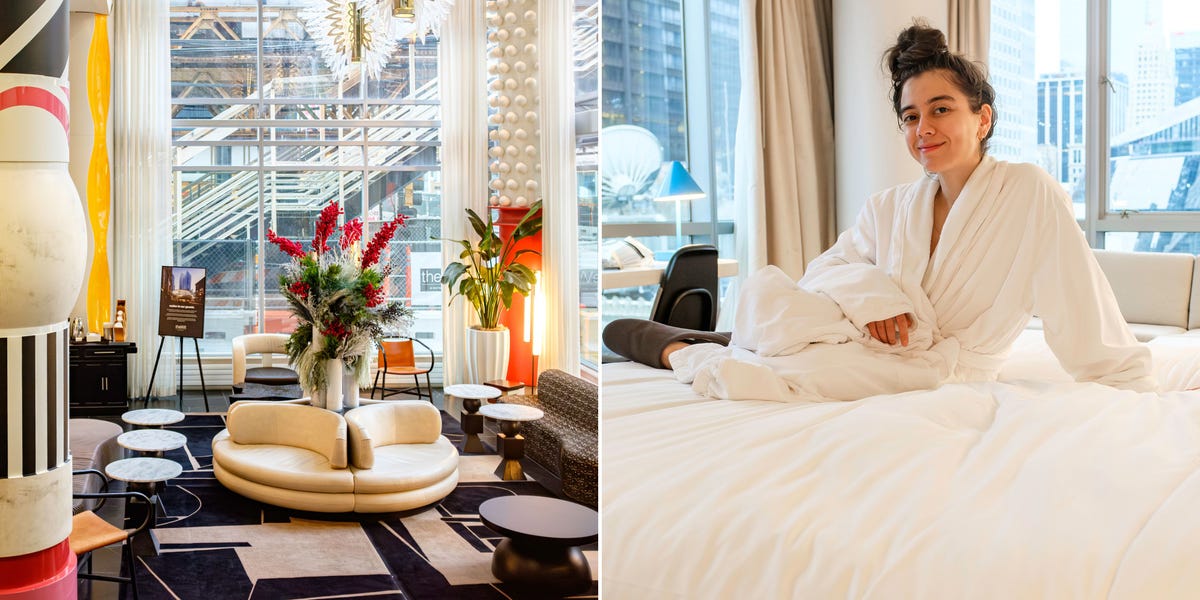
The New Paradigm of Accessible Luxury
In an era where premium travel often commands exorbitant price tags, the hospitality sector is witnessing a recalibration of value. A recent stay at theWit, a prominent Hilton (HLT) property in Chicago, underscores a growing trend: the emergence of 'attainable luxury.' For a nightly rate of $240, the experience provided a level of sophistication that challenges the traditional price-to-value ratio, suggesting that established hotel brands are successfully pivoting to capture a wider demographic of discerning, yet budget-conscious, travelers.
Market Context: The Shift in Hospitality Demand
For traders and analysts monitoring the consumer discretionary sector, the performance of mid-to-high-tier hotels is a vital bellwether for travel demand. Following post-pandemic surges in 'revenge travel,' consumers are becoming increasingly selective. They are no longer willing to pay luxury premiums for standard amenities, forcing properties to differentiate themselves through design, location, and experiential value.
Properties like theWit, which operates under the Hilton umbrella, are positioned to bridge the gap between boutique lifestyle hotels and traditional full-service chains. By maintaining a price point near $240—a figure that sits comfortably below the average luxury suite rates in major metropolitan hubs—Hilton is effectively leveraging its brand loyalty program, Hilton Honors, to drive occupancy while positioning the property as a premium destination for business and leisure travelers alike.
Why This Matters for Investors
From a market perspective, the success of theWit serves as a case study in operational efficiency and brand positioning. When a legacy player like Hilton (HLT) delivers a high-end experience at a competitive price, it places significant pressure on independent boutique hotels and smaller chains that lack the scale and loyalty infrastructure to compete on price without sacrificing margins.
For investors, the key takeaway is the resilience of the mid-to-high-tier segment. While the ultra-luxury market remains insulated, the $200–$300 price bracket is where the volume lies. Properties that can maintain high RevPAR (Revenue Per Available Room) while keeping overheads optimized through Hilton’s global distribution network represent a defensive asset class in an unpredictable economic environment.
The Competitive Landscape
Chicago remains one of the most competitive hospitality markets in the United States. Analysts tracking the sector often look at the 'TheWit' model as a benchmark for urban property performance. By focusing on aesthetics, strategic location, and brand-backed reliability, Hilton (HLT) is successfully insulating itself against the volatility of discretionary spending. If consumers view a $240 room as an 'upgrade' in quality, the company is effectively building brand equity that translates into long-term customer retention.
Forward-Looking Outlook
As we look ahead to the next few quarters, the focus will remain on whether these price-to-value propositions can hold up against rising labor costs and inflationary pressures. Market participants should monitor Hilton’s upcoming earnings reports for commentary on occupancy rates in key urban markets like Chicago. If the 'attainable luxury' trend continues to drive bookings, it could prove to be a significant tailwind for the stock, particularly as travelers seek to maximize their travel budgets without compromising on the quality of their accommodations.
For the institutional investor, the question is clear: Can Hilton continue to scale this model, or will rising costs eventually force a shift in the value proposition? For now, the successful execution at properties like theWit suggests that the current strategy is resonating with the market.