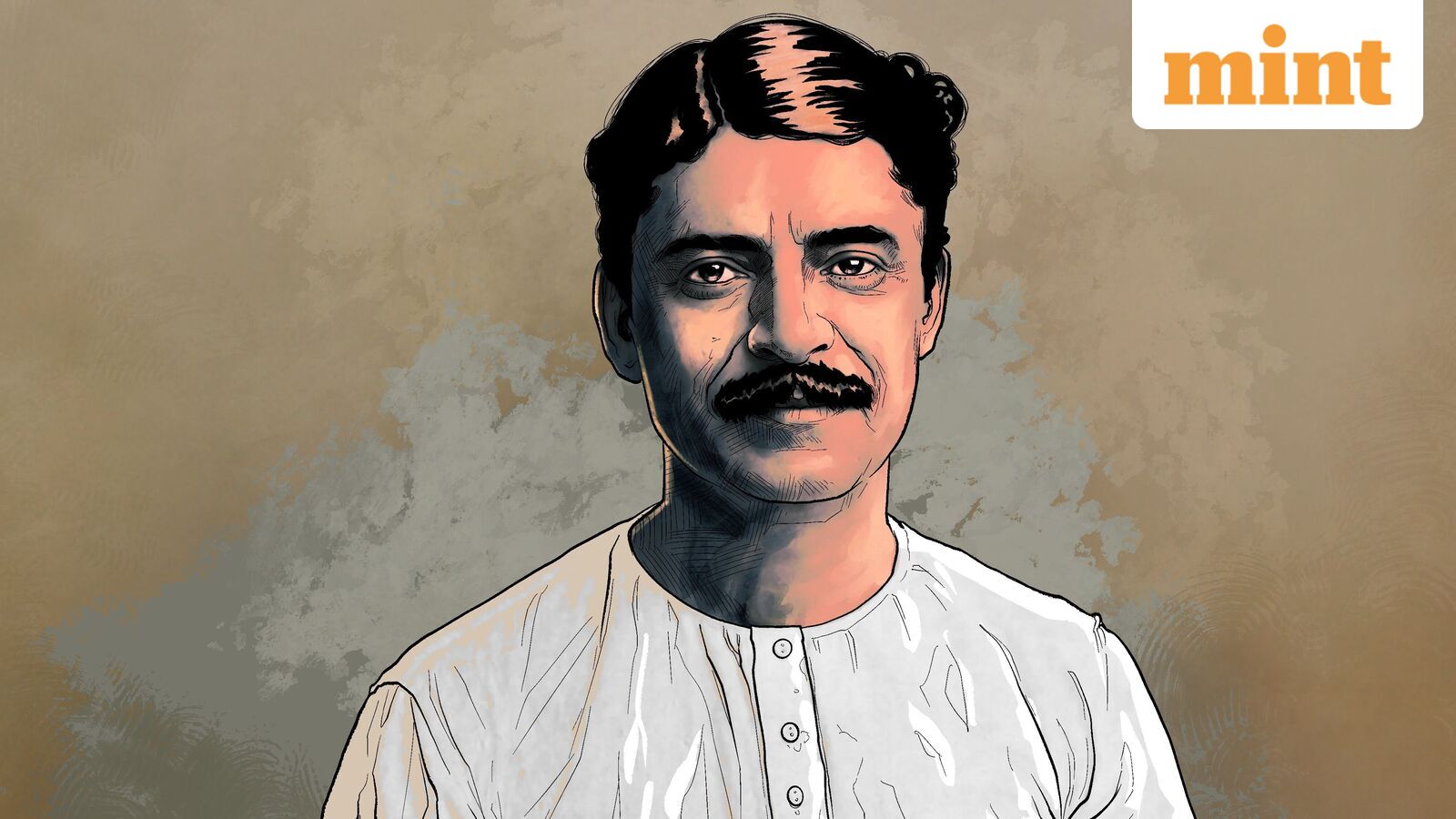
Before VC, pitch decks, or exits, Hemendra Mohan Bose built perfume brands, a recording label, bicycles, cars, and a tea estate in colonial Calcutta.
Hemendra Mohan Bose died in 1916 at 52, his commercial empire battered by police raids and a world war. He had built perfume brands, a recording label, a bicycle assembly line, an automobile import business, a printing press, a tea estate, and a literary prize. He did it all without venture capital, pitch decks, or exit strategies. The term "serial entrepreneur" did not exist in colonial Calcutta. Bose lived it anyway.
Born in 1866 into an educated Brahmo family, Bose was studying medicine at Calcutta Medical College when a laboratory explosion badly injured one of his eyes. The accident ended his medical career. It also sparked a fascination with applied chemistry that would define his life.
His marriage to Mrinalini, sister of pioneering printer and illustrator Upendrakishore Ray Chowdhury, connected him to one of Bengal's most creative families. His son Nitin Bose became a pioneering film director and cinematographer. His daughter Malati Ghoshal became an early celebrated exponent of Rabindra Sangeet.
Bose founded H. Bose Perfumers in 1894. At a time when most branded consumer goods in India were imported from Europe, he formulated and marketed Indian-made products like Kuntalin Hair Oil and Delkhosh Perfume for the growing Bengali middle class.
His real innovation was in branding. He used celebrity endorsements, eye-catching advertisements, free samples, and promotional campaigns decades before modern advertising became a profession. In 1900, he launched the Kuntalin Puraskar, a literary prize that kept his flagship brand in the public eye. Endorsements from Rabindranath Tagore and scientist Prafulla Chandra Ray added to its prestige. The perfume business became the financial engine that funded his other ventures.
The Second Industrial Revolution gave Bose his next canvas. When the Edison phonograph first arrived in Calcutta as a costly curiosity, he opened the Talking Machine Hall. He soon launched H. Bose Swadeshi Records, one of India's earliest indigenous recording enterprises. The label captured songs, speeches, and poetry, including rare recordings of Tagore reciting his own verse. Bose also became one of the earliest Indian photographers to experiment with colour photography.
To support these ventures and his advertising campaigns, he established the Kuntaline Press, bringing publishing, printing, and promotion under one roof.
Bose applied the same instinct to transport. In 1903, he founded H. Bose & Company Cycles, securing the Indian agency for Rover while assembling bicycles locally. As automobiles arrived, he established the Great Eastern Motor Company to import Renault and Peugeot cars for India's professional and business elite.
His curiosity extended beyond manufacturing and retail. Convinced an entrepreneur should understand an industry from its source, he acquired a tea estate in Darjeeling, immersing himself in every stage of production.
The high point of Bose's career coincided with the Swadeshi movement that followed the 1905 Partition of Bengal. Many businessmen stayed politically cautious. Bose openly backed the nationalist cause. His recording studios produced patriotic songs and nationalist music, bringing him into direct conflict with the colonial government. Police raids damaged his recording operations and destroyed equipment and recordings. The outbreak of the First World War crippled the import networks on which several of his businesses depended.
By the time he died, much of his commercial empire had been battered by forces beyond his control. Chemist, marketer, industrialist, publisher, recording pioneer, photographer, and automobile dealer, Bose's career is a reminder that entrepreneurship is not about a lucrative exit. It is about the willingness to experiment, embrace new technologies, and keep building.
Drafted by a large language model from the source reporting linked above, then screened by automated publishing checks. It is not read by a journalist before publication. Some articles cite our Alpha Score. Verify prices and figures against the original source. Educational coverage, not personalized advice.