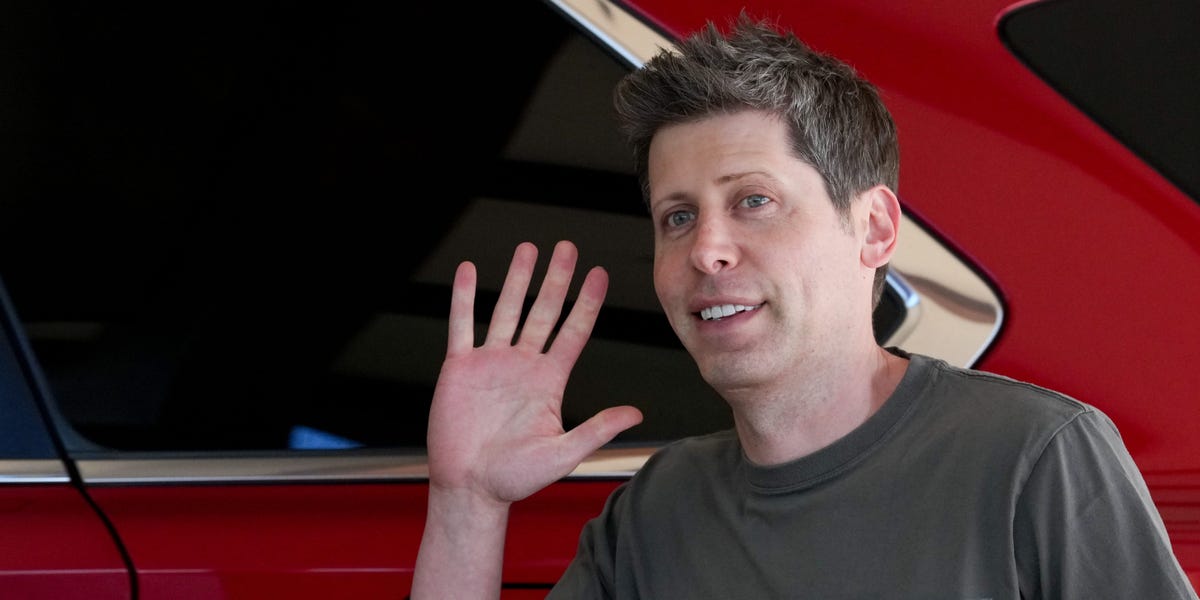
Heidecke, head of Safety Systems, leaves as OpenAI reorganizes. He's the eighth safety leader to depart since 2024, raising questions about OpenAI's safety commitment.
Johannes Heidecke, the head of OpenAI's Safety Systems team, is leaving. His departure adds to a years-long exodus of safety-focused leaders from the company. OpenAI confirmed the move Friday, saying Heidecke decided to leave as the company integrates safety work more closely with its broader research organization under Mia Glaese, who will now serve as vice president of research and safety.
"We're grateful for Johannes' contributions to OpenAI," Mark Chen, OpenAI's chief research officer, told Business Insider. "We're excited for this next chapter under Mia Glaese's leadership across research and safety."
Heidecke joined OpenAI in 2021 and took over Safety Systems after Lilian Weng's departure in November 2024. His team evaluated and mitigated risks in OpenAI's models before release. He has made no public statement since his planned departure became public.
Heidecke is at least the eighth leader of a safety-focused team to leave OpenAI since 2024. The list includes cofounder Ilya Sutskever, who left in May 2024 after co-leading the Superalignment initiative. Days later, Jan Leike, his co-lead on Superalignment, left and posted a public criticism: "Over the past years, safety culture and processes have taken a backseat to shiny products." Leike said OpenAI needed to devote more resources to preparing for future models and that building machines smarter than humans was an "inherently dangerous endeavor." He joined Anthropic.
Miles Brundage left in October 2024 after six years. "Neither OpenAI nor any other frontier lab is ready, and the world is also not ready," he wrote, referring to AI's potential impact. He said staying at OpenAI is an implicit agreement with the company's values.
Lilian Weng, who led Safety Systems before Heidecke, left in November 2024 after almost seven years. She did not criticize OpenAI, instead praising the environment for setting "new industry standards."
Vallone left at the end of 2025 after leading the team that shaped how OpenAI's models respond in sensitive situations. She joined Anthropic's alignment team.
Aleksander Madry joined OpenAI to lead its Preparedness team, which evaluates severe risks from capable models. He was moved out of that role in 2024 and shifted to AI reasoning before leaving in May 2026.
Miles Achiam left in July. He previously led Mission Alignment. "There's not a specific reason for me leaving," he wrote on X. "The world is in on the secret now and it feels possible to work on the mission from outside the walls of a frontier lab."
The departures have hollowed out OpenAI's safety leadership. The Superalignment team was dissolved after Sutskever and Leike left, with remaining employees distributed across other research groups. OpenAI now says it will embed safety within research teams rather than maintain a separate safety division.
The pattern has drawn attention from industry observers. Andrew Curran, a prominent AI analyst, called OpenAI's revolving door of safety leads a "curse" in reference to Harry Potter. "The curse upon the Defense Against the Dark Arts position at OpenAI has claimed yet another victim," he wrote.
The churn contrasts with Anthropic, which has retained its core safety leadership despite some departures. Anthropic cofounder Dario Amodei left OpenAI in 2020 over disagreements about AI safety direction and started Anthropic a year later. In February, Mrinank Sharma, who led Anthropic's Safeguards Research Team, left and warned that AI companies face pressure to "set aside what matters most." Dylan Scand, an Anthropic safety researcher, also left this year to become OpenAI's head of preparedness. Still, Anthropic's senior safety team has largely stayed intact.
For the broader AI sector, the repeated departures raise questions about how frontier labs balance safety research with product release pressure. OpenAI's reorganization under Glaese is an attempt to fuse the two functions. "You can't make good safety decisions without understanding the underlying model capabilities, and you can't make good research decisions without understanding the safety implications," a spokesperson told Business Insider.
Whether that structure retains talent remains to be seen. Heidecke's departure suggests the integration plan did not keep him. No date has been set for his replacement.
Drafted by a large language model from the source reporting linked above, then screened by automated publishing checks. It is not read by a journalist before publication. Some articles cite our Alpha Score. Verify prices and figures against the original source. Educational coverage, not personalized advice.