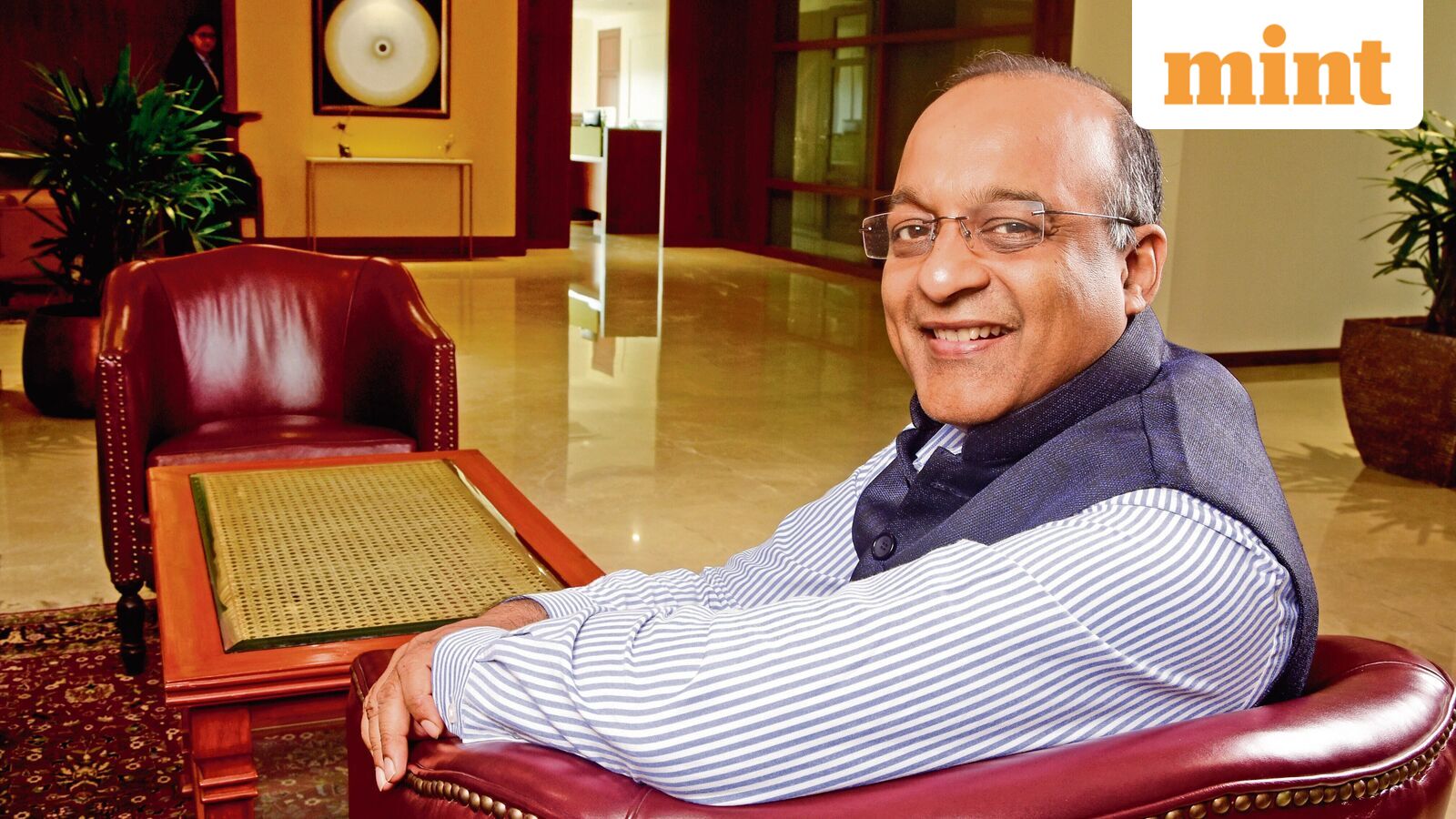
Legal Review Holds Up Jagdishan Reappointment Decision
HDFC Bank's board will not consider CEO Sashidhar Jagdishan's reappointment until the findings of a legal review are complete. The review was commissioned after former chairman Atanu Chakraborty raised unspecified concerns in his resignation letter in March. Two people familiar with the matter said the board's nomination and remuneration committee will meet only after a consolidated report from three law firms is submitted, a deadline that has already slipped from original internal timelines.
With Jagdishan's current term expiring in October and the report now expected only by mid- to end-June, the compressed timeline leaves roughly three months for board approval and Reserve Bank of India sign-off. Bank boards typically seek RBI clearance about six months in advance. ICICI Bank approved Sandeep Bakhshi's reappointment in January, even though his term also ends in October. HDFC Bank itself followed that pattern in 2023, approving Jagdishan's current term seven months before the deadline.
The Three-Firm Mandate
In March, the board appointed Trilegal and Wadia Ghandy & Co to examine board meeting minutes for discrepancies Chakraborty cited. A US-based law firm was subsequently added. The report was to be submitted within a "reasonable period of time," but internal deadlines were missed. One person said the report is now expected "only by mid- or end-June."
Why the Compressed Timeline Matters
If the report arrives by end-June, the committee chaired by former Nabard chairman Harsh Kumar Bhanwala could meet in July. That would leave three months for RBI clearance. Abizer Diwanji, founder of Neostrat Advisors, said the six-month timeline is a norm, not a policy. "RBI can also fast-track approvals if the situation demands," he said. The regulator has publicly backed HDFC Bank, stating in March that "there are no material concerns on record as regards its conduct or governance." Deputy governor Swaminathan J. added in April that supervisory concerns are dealt with on an ongoing basis.
Practical rule: The six-month advance approval cycle is standard, not mandatory. RBI has discretion to compress timelines when it sees no red flags.
Exposure: What Leadership Uncertainty Means for HDB
The Governance Discount in Indian Bank Valuations
Leadership uncertainty typically introduces a governance discount in Indian bank stocks. CEO longevity and regulatory comfort are structural valuation factors. HDFC Bank trades at a premium to peers partly because of consistent management track record. A delayed reappointment breaks that narrative, even if the underlying business remains strong.
Timeline compression introduces execution risk. If the legal review uncovers any procedural lapses, the board would need to address them before reappointment. That could require additional meetings, disclosures, or even a CEO search. A contested reappointment would hit HDB's share price and sector sentiment.
The MSRDC Payment as a Second Pressure Point
In late May, a report said HDFC Bank routed ₹45 crore in payments to the Maharashtra State Road Development Corporation as marketing expenses to effectively offer higher deposit returns. The bank said it "strongly rejects any assumptions of wrongdoing or culpability based on selective material." RBI Governor Sanjay Malhotra later said competition for deposits is "good" as long as it is transparent. The central bank then proposed a draft circular giving banks greater flexibility in pricing bulk deposits while ensuring uniform disclosure of interest rates on deposits.
This second issue reinforces the governance narrative without directly linking to the CEO reappointment. The market's reaction will depend on whether investors view these as isolated compliance matters or part of a broader pattern. The draft circular suggests RBI is watching competition dynamics without alarm.
The Better Market Read: Calendar Risk vs. Fundamental Strength
Why the Legal Review Exists
Chakraborty's 17 March resignation letter cited "certain happenings and practices within the bank" not in congruence with his "personal values and ethics." In an interview on 30 March, he hinted that the mis-selling of Credit Suisse's perpetual bonds was a bone of contention. The bank has reiterated that Chakraborty "did not mention any happenings and practices which were not in congruence with his personal values and ethics."
The board's decision to commission three law firms suggests it takes the matter seriously enough to seek external validation. Both sources said they do not expect anything detrimental against Jagdishan in the report.
How the CEO Reappointment Could Still Play Out
Three scenarios exist:
- Clean report, fast approval: The legal review finds no material issues. NRC meets in early July. RBI grants a standard five-year extension. HDB returns to normal risk profile.
- Clean report, short extension: Even without major findings, a compressed timeline could push RBI to grant only a two- or three-year extension. Recurring uncertainty would linger.
- Ambiguous or negative findings: Any procedural lapse forces board action, search for a new CEO, or a contested reappointment. This scenario risks a sharp valuation re-rating.
Diwanji said the bigger issue is whether RBI approves a reappointment with only a one-year extension. "I don't think HDFC Bank needs to look at a plan B right now," he said. "From the point of view of the regulator, as long as there is transparency in governance and it is aware of what is happening at a bank, it does not impact appointments."
Sector Read-Through: ICICI Bank and the Private Banking Peer Set
ICICI Bank's Cleaner Governance Narrative
ICICI Bank (ticker IBN) approved its CEO reappointment in January, giving it a clear leadership runway. Its Alpha Score of 57/100 (Moderate) reflects stable earnings but still carries execution risk. By contrast, HDB has an Alpha Score of 37/100 (Mixed), partly due to the ongoing governance overhang.
A prolonged HDFC Bank leadership crisis could benefit ICICI Bank as investors rotate into banks with clearer management visibility. A sector-wide sell-off is unlikely unless the legal report uncovers systemic issues. Indian private banking is well-capitalized, and regulators have been proactive on governance.
What a Leadership Void Would Mean
If HDFC Bank faces a CEO gap, Indian private banking would lose its largest and most stable institution. Competitors would see some shift in deposits and market share, the bigger risk is valuation compression across the sector. Foreign institutional investors are sensitive to governance breaks in Indian financials. A sharp HDB decline could drag down the Bank Nifty.
Key insight: The legal review is a governance checkpoint the board cannot skip. The outcome is likely benign, the compressed timeline strips the margin for error. Investors should watch the report's completion and the NRC's subsequent move.
Checklist: What Confirms or Weakens the Thesis
What Would Reduce the Risk
- Legal report arrives by end-June with no material findings. This allows NRC to meet quickly and recommend reappointment.
- NRC meeting announced within two weeks of the report. Signals board confidence in the findings.
- RBI fast-tracks approval under 60 days. Indicates regulatory comfort.
- HDB continues normal business disclosures without governance-related commentary.
What Would Make It Worse
- Legal report delayed beyond July. Implies deeper issues or procedural difficulties.
- Report flags procedural lapses, even minor ones. Forces additional board meetings and disclosures.
- RBI grants only a short extension or requests a successor search.
- New leaks or board statements suggesting internal disagreements.
The Next Decision Point for HDB Holders
The legal report's findings and timing will determine whether HDFC Bank's leadership uncertainty is a short-term noise event or a governance re-rating. A clean outcome likely returns HDB to its normal risk profile. Any ambiguity or additional delay would justify a lower weight in Indian financials exposure until the reappointment is confirmed.
For now, the stock trades on fundamentals. The margin for error is shrinking with each passing week. Readers tracking HDB and IBN should monitor the NRC meeting announcement and RBI's clearance timeline as the definitive signals on whether the governance overhang persists or clears.