Hawk Resources has secured a critical exploration agreement for the Olympus scandium project, targeting an 80% earn-in on a high-grade 309 sq km site.
Hawk Resources (ASX: HWK) has cleared a critical regulatory and social hurdle for its Olympus scandium project in Western Australia, signing a formal mineral exploration agreement with the Ngaanyatjarra traditional owners. This agreement, finalized after three months of negotiations, grants the company the social license required to begin on-ground operations across 309 square kilometers of prospective territory. With the deal secured, the company is now moving to obtain final ministerial consent from the Western Australian government’s departments of indigenous affairs and mining and petroleum.
The company is currently operating under an 80% earn-in option for the Olympus project. This structure allows Hawk to gain a significant majority stake in the asset through the successful execution of its exploration program. The immediate next step involves a cultural heritage survey, which is a prerequisite for the planned exploration activities. Management expects to initiate on-ground work by mid-year, assuming the remaining government approvals follow the current trajectory.
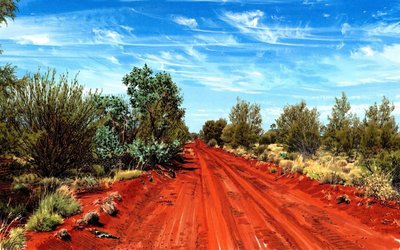
Managing director Scott Caithness noted that the speed of the negotiations with the Ngaanyatjarra Council exceeded internal expectations. The early engagement provided the company with logistical insights into the project area, which is characterized by flat topography covered by calcrete, calcareous gravels, and aeolian sands. This logistical clarity is essential for a junior explorer, as it reduces the risk of unexpected delays once the drill rigs are mobilized. For those interested in the broader stock market analysis of junior miners, the ability to secure land access without prolonged litigation or community friction is a primary indicator of management's operational competence.
The Olympus project is not a greenfield discovery but rather a site with a documented history of exploration. In the early 2000s, Redstone Resources (ASX: RDS) conducted surveys across the area while searching for copper, nickel, cobalt, gold, and platinum group elements. While those commodities were the primary focus at the time, historical portable x-ray fluorescence analyses of soil and lag samples revealed a significant scandium anomaly.
Data from these historical samples identified a 4 kilometer by 7 kilometer scandium soil anomaly. The grades reported are notable, with soil samples reaching up to 1,284 parts per million and peak assays hitting 2,164 parts per million over 1-meter sample intervals. These figures provide a clear target for Hawk’s upcoming exploration program, which will aim to validate these historical findings and define the extent of the mineralization. The presence of such high-grade anomalies in a large, contiguous land package is the primary driver of the company's valuation thesis.
Scandium occupies a unique position in the global commodity market. It is currently not mined as a primary product at any operation worldwide. Instead, global supply is almost entirely derived from by-product extraction or the processing of existing stockpiles in China, Russia, and former Soviet Union countries. This supply concentration has led the US, European, and Australian governments to designate scandium as a critical mineral, citing its importance to the automotive, aerospace, and defense sectors.
Beyond its structural utility in alloys, scandium is a vital component in solid oxide fuel cells. It is used to stabilize zirconia electrolytes, a process that enables these cells to achieve up to 70% electrical efficiency. As global decarbonization efforts accelerate, the demand for high-efficiency energy storage and conversion technologies is expected to rise. The scarcity of primary supply sources makes projects like Olympus, which are located in stable jurisdictions, highly attractive to Western end-users seeking to diversify their supply chains away from current dominant producers.
For investors, the transition from a land-access agreement to active exploration is the most critical phase. While the agreement with the Ngaanyatjarra is a major milestone, the project remains in the early stages of development. The primary execution risk lies in the upcoming ministerial consent process and the subsequent ability of the company to replicate historical assay results. Investors should monitor the progress of the cultural heritage survey as the first concrete marker of the mid-year timeline. If the company fails to secure the necessary government permits by the end of the second quarter, the timeline for the 80% earn-in will likely slip, increasing the capital burden on the company. The project's success hinges on whether the historical 2,164ppm peak assays can be confirmed through modern drilling, which will ultimately determine if Olympus can transition from a speculative anomaly to a viable, world-class scandium province.
AI-drafted from named sources and checked against AlphaScala publishing rules before release. Direct quotes must match source text, low-information tables are removed, and thinner or higher-risk stories can be held for manual review.