Stocks● Neutral
Gundam Rogue Orbit: Why Bandai Namco Needs a Fresh Start
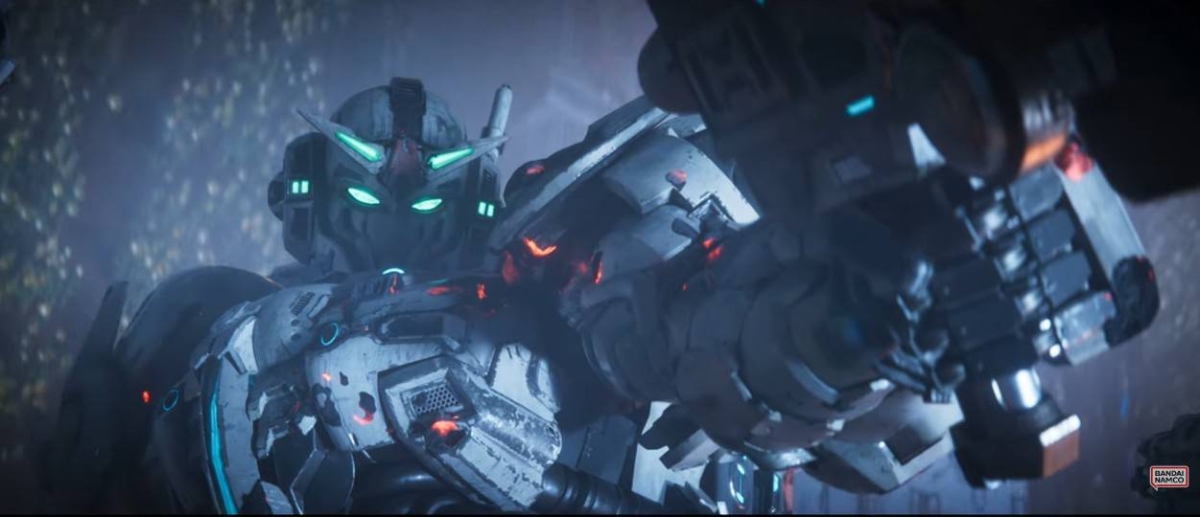
Bandai Namco's Gundam: Rogue Orbit drops anime canon for an original universe and third-person action. The 2027 release targets newcomers, but the two-year gap carries execution risk.
Continue with
The Catalyst: A New Universe, Not a New Anime Tie-In
Bandai Namco Entertainment unveiled Gundam: Rogue Orbit during Summer Game Fest 2026, and the first thing that separates it from the franchise's recent game output is the setting. The title is not another adaptation of Mobile Suit Gundam, SEED, or The Witch from Mercury. It is an original universe with its own mobile suits, its own conflict, and its own protagonist, RE-X (Rex), piloting the Gundam Helix.
For a franchise that has produced dozens of games over four decades, this is a structural break. Most Gundam games carry the burden of anime canon. A player who has not watched the source material faces a wall of unfamiliar factions, characters, and political backstory. Rogue Orbit removes that wall. The question is whether Bandai Namco can execute a standalone narrative that satisfies both longtime fans and newcomers who have never seen a single episode.
Why the Canon Problem Matters for Sales
The practical constraint for any licensed anime game is the addressable audience. A game tied to The Witch from Mercury can only sell to viewers of that series plus the general Gundam enthusiast base. That is a capped pool. By creating an original setting, Bandai Namco expands the funnel to include action-game players who care about mecha combat but not about the Universal Century timeline.
The Combat Shift: Third-Person Action Over Strategy
Rogue Orbit is described as a high-mobility action title. The trailer shows the Gundam Helix dashing across battlefields at high speed, engaging in aerial combat with energy weapons, and landing melee strikes with a massive sword. Support equipment resembling remote-controlled bits or funnels also appears.
This is a deliberate departure from the strategy-heavy Gundam games that have dominated the franchise's recent console output. Titles like Gundam Battle Operation 2 and Gundam Evolution focus on team-based tactical play. Rogue Orbit puts the player directly in the cockpit of a single, powerful machine and asks them to react in real time.
The Third-Person Mecha Market
The comparison that fans have already drawn is to modern mecha action games like Armored Core VI or Daemon X Machina. Those titles succeeded because they combined responsive controls with deep customization. Bandai Namco has confirmed that players will be able to build and customize their mobile suits, allowing for different combat styles and loadouts. The full extent of the progression and customization systems has not been revealed.
What the Trailer Did Not Show
The trailer focused on spectacle: high-speed dashes, aerial combos, and a dramatic sword strike. It did not show mission structure, enemy variety, or the hub between battles. A mecha action game lives or dies on its mission design. If every level is a corridor with waves of identical grunt suits, the mobility system becomes a gimmick. If the levels force the player to use speed and positioning tactically, the system becomes a genuine selling point.