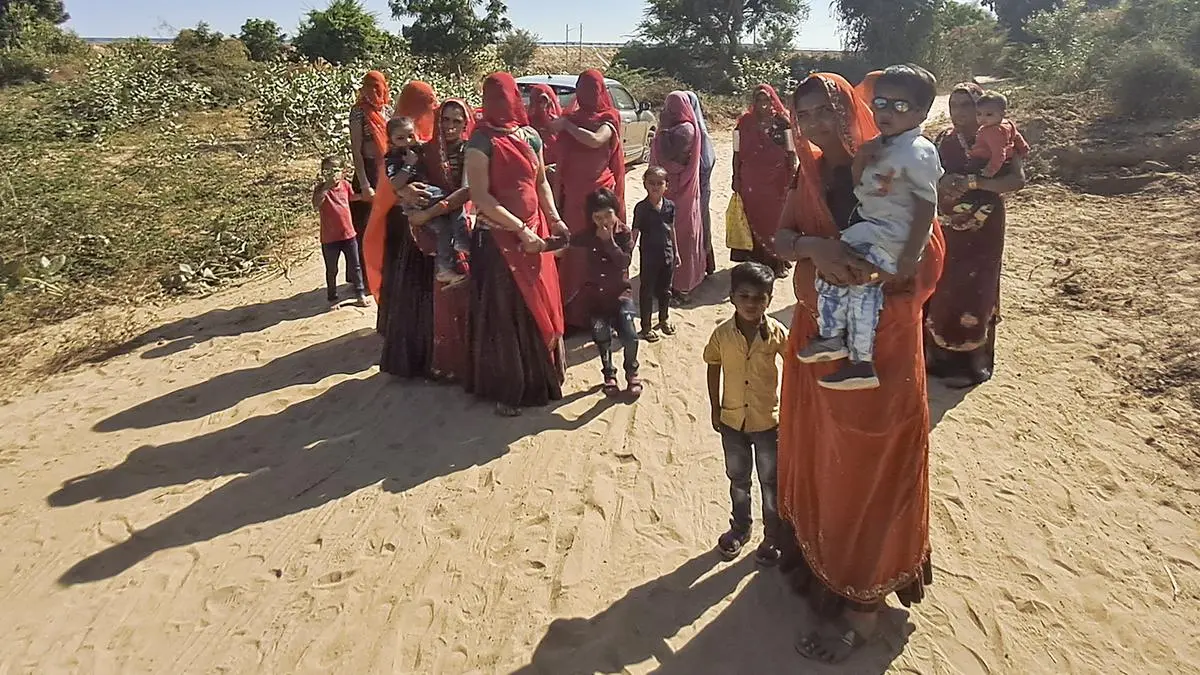
Gujarat logged 5.96 lakh Lakhpati Didis in the push to get rural women earning above ₹1 lakh a year
Gujarat has identified 10 lakh potential Lakhpati Didis under the central government's rural livelihood programme. Of those, 5.96 lakh have now been formally recognised as earning a household income of over ₹1 lakh annually, according to a press release from the Gujarat Chief Minister's Office.
The Lakhpati Didi scheme runs under the Deendayal Antyodaya Yojana National Rural Livelihoods Mission (DAY-NRLM). Its target is women in Self-Help Groups (SHGs). The programme provides training, credit, and market access to help them push household income past the ₹1 lakh threshold.
Gujarat's state-level execution arm, the Gujarat Livelihood Promotion Company, has appointed 124 Master Trainers at district and taluka levels. Those trainers, themselves trained by National Resource Persons, have gone on to train over 10,000 Community Resource Persons (CRPs) including Krishi Sakhis, Pashu Sakhis, and Bank Sakhis. The structure is designed for on-ground reach rather than top-down targets.
"The PM has advanced the vision of women-led development through initiatives such as Swachh Bharat Abhiyan, Pradhan Mantri Jan Dhan Yojana, Ujjwala Yojana, PM Mudra Yojana, PM Awas Yojana and Beti Bachao Beti Padhao campaign," the CMO release said.
Practical rule: The Lakhpati Didi count is a lagging indicator of SHG income crossing a hard threshold. The leading indicators are the trainer pipeline and the credit-flow numbers out of DAY-NRLM.
Bhavnaben Patel: a case study in income stacking
Bhavnaben Patel of Nogama village in Chikhli taluka earns ₹10.16 lakh per year. Her income breaks down as ₹2 lakh from a canteen at the Collector's Office in Navsari, ₹5 lakh from catering services with fellow Sakhi Mandal members, ₹1 lakh from agriculture, and ₹2.16 lakh from other sources.
She joined the Gayatri Sakhi Mandal in 2014. Through SHG meetings, workshops, and awareness programmes under the National Rural Livelihood Mission, she learned about available schemes. The Mission Mangalam initiative and support from her SHG pushed her into canteen and catering services.
The income story here is not about a single grant or product. It is a stacking strategy: a District Industries Centre loan for a laptop, an Ayushman Card through the Primary Health Centre, and the canteen contract. The SHG structure gave her the institutional access to get each piece.
Shilpaben Pandya: food processing as an SHG off-ramp
Shilpaben Pandya of Nenpur village in Mahemdavad taluka, Kheda district, earns ₹10 lakh per year from food processing. She produces natural sharbats – in flavours such as Panchamrut, Lemon, Strawberry, and Guava – without added colours.
She has been with the Shilpa Sakhi Mandal since March 2010 and now serves as its President within the Nenpur Village Organisation (VO) and the Cluster Level Federation (CLF). After her SHG received a revolving fund, she started production. She then took food processing training from Rural Self-Employment Training Institutes (R-SETI) to expand.
This sequence – SHG revolving fund, then specialised training, then enterprise launch – is the pipeline the Lakhpati Didi model is designed to produce. The scheme does not just certify income; it invests in the training infrastructure first.
Mechanism: how DAY-NRLM's trainer layer works
The Lakhpati Didi framework sits inside DAY-NRLM. The goal is to stabilise SHG households above a minimum income floor using a pyramid of trainers.
At the top, National Resource Persons train state-level Master Trainers. Those Master Trainers then train Community Resource Persons at the district and village level. The CRPs include specialised roles: Krishi Sakhis (agriculture), Pashu Sakhis (animal husbandry), and Bank Sakhis (financial access).
The maths in Gujarat: 124 Master Trainers trained over 10,000 CRPs. Each CRP works with multiple SHGs. The reach multiplier is what makes the 5.96 lakh Lakhpati Didi count possible. Without the trainer layer, the programme would scale slowly and unevenly.
The state's role vs the centre's framework
The Ministry of Rural Development designs the DAY-NRLM framework nationally. State governments – in this case Gujarat's Chief Minister Bhupendra Patel – guide implementation through state-level livelihood promotion companies.
Gujarat's press release frames the scheme as part of Prime Minister Narendra Modi's vision of "women-led development" and a "Viksit Bharat". The release cites Swachh Bharat Abhiyan, Jan Dhan Yojana, Ujjwala Yojana, PM Mudra Yojana, PM Awas Yojana, and Beti Bachao Beti Padhao as the broader framework.
Key insight: The Lakhpati Didi scheme is one of the few central programmes where the state-level execution density – trainer count, CRP count, SHG penetration – is a directly measurable leading indicator, not just a budget-outlay metric.
What would confirm sustained progress
The 5.96 lakh count is a recognition milestone, not an end. The real test is whether the income is sustained and compoundable. A few concrete markers to track:
- SHG credit growth in Gujarat under DAY-NRLM – does the revolving fund pipeline keep feeding new enterprise
- CRP retention – are the 10,000+ trained CRPs staying in their roles, or dropping out
- Repeated crossing of the ₹1 lakh threshold by the same households across two or three consecutive years
- Enterprise diversification beyond agriculture into services, processing, and contracts (like Bhavnaben's canteen)
The Gujarat numbers show capacity. Whether they show velocity depends on what happens in the next annual cycle.
The bottom line for tracking the programme
The Lakhpati Didi initiative is not a cash-transfer scheme. It is a training-and-credit architecture that requires state-level institutional capacity. Gujarat's 5.96 lakh count and its trainer pyramid show that the architecture can produce measurable results. The question for other states is whether they can match the trainer density and the SHG penetration.
For an investor or analyst watching rural consumption and micro-enterprise trends, the Lakhpati Didi count is a useful proxy for rural women's income velocity in a state. The programme's structure means the number is conservative – households must prove annual income above ₹1 lakh to qualify. A rising count signals real earning shifts at the bottom of the pyramid.
Gujarat's next milestone will be the remaining 4 lakh potential Lakhpati Didis. If the trainer infrastructure holds, the gap should narrow. That is the metric to watch for the next fiscal cycle.