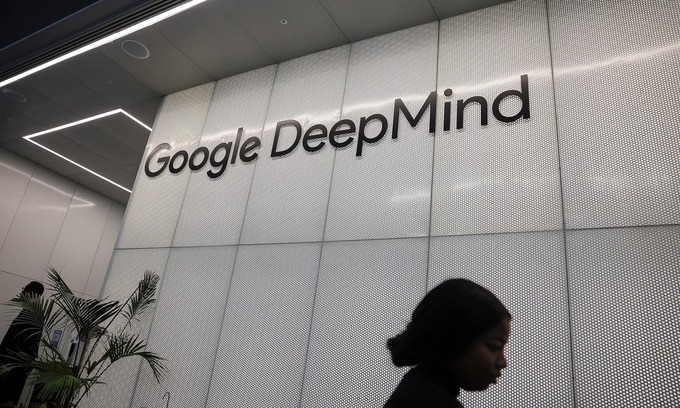
Cao Liangliang, a former Google DeepMind director who worked on the Gemini model, has left the U.S. after two decades to join Hong Kong Polytechnic University as a chair professor. The appointment took effect June 29, the university said, as reported by the South China Morning Post.
"Returning to Hong Kong is a full-circle moment for me," Cao wrote on his personal website.
His path in AI began at the Chinese University of Hong Kong in 2003, in the Multimedia Laboratory run by Tang Xiao'ou, the computer scientist who later founded SenseTime. Tang died in December 2023, Caixin reported. Cao earned a bachelor's from the University of Science and Technology of China in 2003 and a master's under Tang in 2005 before moving to the University of Illinois Urbana-Champaign for a doctorate with Thomas S. Huang, a computer vision pioneer who mentored more than 100 students before his death in 2020.
In 2010 Cao was part of a team that won the ImageNet Large Scale Visual Recognition Challenge, the contest built on the dataset created by Stanford's Li Fei-Fei. That challenge became a foundation of deep-learning breakthroughs in computer vision.
After his doctorate, Cao joined IBM's T.J. Watson Research Center in 2011 and later Yahoo Labs, while teaching as an adjunct professor at Columbia University and the University of Massachusetts Amherst. He co-founded Switi Inc., which Google acquired in 2018, then worked at Google as a senior staff scientist and manager. He moved to Apple as a principal scientist and engineering lead, serving as the modeling lead for on-device Apple Intelligence, before returning to Google DeepMind as a principal engineer and director on the Gemini team.
"For more than a decade, I have worked on intelligent assistants and AI agents, contributing to Gemini, Google Assistant, Apple Intelligence and IBM Watson," Cao wrote.
His recent research centers on AI tools for special education, including methods to detect early signs of autism by analyzing a child's gaze and facial expressions in video.
The move adds to a pattern of senior AI researchers leaving U.S. tech companies for academic posts in China and Hong Kong, where government and university funding for AI has grown sharply. Cao's return to Hong Kong, where his career began, gives PolyU a researcher with experience across the Gemini, Apple Intelligence, and IBM Watson product lines.