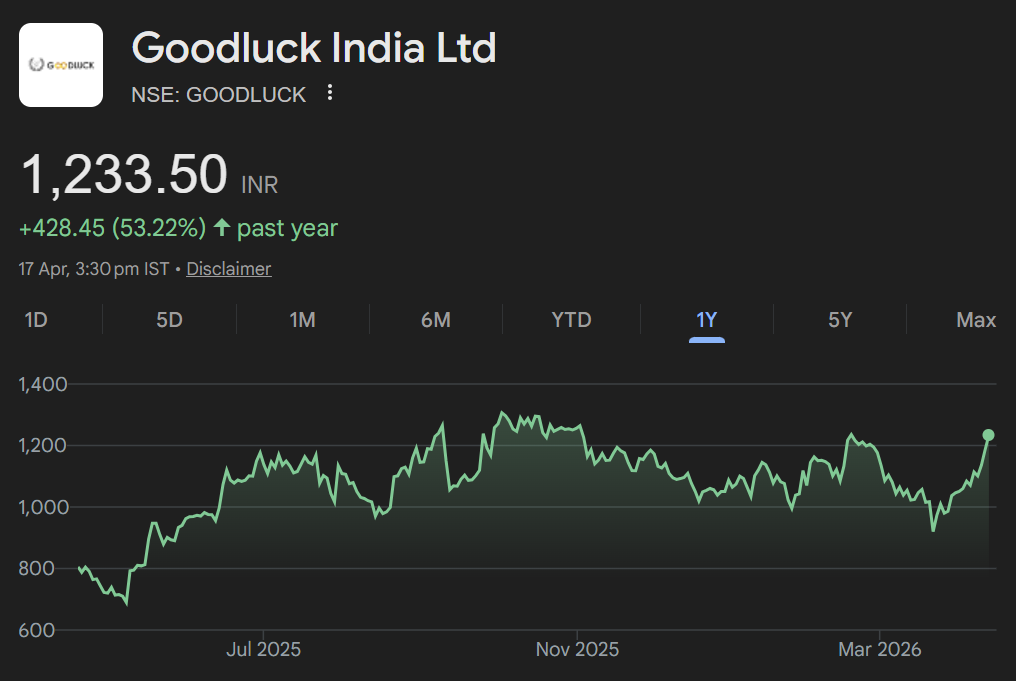
Goodluck India has initiated a strategic pivot toward high-value product segments, specifically targeting the hydraulic tube market to capture demand within the automotive and construction equipment sectors. The company has established a production capacity of 50,000 MTPA to support this expansion. This move represents a shift in the firm's operational focus, aiming to leverage specialized manufacturing to improve its underlying margin profile.
Operational Scaling and Sector Integration
The integration of hydraulic tube production serves as a primary catalyst for the company's current growth narrative. By aligning its output with the specific requirements of the automotive and construction industries, Goodluck India is positioning itself to capture a larger share of the industrial supply chain. The current operational target for EBITDA margins in these new product categories sits between 12% and 13%. This range suggests a deliberate effort to move beyond commodity-grade steel products toward higher-margin industrial components.
Success in this transition depends on the company's ability to maintain high utilization rates across its new 50,000 MTPA capacity. The automotive and construction sectors remain sensitive to broader macroeconomic cycles, making the timing of this capacity expansion a critical factor for future revenue consistency. If the company successfully integrates these products into its existing client base, it could establish a more resilient earnings foundation that is less susceptible to the volatility of standard steel pricing.
Valuation and Growth Trajectory
Market expectations for Goodluck India have shifted as the firm moves into this capital-intensive phase. The current outlook assumes that the expansion into hydraulic tubes will act as a primary driver for long-term value creation. Investors are evaluating the firm based on its ability to scale these specialized lines while managing the debt load associated with recent infrastructure investments. The focus remains on whether the projected margin improvements can be sustained as the new capacity reaches full operational status.
AlphaScala data provides a comparative look at how firms in the broader industrial and consumer sectors are currently positioned. For instance, Agilent Technologies (A) currently holds an Alpha Score of 55/100, while Target Corporation (TGT) maintains an Alpha Score of 64/100. These scores reflect different risk profiles within the healthcare and consumer staples sectors, serving as a benchmark for how companies manage operational transitions in their respective markets.
The Path Toward Operational Maturity
The next concrete marker for Goodluck India will be the disclosure of utilization rates for the new hydraulic tube facility in upcoming quarterly filings. Investors should monitor the following indicators to assess the success of this expansion:
- The stabilization of EBITDA margins within the 12% to 13% range across the new product lines.
- The conversion rate of existing automotive and construction clients to the new hydraulic tube offerings.
- The impact of increased production capacity on the company's overall debt-to-equity ratio.
As the company scales these operations, the primary risk remains the potential for cyclical downturns in the automotive and construction sectors to dampen demand for new capacity. The ability to maintain pricing power in the face of raw material cost fluctuations will be the final test of the firm's current growth strategy. Further stock market analysis will be required to determine if these gains can be sustained as the company navigates the next phase of its industrial expansion.