Commodities● Neutral
Gold Holds $4,000 as US-Iran Strikes Test Ceasefire
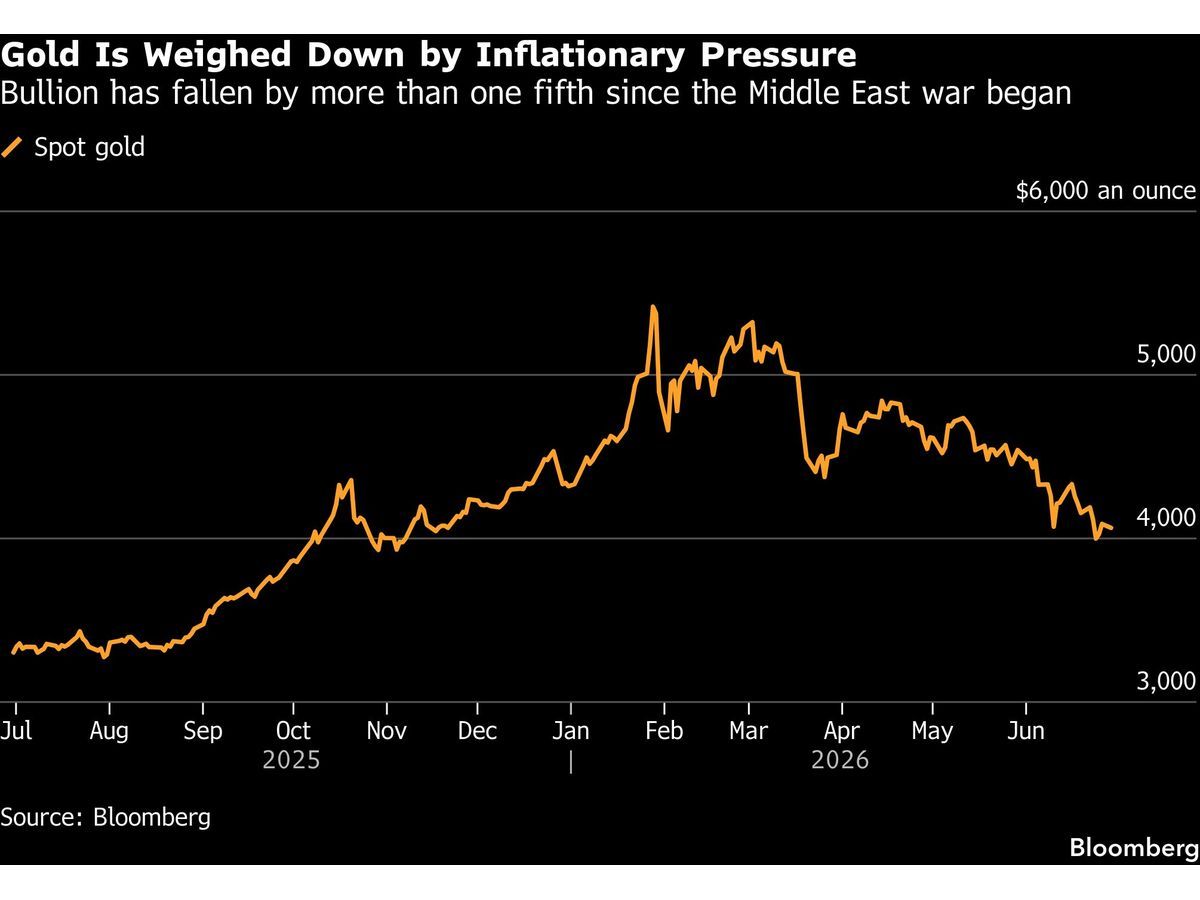
Gold slipped toward $4,000 after US-Iran attacks strained a ceasefire. Dip buyers are defending the level, one analyst said, as the metal has erased year-to-date gains.
Continue with
Gold slipped toward $4,000 an ounce after the US and Iran traded attacks in the Persian Gulf over the weekend, straining a ceasefire that had pushed energy prices back to pre-war levels.
Spot gold fell as much as 0.9% before recovering to trade down 0.6% at $4,064.47 by 8:53 a.m. Singapore time. The move followed a 1.6% gain on Friday. Oil advanced after a tanker carrying Qatari crude was hit during the tit-for-tat assaults, which hampered shipping through the Strait of Hormuz.
The two sides have since agreed to halt the attacks and meet Tuesday in Doha, Axios reported, citing unidentified US officials.
Gold holding above $4,000 despite renewed tension in the strait "suggests marginal dip buyers have returned and are willing to defend this level," said Justin Lin, an analyst at Global X ETFs Australia.