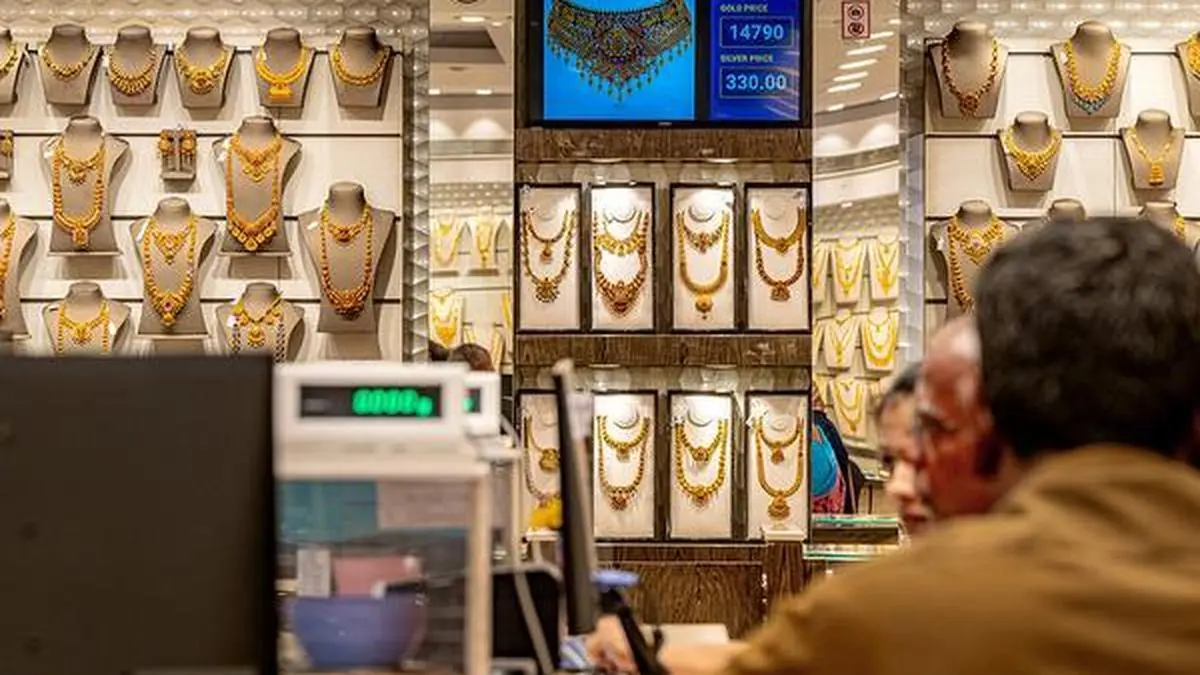
The Indian organised gold jewellery retail sector is heading for its worst sales volume in a decade, excluding the pandemic year. A customs duty hike to 15% from 6%, combined with domestic gold prices near Rs 160,000 per 10 gram, is crushing demand. Crisil Ratings projects a 13-15% on-year volume decline this fiscal, following an 8% contraction last year. That would push volumes to 620-640 tonne, the lowest since fiscal 2021.
A surface reading focuses on the volume collapse. A deeper market read separates volume from revenue and credit. Higher realisations from the price surge will drive 20-25% revenue growth. Absolute EBITDA is expected to rise 20% on-year. Credit profiles, despite higher inventory costs and debt, are seen as stable. The tension between collapsing volume and rising revenue creates a specific risk setup for traders watching Indian gold demand, retail margins, and policy spillovers.
The Duty Hike: From 6% to 15% – Policy Mechanism
The central government more than doubled the customs duty on gold in a single move, aiming to curb imports and narrow the trade deficit. In fiscal 2026, India imported about 720 tonnes of gold, costing roughly USD 72 billion in foreign currency outflows. The duty hike is a direct policy response to that outflow and a depreciating rupee.
Himank Sharma, Director at Crisil Ratings, said the decision “will be a significant deterrent to demand for gold jewellery.” The mechanism is straightforward: higher import taxes raise the landed cost of gold, which retailers pass to consumers. At current prices, the duty adds roughly Rs 24,000 per 10 gram compared to the old rate. That increment alone is enough to push marginal buyers out of the market.
The 55% Price Surge
Domestic gold prices rose an unprecedented 55% last fiscal, driven by global geopolitical uncertainty and a weakening rupee. The rupee’s depreciation amplified the dollar-denominated rally. At Rs 160,000 per 10 gram for 24-carat gold, realisations this fiscal will be 35-40% higher on-year, according to Crisil. That price level is the primary reason revenue can grow while volume shrinks.
Volume Collapse: 620–640 Tonne and Demand Shifts
The 620-640 tonne forecast represents a two-year cumulative drop of roughly 21-23% from fiscal 2025 levels. The only lower print in the past decade was fiscal 2021, when Covid lockdowns shut stores. This time, the cause is purely price-driven demand destruction.
Shift to Lower Carat and Investment Products
Consumers are adapting in two ways. First, they are trading down to 16-22 carat jewellery and studded pieces, which use less gold per item. Second, investment demand for gold bars and coins has surged over 50% in the past two fiscals, while jewellery sales fell about 25%. That shift is not enough to offset the overall volume decline, it changes the product mix for retailers.
Revenue Paradox: Higher Realisations Masking Weak Demand
Revenue growth of 20-25% this fiscal, despite a 13-15% volume drop, is a direct function of price. Every gram sold generates more rupees. That arithmetic protects top-line numbers, it masks the underlying weakness in consumer appetite.
EBITDA and Margin Pressure
Absolute EBITDA is expected to rise 20% on-year, partly covering higher inventory costs and expansion plans. Gross margins face headwinds. Retailers may offer deeper discounts and increase promotional spending to move inventory. Inventory days are expected to rise to 160-180 days from 150 days last fiscal, tying up more working capital.
Gaurav Arora, Associate Director at Crisil Ratings, noted that organised retailers are expanding cautiously through franchise-led models, which improve capital efficiency and extend reach into Tier 2 and 3 cities. That strategy limits the balance-sheet strain from higher inventory.
Credit Stability: Debt Rises, Metrics Stay Manageable
Debt will increase by about a third this fiscal to fund higher inventory at elevated gold prices. The total outside liabilities-to-adjusted net worth ratio will rise to around 1.5 times as of March 31, 2027, from 1.2 times a year earlier. That is still within manageable territory.
Median interest coverage is seen moderating to 5-6 times this fiscal from about 7 times last fiscal. The decline reflects higher borrowing costs and larger debt loads, the absolute level remains healthy. Crisil expects credit profiles to stay stable, supported by improved revenues and cash accruals.
| Metric | Fiscal 2026 (Est.) | Fiscal 2025 |
|---|
| Volume (tonne) | 620-640 | ~720 |
| Revenue growth | +20-25% | +8% (est.) |
| EBITDA growth | +20% | – |
| Inventory days | 160-180 | 150 |
| Interest coverage | 5-6x | ~7x |
| TOL/ANW ratio | ~1.5x | 1.2x |
Key Risks to the Stable Outlook
Crisil flagged four specific risks that could turn the stable credit outlook into a problem:
- Steep fluctuations in gold prices – a sharp drop would force inventory write-downs and squeeze margins.
- Further regulatory changes – another duty hike or import restrictions would deepen the volume decline.
- Government restrictions on gold purchases – direct limits on buying or holding gold would be a structural shock.
- Shifts in consumer sentiment – if investment demand also falters, the volume floor could break lower.
Traders should watch the rupee-dollar exchange rate and global gold prices as the primary inputs. A stronger rupee would lower domestic prices and potentially revive demand, the duty hike is a fixed cost that will not adjust quickly.
The Trader's Decision Point
The organised jewellery sector is caught between a volume cliff and a revenue boom. For traders, the key question is whether the 20-25% revenue growth and stable credit profiles are enough to sustain equity valuations, or whether the volume decline will eventually force margin compression that the market has not priced.
What this means: The duty hike is a deliberate policy drag on gold demand. It will work as intended – lower imports, smaller trade deficit. The revenue growth is a mirage of price, not demand. If gold prices stabilise or fall, the revenue growth disappears and the inventory strain becomes visible.
For traders holding Indian gold jewellery stocks, the watchlist should include monthly import data, customs duty announcements, and quarterly same-store sales from organised players. A sustained volume drop below 600 tonne would signal that the demand destruction is deeper than Crisil’s base case.
For commodity traders, the Indian demand weakness is a bearish signal for global gold, it is partly offset by strong central bank buying and investment flows elsewhere. The Indian premium over international prices will remain elevated as long as the duty stays at 15%.
Read more on commodities analysis and the gold profile for ongoing coverage of Indian gold policy and its market effects.