Back to Markets
Commodities● Neutral

Gold Demand Shifts as Akshaya Tritiya Approaches Amid Price Volatility

Gold Demand Shifts as Akshaya Tritiya Approaches Amid Price Volatility
ASABCOST

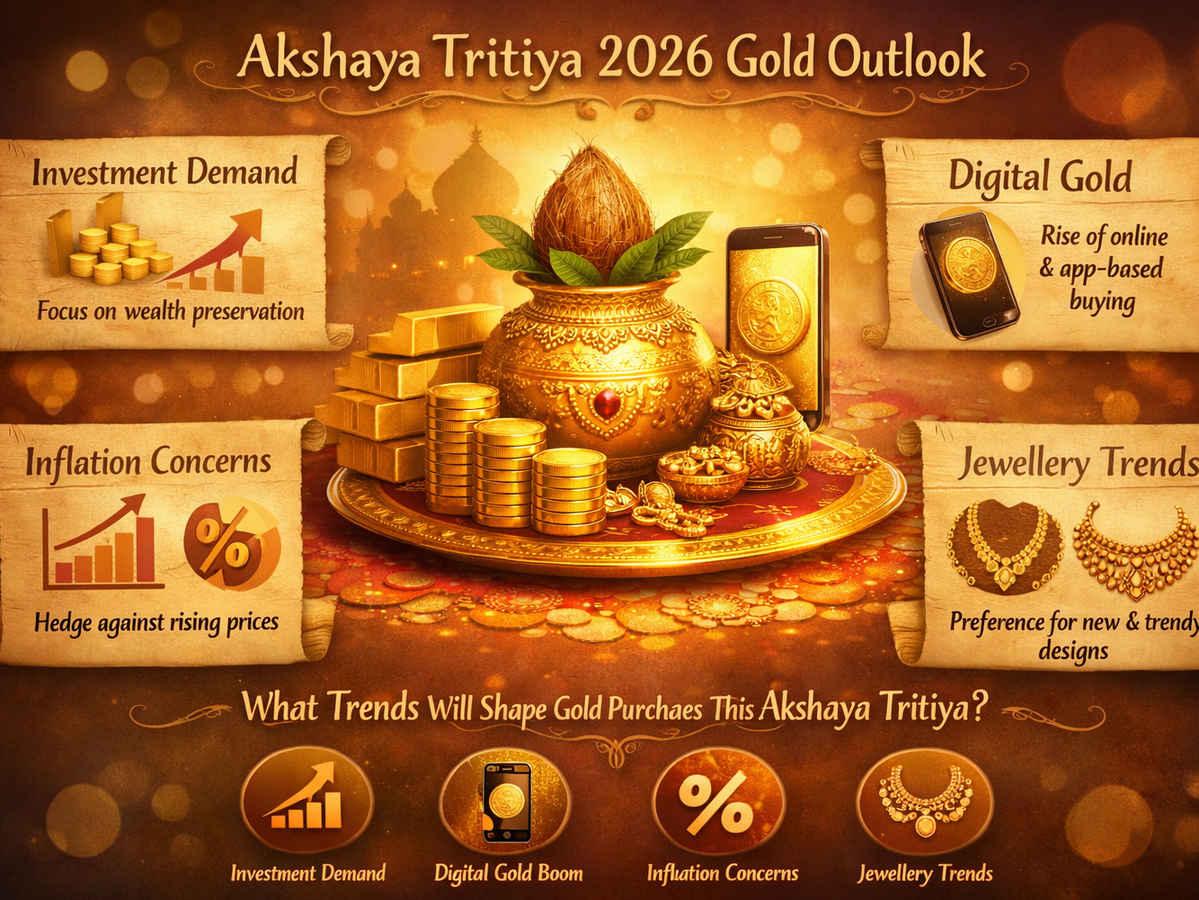
Gold demand for Akshaya Tritiya 2026 is shifting toward investment-grade assets like coins and bars as consumers navigate price volatility and diversify into silver and diamonds.

AlphaScala Research Snapshot
Live stock context for companies directly referenced in this story
Consumer Cyclical
Alpha Score
47
Weak

Alpha Score of 47 reflects weak overall profile with moderate momentum, poor value, moderate quality. Based on 3 of 4 signals — score is capped at 90 until remaining data ingests.

Alpha Score
55
Moderate

Alpha Score of 55 reflects moderate overall profile with moderate momentum, moderate value, moderate quality. Based on 3 of 4 signals — score is capped at 90 until remaining data ingests.

Basic Materials
Alpha Score
70
Moderate

Alpha Score of 70 reflects moderate overall profile with moderate momentum, moderate value, strong quality, moderate sentiment.

Consumer Staples
Alpha Score
57
Moderate

Alpha Score of 57 reflects moderate overall profile with moderate momentum, moderate value, moderate quality, moderate sentiment.

This panel uses AlphaScala-native stock data, separate from the source wire linked above.

Gold enters the 2026 Akshaya Tritiya season facing a distinct environment defined by elevated price volatility. While the festival traditionally serves as a cornerstone for physical gold demand, the current market landscape is shaped by broader macroeconomic uncertainty and persistent geopolitical tensions. These factors have created a complex backdrop for consumers and investors who typically view this period as an auspicious time for accumulation.

Geopolitical Drivers and Price Sensitivity

The current volatility in gold prices is primarily a function of global economic concerns and shifting geopolitical risks. These external pressures have moved gold into a cycle of rapid price fluctuations, forcing a shift in how market participants approach the asset. Rather than viewing high price points as a deterrent, many investors are treating the volatility as a structural opportunity to build positions gradually. This strategy of staggered accumulation allows buyers to mitigate the risk of entering the market at a single peak, aligning with the long-term store-of-value narrative that gold maintains during periods of instability.

Diversification in Precious Metal Portfolios

Consumer behavior during this year's Akshaya Tritiya is showing signs of diversification beyond traditional jewelry purchases. While gold remains the primary focus, there is a measurable trend toward smaller, more liquid forms of the metal. Investors are increasingly prioritizing coins and small bars, which offer easier entry points and better portability compared to ornamental gold. This shift toward investment-grade physical assets suggests that buyers are becoming more tactical in their approach to wealth preservation.

Furthermore, the appetite for precious metals is expanding into a broader category of luxury and store-of-value assets. Consumers are increasingly exploring diamonds and silver alongside their gold purchases. This trend indicates a move toward a more balanced portfolio approach among retail buyers, who are looking to hedge against gold-specific price swings by incorporating other commodities. The following factors are currently influencing purchasing decisions:

  • Preference for coins and small bars over traditional jewelry for investment purposes.
  • Increased interest in silver as a lower-cost alternative for physical accumulation.
  • Growing consumer appetite for diamonds as a complementary asset class.

This shift in buying patterns reflects a more sophisticated retail market that is increasingly conscious of asset allocation. As consumers move beyond traditional gold, the overall demand profile for the festival period is becoming more fragmented. The next concrete marker for this market will be the post-festival data on physical inventory depletion and the specific volume of bullion versus jewelry sales, which will clarify whether the shift toward investment-grade assets is a temporary reaction to price volatility or a permanent change in consumer behavior. For more on the long-term outlook for the metal, see our gold profile and broader commodities analysis.

How this story was producedLast reviewed Apr 18, 2026

AI-drafted from named sources and checked against AlphaScala publishing rules before release. Direct quotes must match source text, low-information tables are removed, and thinner or higher-risk stories can be held for manual review.

Editorial Policy·Report a correction·Risk Disclaimer