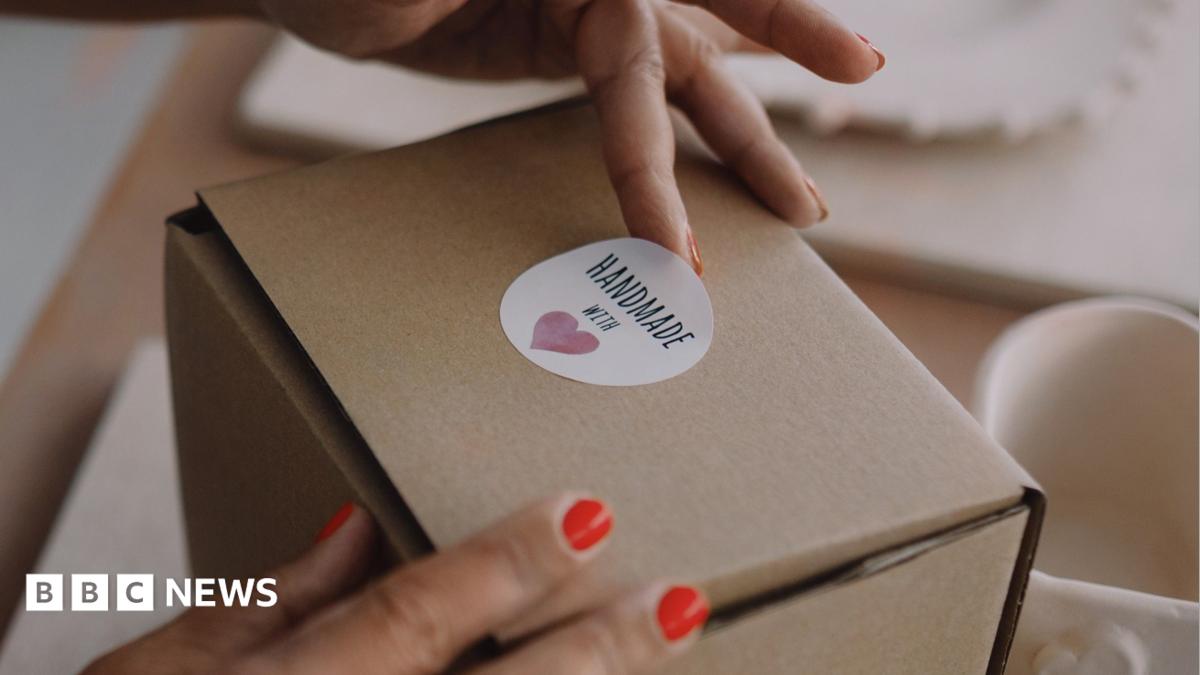
Three German firms develop adhesive-free paper sealing as Europe's PPWR regulation demands 70% recyclable packaging by 2030. Challenges remain in machinery, speed, and food-grade barriers.
Paper packaging that would otherwise be recyclable often ends up rejected because of the glue holding it together. Non-recyclable adhesives, known in the industry as “stickies,” can damage recycling machinery or lower the quality of the recycled batch, scientists at NC State University said.
That is a meaningful problem for an industry where paper is one of the most recycled materials in Europe. Roughly 74% of paper and board consumed in 2024 was recycled, according to industry data.
European regulators are pushing for more. A new Europe-wide packaging and packaging waste regulation (PPWR) that takes effect in August requires all packaging to be at least 70% recyclable by 2030, rising to 80% from 2038. German law will also require stricter reporting and licensing fees.
Three German firms – Fraunhofer, Hermann Ultraschall and Henkel – have developed adhesive-free sealing technologies that could help. All three are based in Germany’s “Packaging Valley,” a regional hub for the packaging industry. Their work is partly a response to tightening recycling rules and rising fines for non-compliance.
Fraunhofer launched the PAPURE project in 2023 to develop a laser-based heating process that seals paper packaging without adhesive. The project is set to close in September, and Fraunhofer is looking for an industry partner to commercialize the technology. The researchers exhibited at the Interpack trade show in Dusseldorf in May and said interest was strong.
“There are not really many paper sealing technologies without any foreign materials, so it's a great technology and we feel it's likely that we can bring it to market,” said Fabian Kayatz, a researcher group leader at Fraunhofer. “If we are optimistic, we will have the first solution out in two years.”
Hermann Ultraschall bought the rights to a patented ultrasonic paper sealing technology in 2023, a process the company likens to welding. “We are really actively at the moment in discussion with several really big players in the market with the focus of bringing this technology into mass production,” said Michael Baumann, the company’s head of business development packaging. “One customer told me this is an innovation they have never seen before.”
The technology faces hurdles. Existing packaging machinery is built for glue materials. “Some kind of redesign is probably necessary, and this is our biggest challenge,” Baumann said. Volker Franke, also a research group leader at Fraunhofer, said existing machines can be modified by integrating the PAPURE laser module. Both acknowledged production speed is slower than adhesive-based packaging. Franke said fully automated production should allow for faster throughput.
The technologies do not work on all paper types. “It's not possible to bond every paper material,” Baumann said. “We are actively in discussion with paper manufacturers about how they can produce a raw material in a way that makes it easy to bond.” PAPURE has not yet found a way to apply its laser sealing to food-grade packaging, which requires a protective coating – the reason plastic is often used for food packaging.
Henkel has addressed that gap. In February, the company launched the first cold seal solution that works with barrier-coated paper, making it both recyclable and suitable for food products. Barrier paper is difficult to bond, and heat is unsuitable for temperature-sensitive foods like ice cream or chocolate. Henkel’s cold seal uses pressure to bond the coated paper against itself. The solution is already being used in snack and confectionery products, though Henkel declined to name the brands.
Henkel previously developed a fully recyclable heat seal solution for paper. Italian brand Regina used it to switch from plastic to paper packaging for toilet roll, kitchen paper and napkins.
“Since paper is already very established in the recycling infrastructure, it's a very obvious solution when we think about how we can improve the sustainability and recyclability of our packaging,” said Dr. Arianna Savini, market strategy manager for paper packaging Europe at Henkel’s adhesive technologies division. “This is really a system shift. You need to engage with all the players in the supply chain to enable this change. There is good momentum in the industry now because of the PPWR deadline.”
Jamie Stone, a packaging expert at global innovation consultancy PA Consulting, said multiple surfaces in a single package must work together. “Take a yoghurt pot made from folded paper fibre. You need a barrier layer between the paper fibre and the yoghurt to protect the shelf life, and you also need a secure lid,” he said. “If the barrier layer is a liner, it needs to be very thin. It also needs to bond really well to the paper fibre part. If it doesn't stick well enough, you risk pulling out the lining with the lid still attached – leaving a messy, partially sealed pot of yoghurt.”
Ambarish Mitra, co-founder of waste analytics platform Greyparrot, said the bigger problem is collection and sorting. “A lot of paper and card doesn't get recycled because it gets dirty or mixed in with other rubbish before it even reaches a recycling plant, not because of the glue holding it together,” he said.
Stone called the new sealing technologies “a smart place to start.” He said the real sustainability benefits will scale as the technologies mature and handle more complex, high-barrier paper-based packaging while matching the speed and cost of plastic packaging lines.
Drafted by a large language model from the source reporting linked above, then screened by automated publishing checks. It is not read by a journalist before publication. Some articles cite our Alpha Score. Verify prices and figures against the original source. Educational coverage, not personalized advice.