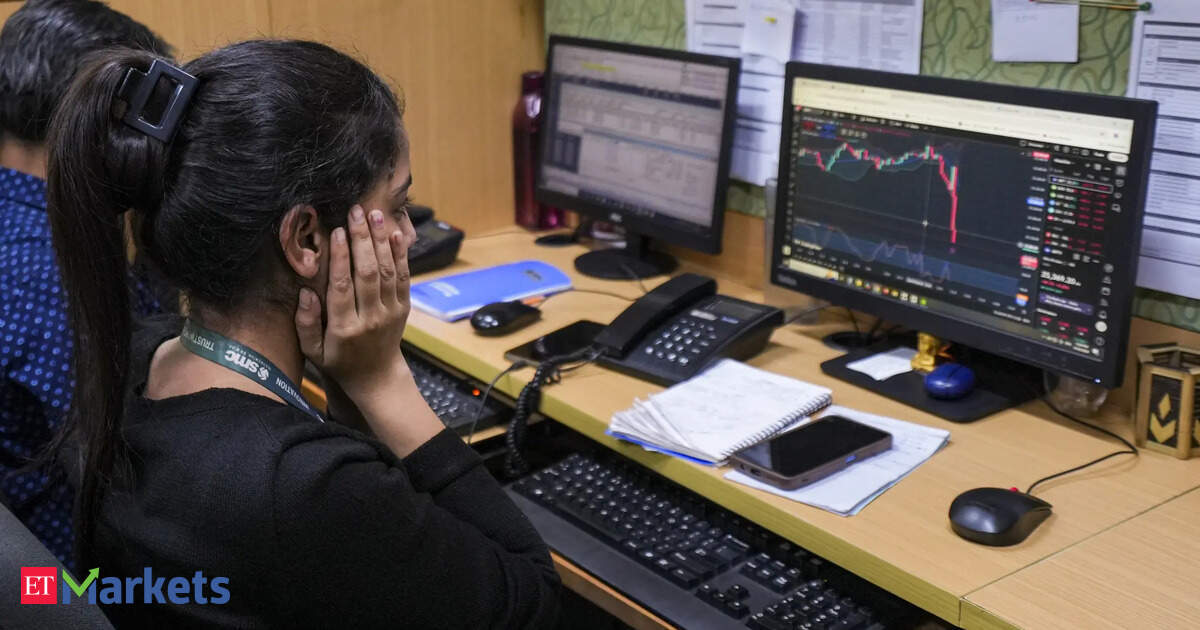
The GIFT Nifty fell 1.5% in Friday's session, tracking a sharp selloff in US equities as a fresh wave of tariff threats from the White House rattled global risk appetite. For anyone watching Indian equities, the question is not whether the Nifty 50 will gap down on Monday – it will. The real question is how far the transmission runs through domestic liquidity, sector positioning, and the USD/INR pressure valve.
The headline move is simple: US stocks dropped on renewed trade-war escalation fears, and the GIFT Nifty – effectively the offshore futures proxy for India's benchmark – priced in a 1.5% discount ahead of the cash open. That is a mechanical read. The better market read is that this selloff exposes a structural vulnerability in India's IT services and banking sectors, both of which carry elevated sensitivity to the transmission path the source describes.
Tariff Shock and the Nifty Transmission Path
The immediate trigger is the US administration's latest tariff escalation, which targets a broad set of imports. For Indian equities, the chain runs through three specific channels. First, the USD/INR reaction: when US trade policy raises global uncertainty, the dollar typically strengthens on safe-haven flows. A stronger dollar pressures the rupee, and a weaker rupee directly hurts banks with large foreign-currency liabilities and import-heavy sectors like oil and gas.
Second, the yield channel. US tariff shocks historically push Treasury yields lower on flight-to-safety buying in the first 48 hours, then higher as inflation expectations reprice. If US 10-year yields rise, the Nifty 50's growth-stock heavyweights – particularly Infosys and Wipro in the IT basket – lose valuation support because their future cash flows are discounted at a higher rate. That is a mechanical drag that no domestic policy can offset in the short run.
Third, the corporate earnings revision cycle. Indian IT firms derive roughly 60-70% of revenue from North America. A US tariff shock that slows corporate IT spending directly hits Infosys and Wipro revenue growth at a time when the sector is already navigating AI-driven demand shifts. The GIFT Nifty's 1.5% drop is the market front-running that earnings risk.
Why the IT Basket Carries the Most Exposure
Infosys (INFY) and Wipro (WIT) are the two most liquid Indian IT stocks with direct US exposure. The source notes that the sector is already facing AI-disruption headwinds that have knocked valuations lower over the past year. A tariff-driven US slowdown compounds this: as US clients delay or cut discretionary IT spending, the revenue visibility for Infosys and Wipro shortens.
The key insight is that this is not a repeat of the 2020 Nasdaq-led selloff where Indian IT stocks bounced first because they were viewed as remote-work beneficiaries. The current selloff is fundamentally different. US tariff policy creates a currency and cost headwind that hits Indian IT margins directly on the USD-INR translation effect and indirectly on volume weakness.
AlphaScala's internal scoring reflects this structural tension. Infosys carries an Alpha Score 57/100 (Moderate) and Wipro carries an Alpha Score 46/100 (Mixed), both in the Technology sector. Market analysis of the current macro setup suggests these scores are likely to face downward pressure if the US tariff narrative escalates further.
HDFC Bank and the Liquidity Trap
The other major weight in the GIFT Nifty is HDFC Bank (HDB) , India's largest private lender by market cap. HDB carries an Alpha Score 39/100 (Mixed) in AlphaScala's framework, reflecting a challenging 2025 where margin compression and deposit-growth competition have already capped outperformance. A US tariff shock adds a fresh margin headwind via two mechanics.
First, if the rupee weakens sharply on Monday's open, the Reserve Bank of India may step in with intervention, draining banking-system liquidity. That forces HDFC Bank and peers to compete harder for deposits, compressing net interest margins. Second, the tariff escalation raises the probability that the RBI holds rates steady for longer, keeping the yield curve flat and squeezing the largest lenders' core lending spreads.
The GIFT Nifty's drop is effectively the offshore market pricing in that HDFC Bank cannot escape this macro drag, regardless of its individual loan-book quality.
The Next Decision Point
The immediate catalyst is Monday's USD/INR open. A move above the 87.50 level – where the RBI has historically intervened – would signal that the central bank views the tariff shock as a one-off adjustment rather than a sustained crisis. A break above 88.00 on thin volumes would suggest deeper liquidity stress that could force further GIFT Nifty selling into the cash session.
On the fiscal side, the next scheduled data point is the US monthly trade balance release, which will show whether the tariff escalation is already showing up in import volumes. If the trade data surprises to the downside, expect the Nifty's IT and banking components to face a second wave of selling.
For traders holding open positions in HDB stock, INFY stock, or WIT stock into the Monday open, the risk management discipline is straightforward: the GIFT Nifty has already told you what the cash market has not yet traded. The gap-down is priced in. The question is whether the selling extends beyond the first 30 minutes or finds a floor from domestic institutional flows.