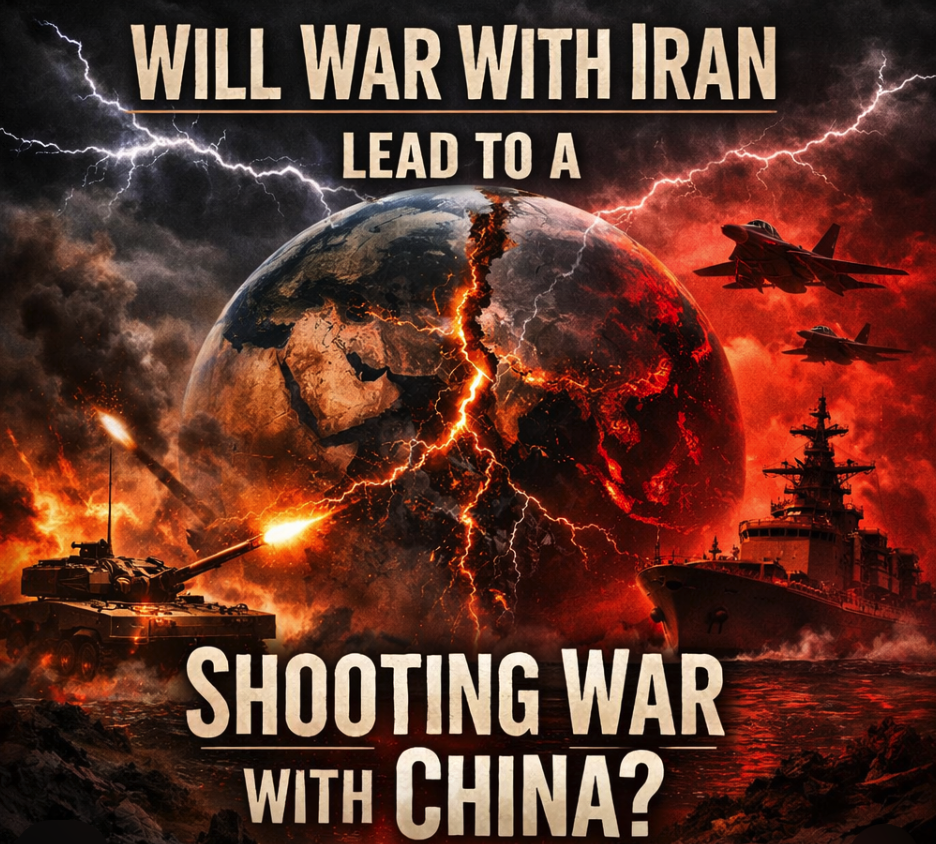
Geopolitical Realignment: Assessing Beijing’s Strategic Calculus Amid Middle East Volatility

As geopolitical tensions in the Middle East escalate, China’s critical reliance on energy imports could force a dangerous shift in its foreign policy, creating significant risks for global markets.
The Silent Escalation
For the better part of the last decade, global market participants have largely priced in localized Middle Eastern conflicts as transitory supply-side shocks. However, a shifting geopolitical paradigm suggests that the current tensions involving Iran—a key strategic partner to Beijing—may be entering a phase that threatens to drag the world’s second-largest economy into a direct confrontation with Western interests. As the conflict in the Middle East intensifies, the potential for a fundamental disruption in energy corridors has moved from a tail-risk scenario to a central pillar of speculative concern.
China’s Energy Vulnerability
China’s economic engine is inextricably linked to the stability of the Persian Gulf. As the world’s largest importer of crude oil and liquefied natural gas (LNG), Beijing relies on the unimpeded flow of energy through the Strait of Hormuz. Should a full-scale shooting war erupt involving Iran, the resulting blockade or disruption of these maritime chokepoints would be catastrophic for Chinese industrial output.
Analysts are increasingly noting that China’s frustration with Western policy is reaching a fever pitch. Beijing views the current regional instability not merely as a localized conflict, but as a direct assault on its core national interests and its long-term strategy for energy security. The question for traders is no longer whether China will react, but how much economic pain it is willing to absorb before moving from diplomatic posturing to active intervention. If the flow of oil and natural gas from the Middle East is cut off, the Chinese economy faces an immediate, supply-side recession that would ripple through global equity and commodity markets.
The Shift in Global Alliances
Historically, China has preferred a policy of economic pragmatism, prioritizing trade over ideological alignment. However, the hardening of the Beijing-Tehran axis suggests that China is no longer content to remain on the sidelines. By deepening its ties with Iran, Beijing is signaling that it is prepared to challenge the status quo enforced by Western powers. This strategic pivot creates a volatile environment where the risk of miscalculation is at an all-time high.
For investors, this represents a significant shift in the risk-on/risk-off calculus. The traditional assumption that the U.S. and its allies can manage regional conflicts without triggering a broader systemic response from China is being tested. If Beijing views the protection of its energy lifeline as a non-negotiable national security imperative, the probability of a secondary, high-stakes confrontation increases significantly.
Market Implications and Forward Outlook
What does this mean for the trading desk? First, the volatility premium on crude oil (CL) is likely to remain elevated, as the market begins to price in the risk of a regional conflagration that could shutter production. Second, the correlation between energy prices and broader indices like the SPX and the IXIC may tighten, as any disruption in energy flows would likely trigger a massive sell-off in industrial and tech-heavy sectors.
Traders should monitor the rhetoric emanating from the Ministry of Foreign Affairs in Beijing, as well as any changes in naval activity within the South China Sea and the Persian Gulf. While a direct shooting war remains a worst-case scenario, the market is beginning to recognize that the era of 'cheap energy and stable trade' is under pressure. Moving forward, the focus must shift toward how China manages its domestic energy reserves and whether it accelerates its pivot toward alternative supply chains, even at the cost of further alienating Western trading partners.