A Resilient Outlier in a Volatile Global Landscape
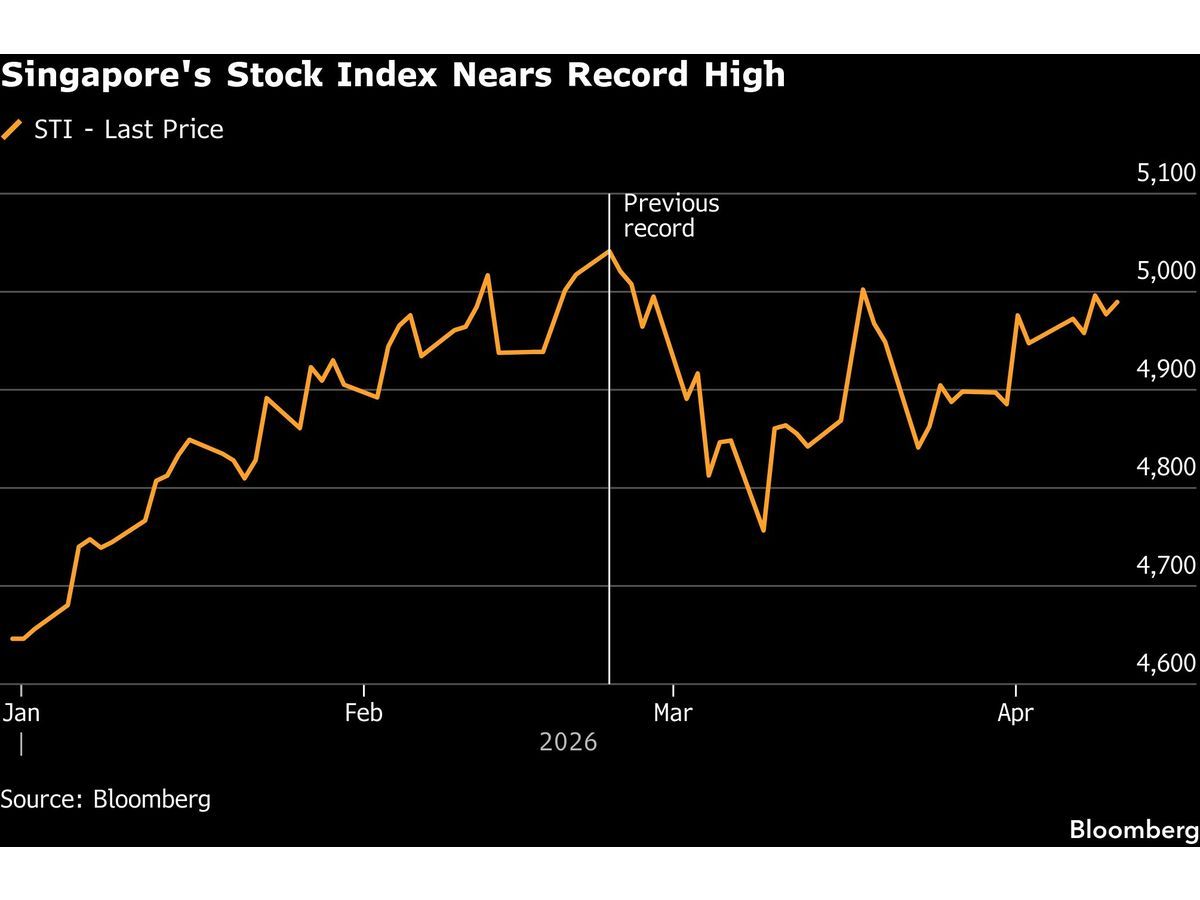
Singapore’s equity market is currently navigating a rare trajectory, with the Straits Times Index (STI) hovering within striking distance of its all-time record high. While global markets have been whipsawed by persistent macroeconomic uncertainty and escalating geopolitical tensions, the city-state’s financial assets are increasingly being viewed by institutional investors as a premier 'safe harbor.'
This move toward Singaporean equities reflects a broader thematic shift in capital allocation. As conflicts persist in the Middle East and Eastern Europe, the traditional playbook of seeking refuge in gold or U.S. Treasuries is being supplemented by a pivot toward jurisdictions perceived as politically neutral and economically stable. For Singapore, this has manifested as a steady inflow of liquidity, bolstering local blue-chip stocks and pushing the benchmark index toward levels not seen since its historical peak.
The Haven Premium: Why Capital Flows to the Lion City
What differentiates the Singapore market from its regional peers, such as Hong Kong or mainland China, is its perceived status as a neutral ground. In an era where trade fragmentation and supply chain regionalization are the new norms, Singapore’s strategic positioning as a global logistics and financial hub provides a buffer against the volatility typically associated with emerging market risks.
Institutional analysts point to the robustness of the local banking sector and the stability of the Singapore dollar as key drivers for this sentiment. When global volatility spikes—often measured by the CBOE Volatility Index (VIX)—investors tend to rotate out of high-beta growth stocks in the U.S. and toward dividend-yielding, stable-growth environments. Singapore offers a unique combination of a high-dividend yield profile and a regulatory environment that remains steadfast, making it an attractive destination for risk-averse capital looking for yield without excessive geopolitical exposure.
Market Implications and Trader Strategy
For the professional trader, the proximity of the STI to its record high presents a critical technical juncture. Markets often face 'psychological resistance' at historical highs, where profit-taking can lead to short-term consolidation. However, the current structural tailwinds—specifically the 'haven status' narrative—suggest that the index may have the momentum to clear these hurdles if global instability continues to worsen.
Traders should focus on the heavyweights within the STI, particularly the major banking institutions like DBS Group (DBS), Oversea-Chinese Banking Corp (OCBC), and United Overseas Bank (UOB). These entities are the bellwethers of the Singaporean economy and are highly sensitive to the capital flows that define the current market environment. If the current trend persists, a breakout above the record high could trigger a new wave of institutional buying, potentially extending the index’s gains.
Forward Outlook: What to Watch
As the STI approaches its zenith, investors must remain vigilant regarding the catalyst for this rally: global conflict. While the haven status is a boon for Singapore, it is inherently tied to the state of the world economy. Any sudden de-escalation in geopolitical tensions could lead to a 'risk-on' rotation, where capital moves back into higher-growth, higher-risk assets globally, potentially causing a temporary outflow from the Singaporean market.
Moving forward, the primary metric to track is the persistence of global volatility. If systemic risks remain elevated, the case for Singapore as a defensive play remains strong. Market participants should watch for sustained volume spikes during any breakout attempts, as these will serve as the best indicator of whether this rally is driven by genuine institutional conviction or simply a lack of better alternatives in the current global climate.