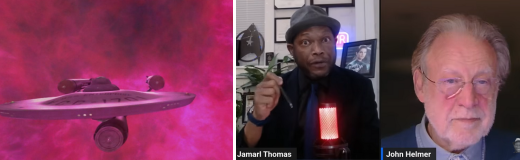
The Changing Guard of Independent Analysis
Independent analyst Jamarl Thomas is carving a distinct niche by dissecting geopolitical developments that often escape the lens of mainstream financial reporting. His commentary focuses on the intersection of state policy and global instability, providing a departure from the standard consensus found in terminal-based news feeds. For traders, this shift reflects a broader appetite for alternative data sources that challenge the traditional narrative surrounding international conflict and its impact on trade flow.
Thomas highlights the disconnect between official policy statements and the ground-level realities of geopolitical maneuvering. While institutional desks often rely on conventional risk models, the discourse surrounding figures like Thomas suggests that market participants are increasingly looking toward non-traditional analysts to hedge against information asymmetry. This trend is particularly relevant for those tracking the crude oil profile, where supply chain disruptions and political posturing can induce sudden volatility.
Market Impact and Information Flow
Market participants are currently facing a period where traditional sentiment indicators are becoming less reliable. Independent voices are filling the vacuum left by the centralization of media, often providing earlier warnings on regional tensions that eventually manifest in asset pricing. The following factors are driving this shift in focus:
- Increased demand for contrarian views on long-term geopolitical stability.
- A migration of retail and institutional engagement toward decentralized media platforms.
- The growing influence of independent commentators on public perception of market analysis.
"For our audience, which is exposed every few minutes of the day to the knowns, speculation about the known frequently masks the unknown."
Traders and the Signal-to-Noise Ratio
The real value for the trading desk lies in filtering this commentary for actionable signals. When political discourse shifts toward potential sanctions or supply-side constraints, the immediate reaction in commodities markets is often driven by momentum rather than fundamental shifts. Understanding the narrative arc presented by analysts like Thomas allows for a clearer view of how regional players might respond to economic pressure.
Monitoring these perspectives is not about replacing traditional research, but about identifying the blind spots that institutional models often overlook. When geopolitical narratives gain traction in independent circles, they eventually filter into the broader investor consciousness, often leading to sudden re-pricings. Traders should keep a close eye on how these alternative viewpoints influence market sentiment, especially when they diverge sharply from the consensus outlook on major indices like the SPX or IXIC.
Ultimately, the ability to synthesize these non-traditional insights provides a distinct edge in an environment where the news cycle moves faster than the underlying data can be verified.