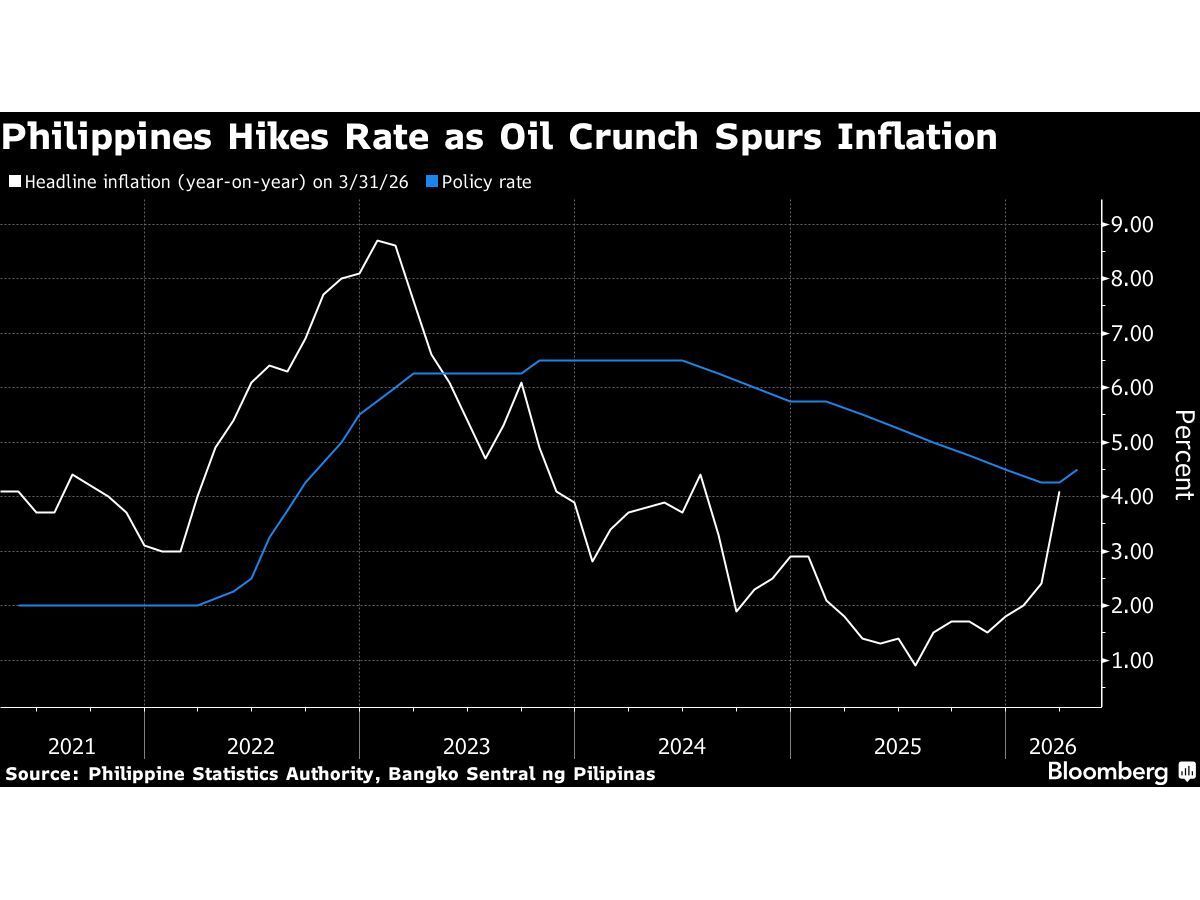
The Bangko Sentral ng Pilipinas (BSP) has enacted its first interest rate hike in over two years, signaling a decisive shift toward monetary tightening as inflation risks intensify. The policy adjustment follows a period of sustained price pressures that have pushed headline inflation beyond the central bank's target range. This move reflects a broader regional trend where central banks are forced to prioritize price stability over the accommodative stances maintained during the pandemic recovery phase.
Transmission to Local Yields and Currency
The immediate impact of the rate hike is concentrated in the domestic fixed-income market, where yields are adjusting to reflect the higher cost of capital. As the BSP moves to anchor inflation expectations, short-term government bond yields are expected to rise, creating a steeper yield curve for local debt instruments. This adjustment is critical for managing the interest rate differential against major global currencies, particularly the U.S. dollar.
For the Philippine peso, the rate increase serves as a defensive mechanism against capital outflows. By narrowing the real interest rate gap, the central bank aims to stabilize the currency and mitigate the inflationary impact of imported goods. This policy shift is particularly relevant for sectors sensitive to input costs, where currency volatility often exacerbates the challenges posed by rising global commodity prices.
Impact on Consumer and Industrial Sectors
The tightening cycle introduces a new variable for domestic consumption and corporate investment. Higher borrowing costs typically dampen credit expansion, affecting sectors that rely on leverage for growth. As the cost of servicing debt rises, companies must navigate tighter margins, which may influence capital expenditure plans across the consumer cyclical and industrial landscapes.
AlphaScala data currently reflects a varied outlook for consumer-facing entities, with AS stock page holding an Alpha Score of 47/100 and a Mixed label, while TGT stock page maintains a Moderate label with an Alpha Score of 66/100. These scores highlight the divergence in how different consumer segments respond to macroeconomic headwinds. Similarly, NOW stock page currently holds an Alpha Score of 53/100, reflecting the broader uncertainty in the technology sector as firms reassess their operational spending in a higher-rate environment.
Future Policy Markers
The next phase of this policy cycle will depend on the persistence of supply-side shocks and their secondary effects on wage growth. The BSP will likely monitor the transmission of these rate hikes into the broader economy before determining the pace of subsequent adjustments. Key markers for the coming months include the central bank's revised inflation forecasts and the evolution of global energy prices, which remain a primary driver of the current inflationary environment. Market participants will look for clarity on whether this initial hike represents the start of a sustained tightening path or a calibrated response to transitory pressures. The central bank's upcoming policy meetings will serve as the primary indicator for the terminal rate trajectory in the current cycle.