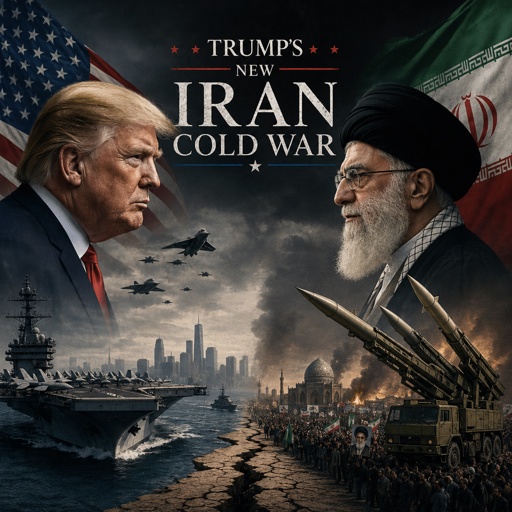
The recent discourse surrounding potential blockade strategies marks a significant escalation in the rhetoric governing international trade and maritime security. By targeting the flow of goods through critical corridors, the proposed policy shifts threaten to disrupt established supply chains that have underpinned European economic stability for decades. This development forces a reassessment of how industrial powers manage energy dependencies and cross-border logistics in an increasingly fragmented geopolitical landscape.
Strategic Realignments in Maritime Corridors
The prospect of a blockade creates a direct pressure point for European markets, which remain sensitive to interruptions in energy and raw material imports. If such measures are enacted, the resulting inflationary shock could trigger a contraction in industrial output across the continent. This scenario forces firms to reconsider their reliance on long-haul maritime routes and may accelerate the push toward localized production models. The ripple effect extends beyond Europe, as regional actors observe the efficacy of blockade tactics in modern statecraft.
Observers are now evaluating whether these maneuvers serve as a template for other flashpoints, specifically the Taiwan Strait. If maritime restrictions become a standard tool for exerting economic pressure, the risk premium on global shipping will likely rise. Companies with heavy exposure to trans-Pacific trade are already factoring in the potential for increased insurance costs and longer transit times. This shift in the risk environment is prompting a pivot in capital allocation, as investors move away from assets heavily reliant on vulnerable trade routes.
Industrial Exposure and Market Sensitivity
Market participants are currently parsing the potential for a broader contagion effect. While the immediate focus remains on energy and defense, the secondary impacts on consumer cyclicals and technology hardware are becoming clearer. The following factors are driving the current market sentiment:
- Increased volatility in global shipping indices due to rerouting concerns.
- Heightened demand for domestic manufacturing capabilities as a hedge against supply chain isolation.
- A shift in liquidity toward defensive sectors that are less sensitive to international trade disruptions.
For investors, the primary concern is the potential for a sustained period of economic stagnation if these blockade policies are implemented. The transition from a globalized trade model to one defined by regional security blocks requires a new approach to valuation. Companies that can demonstrate supply chain resilience or maintain strong domestic market share are likely to see a divergence in performance compared to those reliant on global interconnectedness.
AlphaScala data currently reflects this environment of uncertainty. Bloom Energy Corp BE stock page holds an Alpha Score of 46/100, categorized as Mixed within the Industrials sector. This score highlights the ongoing difficulty in pricing industrial assets when the underlying trade environment is subject to rapid policy shifts. Meanwhile, Hasbro, Inc. HAS stock page remains unscored, reflecting the broader difficulty in assessing consumer-facing firms that depend on complex, globalized manufacturing networks.
This narrative sets the stage for the next critical marker, which will be the official response from international trade bodies and the subsequent adjustments to maritime insurance premiums. Any formalization of these blockade policies will likely trigger a re-rating of assets exposed to global logistics. Investors should monitor upcoming trade policy filings and regional security updates, as these will provide the clearest signals regarding the longevity of these new trade barriers. The focus remains on whether these measures are temporary posturing or a permanent shift in the global economic order.