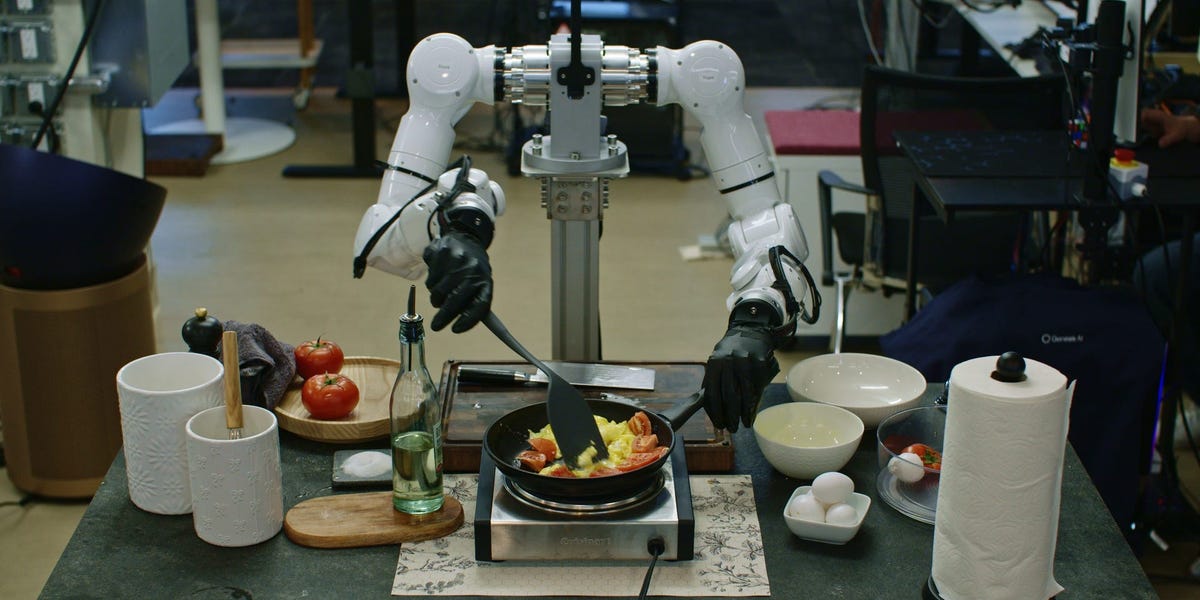
Genesis AI claims its new robotic hands approach human-level dexterity. The breakthrough could redefine automation, but commercial viability remains the test.
Genesis AI CEO Zhou Xian recently stated that the company has developed robotic hands capable of achieving dexterity and performance levels approaching those of human hands. This development targets one of the most persistent bottlenecks in the field of robotics, where the physical manipulation of objects has historically lagged behind advancements in artificial intelligence software and navigation systems.
For years, the primary challenge in robotics has not been the intelligence of the control software, but the physical execution of tasks. While industrial arms have long excelled at repetitive, high-speed movements in controlled environments, they have struggled with the nuance required for unstructured tasks. Manipulation involves a complex interplay of sensory feedback, force application, and spatial awareness. The ability to grab, move, take apart, or assemble objects with human-like precision requires a level of tactile sensitivity that has remained elusive for most hardware manufacturers.
If Genesis AI has indeed achieved a breakthrough in hand dexterity, the implications for the broader automation sector are significant. Current robotics often rely on specialized end-effectors designed for specific tasks. A general-purpose hand that can replicate human movement suggests a shift toward more versatile, multi-functional robots that could operate in environments previously reserved for human labor. This would reduce the need for custom tooling and potentially lower the barrier to entry for robotics in sectors like logistics, household services, and complex manufacturing.
Investors tracking the robotics space should distinguish between laboratory demonstrations and scalable commercial deployment. While the ability to play the piano or cook a meal serves as a high-visibility proof of concept, the true test lies in the durability, cost-efficiency, and integration of these systems into real-world workflows. The hardware-software integration required for such dexterity often involves high power consumption and complex maintenance cycles, which can limit the total addressable market for initial iterations.
In the current landscape, companies like Grab Holdings Ltd and other technology-focused firms are navigating a period where capital allocation is increasingly scrutinized for tangible returns. With an Alpha Score of 21/100, Grab Holdings Ltd reflects the broader caution surrounding high-growth tech valuations that have yet to prove consistent, long-term profitability. For Genesis AI, the transition from a demonstration of dexterity to a viable commercial product will require solving for unit economics that justify the high cost of advanced robotics hardware.
Market participants should monitor future updates regarding the durability of these robotic hands under sustained, high-frequency use. The next concrete marker for the industry will be the disclosure of production costs and the timeline for pilot programs outside of controlled laboratory settings. If the company moves toward a manufacturing partnership or a public demonstration of endurance, it will provide a clearer signal of whether this technology is ready for commercial scaling or remains a specialized research project. Investors looking for broader trends in stock market analysis should watch for how these developments influence capital expenditure patterns in the automation and semiconductor supply chains.
AI-drafted from named sources and checked against AlphaScala publishing rules before release. Direct quotes must match source text, low-information tables are removed, and thinner or higher-risk stories can be held for manual review.