On Monday, Richmond, BC-based General Fusion became the first nuclear fusion company to go public. The company debuted on the public markets days after merging with the Nasdaq-listed special purpose acquisition company Spring Valley Acquisition Corp. III.
Listed as $GFUZ on the Nasdaq, the stock opened Monday at $12.80 USD per share. It has since hovered around that level, hitting highs of nearly $15 USD. As of publication, the price was about five percent above that opening listing, at $13.40 USD.
General Fusion debuted with approximately $150 million USD ($212 million CAD) in cash. That is a far cry from the up to $335 million it could have secured through the SPAC deal, following heavy redemptions as many of the SPAC's investors opted to cash in their shares.
Megan Wilson, General Fusion's chief strategy officer, said she is happy with the amount the company raised through this deal and how it has been received by public-market investors.
"It's a really exciting time for fusion and it's a really exciting time for General Fusion," Wilson told BetaKit in an interview. "We like to say we are a company of firsts."
Wilson noted that General Fusion became one of the first fusion companies in 2002 when it was launched by founder and chief scientist Michel Laberge. While General Fusion remains focused on its long-term goals, which include operating a commercial power plant based on its patented Magnetized Target Fusion technology by 2035, Wilson said the company is "very pleased" with the reaction it has received thus far.
"We're feeling great about the initial response," Wilson said. "The market has been very receptive."
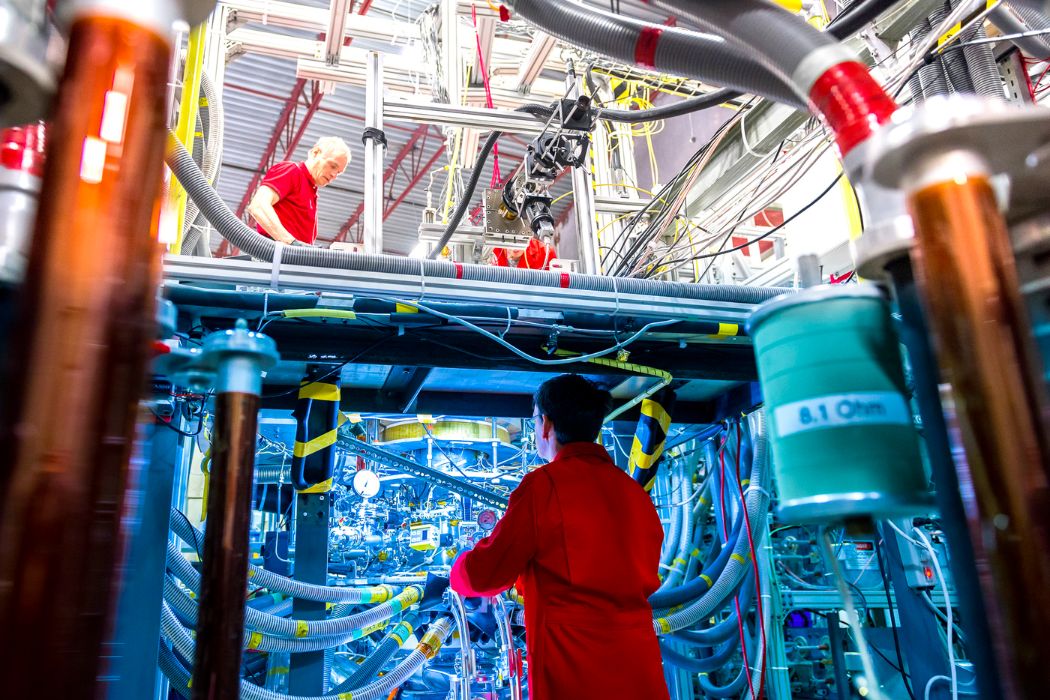
The $150 million gives General Fusion the cash it needs to complete its current Lawson Machine 26 (LM26) program between now and the end of 2028. General Fusion revealed last month it is nearing the next technical milestone on that path: demonstrating fusion at temperatures of 10 million degrees Celsius.
After that, General Fusion will focus on the 100-million-degree mark and "scientific breakeven conditions," or the point where LM26 is capable of producing more energy than it consumes. The company hopes to be the first in the world to achieve that.
Chris Gadomski, lead analyst for nuclear at Bloomberg New Energy Finance, told BetaKit in an interview Monday that the $150 million is "a drop in the bucket" compared to what General Fusion will need to attain its broader ambitions, including that 2035 target. He highlighted that many of the firm's competitors have raised much larger sums to date. General Fusion's success will depend heavily upon its ability to raise additional capital.
"Being a public company and being the first publicly listed fusion company, we believe, gives us access to a much broader universe of investors," Wilson said, adding that General Fusion prides itself on its capital efficiency and plans to keep executing in this fashion.
Wilson said the company hopes LM26's "clearly defined" and "industry-accepted" milestones will help it generate momentum and create shareholder value along the way.