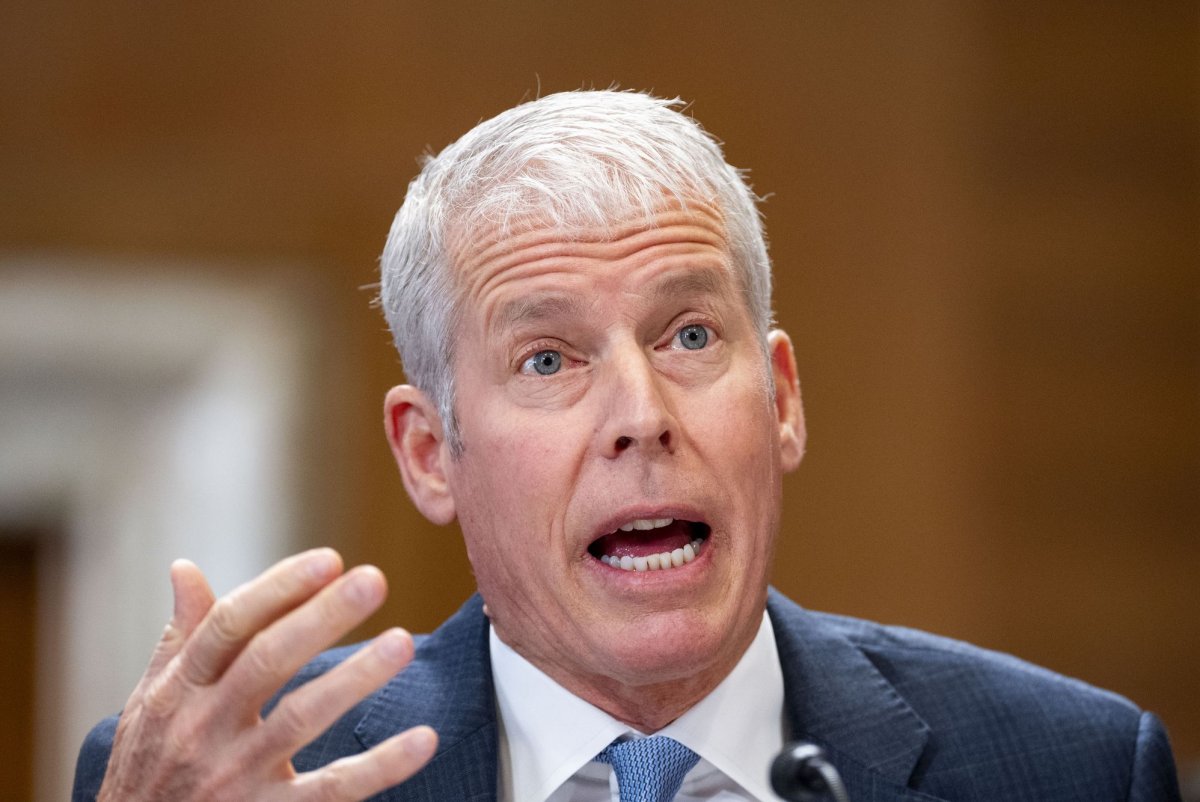
Energy Secretary Wright says the White House is open to suspending the 18-cent federal gas tax as pump prices hit $4.52. The better trade reads through the demand-side palliative to the Strait of Hormuz supply choke.
The White House is openly discussing a suspension of the 18-cent-per-gallon federal gasoline tax, Energy Secretary Chris Wright confirmed Sunday, as the national average pump price hit $4.52 per gallon. The immediate market take is straightforward: a tax holiday would mechanically lower the price consumers pay, potentially cooling political pressure and softening demand destruction fears. That simple read misses the mechanism that actually moves gasoline futures and refining margins.
Wright told NBC's Meet the Press the administration is "open to all ideas" to lower energy prices, including following state-level examples of temporarily shelving gas taxes. He cited previous measures like Strategic Petroleum Reserve releases and summer-blend rule revisions. But the 18-cent figure is a rounding error against the $1.40 year-over-year surge that pushed prices to their highest since 2022, according to AAA data. The real story is not the tax; it is the Strait of Hormuz.
The naive interpretation treats a gas tax suspension as a supply-side fix. It is not. Removing the federal levy would reduce the pump price by exactly 18 cents in a competitive pass-through scenario, assuming no offsetting behavior by refiners or retailers. That is less than one week's average price move during the current crisis: regular gas surged 25 cents for the second consecutive week to $4.55, AAA reported. The tax talk is a demand-side palliative, not a solution to the supply choke that began when Iran blocked the Strait of Hormuz in retaliation for U.S.-Israeli bombing attacks starting February 28.
For traders, the better read is that a tax holiday signals the administration is running out of immediate supply levers. SPR releases have already been deployed. Summer-blend waivers address refinery flexibility at the margin. If the White House is now floating an 18-cent tax cut, it implicitly acknowledges that the Strait closure is the binding constraint and that diplomatic efforts to reopen it remain fragile. That fragility, not the tax, is the tradable variable.
Gasoline futures (RBOB) price off crude oil inputs plus the refining margin, not off the retail pump price. A federal tax suspension does not alter the cost of a barrel of crude or the operational cost of turning it into gasoline. It changes the after-tax price to the consumer, which can influence demand at the margin, but the primary driver of RBOB right now is the physical availability of crude and refined products transiting Hormuz.
This is a crack spread story. The 3-2-1 crack spread – a rough proxy for refining profitability – has widened as gasoline prices outpaced crude. With WTI crude dipping below $100 per barrel during the fragile cease-fire, but gasoline holding above $4.50, the incentive to run refineries hard is enormous. A tax holiday that stimulates demand without adding supply would actually tighten the gasoline market further, potentially widening cracks. The administration's own logic – "revising federal regulations on summer gasoline blends to make it easier for American refineries to produce more gasoline" – is the supply-side action that matters. The tax cut is a secondary demand signal.
The only catalyst that can sustainably reverse the gasoline spike is a credible reopening of the Strait of Hormuz. Until then, every headline about negotiations or cease-fire extensions will cause sharp two-way swings. Wright refused to predict gas prices on CBS's Face the Nation, saying only that "gasoline and diesel prices are up, and they will remain up while this conflict's in place, and then they will come back down." That is not a forecast; it is a description of a binary outcome.
For a technical setup, the confirmation level is not a specific RBOB price but crude's behavior at the $100 handle. As long as WTI holds below $100, the market is pricing some probability of a diplomatic resolution. A break above $100 on renewed escalation would signal that the Strait closure is becoming entrenched, and gasoline would likely re-test its panic highs. Conversely, a sustained move below $90 crude on concrete progress toward reopening the waterway would be the first real signal that the supply premium is deflating. The tax talk is noise relative to that binary.
The gasoline rally's invalidation condition is not a tax suspension. It is a combination of three factors: a durable Strait reopening, a measurable increase in U.S. refinery runs that translates into rising gasoline inventories, and a demand response to $4.50-plus prices that shows up in weekly EIA data. The first factor is geopolitical and unforecastable. The second is already incentivized by wide cracks but constrained by refinery capacity. The third is the slow-burn demand destruction that typically caps gasoline spikes.
A trader watching this setup should monitor the weekly EIA gasoline inventory report for any build that exceeds seasonal norms. A surprise build while the Strait remains blocked would suggest that high prices are doing the demand work that a tax holiday would only delay. That would be a bearish signal for RBOB even without a geopolitical resolution. The tax talk, if it becomes policy, might actually delay that demand response, extending the period of elevated prices.
Wright's comments are a reminder that political intervention in commodity markets often addresses the symptom, not the cause. The 18-cent tax is a rounding error against a $1.40 move driven by a blocked chokepoint. The better trade reads through the palliative to the underlying supply risk, and that risk will not be resolved by a tax code change.
Drafted by the AlphaScala research model and grounded in primary market data – live prices, fundamentals, SEC filings, hedge-fund holdings, and insider activity. Each story is checked against AlphaScala publishing rules before release. Educational coverage, not personalized advice.