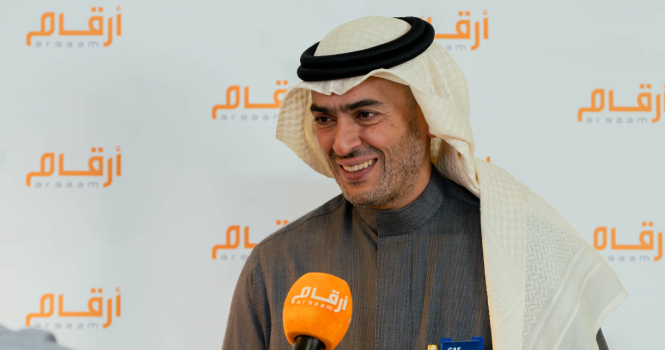
GAS Arabian Services Co. CEO Faisal Khalid AlDabal confirmed the company entered Q2 2026 with a SAR 1.77 billion contracts backlog, the highest disclosed in recent quarters. That level of contracted revenue visibility shifts the near-term risk profile from a demand question to an execution and geopolitical monitoring exercise. The immediate market read is a clean backlog-linked runway for the next quarter. The better read ties the backlog figure to the Q1 margin structure and to the same geopolitical caution that could cap re-rating.
SAR 1.77B Backlog Sets Up Q2 Catalyst
The CEO told Argaam the backlog figure is the primary reason he expects a positive profit outlook for Q2 2026. For a services company, backlog is not a guarantee but a bounding floor for near-term revenue, especially when it spans trading and technical segments that typically convert within one or two quarters. The simple interpretation is that Q2 revenue has a high starting point. The sharper interpretation is that the backlog mix matters: if the trading and technical services components that drove Q1 margin expansion also dominate the backlog, then the Q2 profit bridge is more than mechanical, it carries improved incremental profitability from the same segments.
AlDabal pointed to a broadly positive performance across all three segments in Q1. That breadth reduces the single-segment dependency risk that can punish a service name when one vertical stalls. The company did not disclose the exact backlog composition, but the CEO explicitly linked the Q2 view to the volume of contracts in hand, not to a hoped-for pipeline of new wins. That distinction matters. It means the market is pricing a realization story, not solely an award cycle.
Trading, Technical Services, and Associate Income Drive SAR 38.2M Profit
Q1 2026 net profit reached SAR 38.2 million, driven by higher segment revenues, improved margins, and a larger contribution from investments in associate companies. The trading and technical services segments were specifically identified as profit boosters. Those are typically shorter-cycle, higher-turn businesses where margin discipline is a direct reflection of execution rather than sector tailwinds alone.
The associate income narrative shifted materially because of two stake purchases totaling SAR 65.8 million. Those investments were reflected in Q1 results, confirming the increase in GAS’s share of profits from joint ventures. For a market that often treats associate income as an opaque, lagging line item, the explicit Q1 recognition provides a cleaner starting point. The risk is that associate profits can be lumpy; the counterpoint is that the CEO chose to highlight them as a structural profit driver, implying a recurring contribution logic rather than a one-off boost.
Geopolitical Cloud: What the CEO’s Caution Means for the Trade
The interview included a clear but measured geopolitical flag. AlDabal said the company continues to monitor regional developments and their impact on the business environment in the Kingdom and GCC countries. He added that the long-term impact will be assessed in future reports “given the rapidly evolving nature of these events.” That is not a warning; it is a disclosure that a variable outside the backlog is being actively tracked and has not yet been quantified.
For a stock that is trading on a backlog-driven Q2, the main risk is not that the backlog disappears, but that execution margins tighten because geopolitical disruption raises costs, slows project delivery, or forces a reassessment of regional spending patterns. The positive side of the same coin is that GAS’s core operations are domestic and GCC-focused, where the spending backdrop remains tied to Vision-linked projects. The exposure is indirect through business environment deterioration, not through direct asset impairment or sanction risk.
What would reduce the risk: if Q2 results deliver backlog conversion with similar or improved margins, and if regional stability holds, the company validates its resilience claim. What would make the risk worse: any operational disruption that delays backlog conversion or a macro shift that erodes the profitability of the trading and technical services segments, forcing a margin compression that the backlog alone cannot offset.
The Next Decision Point
Q2 2026 results will be the concrete marker. The market will watch not just the top-line number but the margin structure across segments and the contribution from associates. If the backlog conversion rate holds and the geopolitical commentary remains cautious but not alarmed, the operational narrative stays intact. If margin pressure appears despite the backlog, the market will likely reduce its confidence in the profit bridge implied by the CEO’s statement. For now, the backlog gives GAS a visible floor, and the CEO’s comments set a positive baseline. The close is a stock with a defined near-term catalyst and a clearly stated risk factor that has not yet been priced. That is the tradeable tension.